The Liberation of Women is a Fundamental Necessity for the Revolution
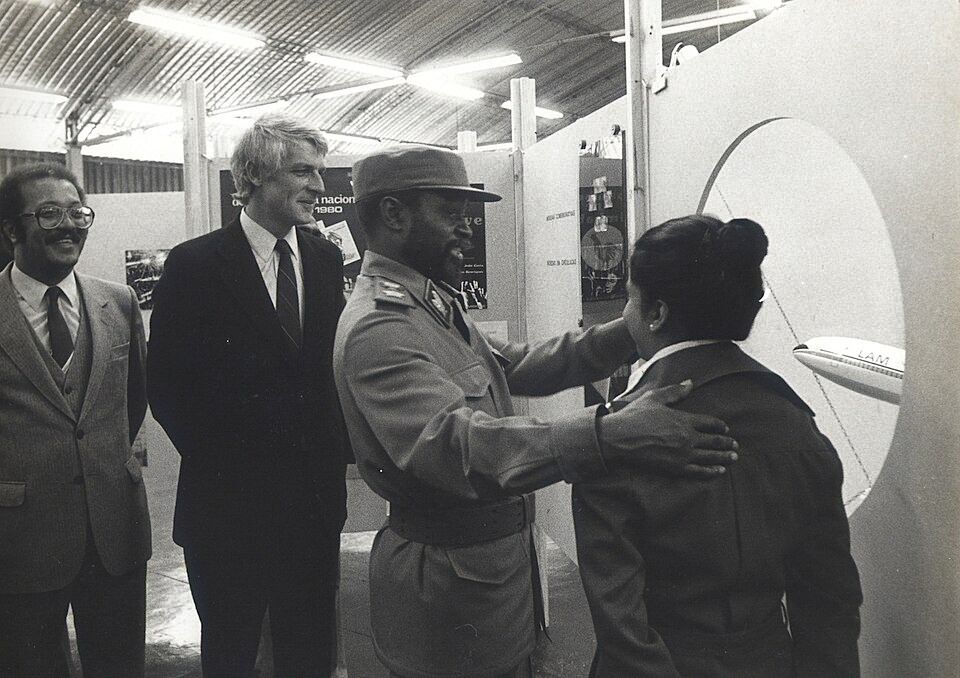
Editorial Note: The speech reprinted in the linked PDF below is Samora Machel's opening address to the First Conference of Mozambican Women, delivered on March 4, 1973.
Machel became president of FRELIMO (the Mozambique Liberation Front) three years before this address in 1970, following the assassination of Eduardo Mondlane, the organization's founding president. At that point, FRELIMO had been waging a decade-long armed struggle against Portuguese colonial rule. By 1973, their struggle had been successful enough that they were no longer simply struggling against their colonizers; they were also struggling with the Mozambican people to build out the revolutionary process by challenging many of the assumptions that had been foundational to their society under colonial rule. With this desire to change the foundations of society, FRELIMO used the historic commemoration of International Women’s Day 1973 (as observed by Soviet comrades since 1922) to convene its first conference dedicated entirely to women, gathering delegates who had served the struggle as soldiers, nurses, teachers, and organizers from every province of the country.
In his address, Machel confronts arguments circulating within FRELIMO's own ranks that women's emancipation was a secondary, even divisive, concern. Machel rejected the notion that, out of fear of alienating "traditional" masses if pursued too soon, the issue of women’s emancipation should be left for a later date. Machel insisted the liberation of women was not "an act of charity" but "a fundamental necessity for the revolution, the guarantee of its continuity and the precondition for its victory." He locates the origins of women's oppression in the same system of private property and exploitation that produces colonial and class domination, describing women as workers whose labor, fertility, and inheritance value have historically been appropriated much like land and labor are appropriated under colonialism, and further insists that no revolution can call itself complete while any part of the exploited remains excluded from it. To illustrate the danger of premature or hollow organizing, he recounts the collapse of the earlier Mozambican Women's League (LIFEMO), founded in 1966 before FRELIMO's line had been tested and internalized in practice, and argues that the conditions for a durable women's organization now, unlike then, finally exist. On this basis, he announces the founding of the Organization of Mozambican Women (OMM), conceived not as a substitute for the FRELIMO Women's Detachment already fighting on the front lines, but as a mass structure to draw the whole of Mozambican womanhood, "young and old, single and married, educated and non-educated," into the work of revolution. Machel closes with a key argument explicitly rejecting any reading of the struggle as one between men and women. Rejecting the notion that men are the enemies of women (or vice versa), Machel insists the antagonism runs between the exploited of both sexes and the social order exploiting most humans, regardless of gender. Finally, Machel situates Mozambique's fight alongside the liberation struggles of Luso-colonized African territories such as Angola, Guinea-Bissau, and Cape Verde, and against the larger capitalist-imperialist system confronted throughout the essays gathered in this issue.
Samora Machel was born on September 29, 1933. Though he had only a limited formal education, he developed a fierce anti-imperialist consciousness and ultimately became the head of the FRELIMO guerilla army and, later, the first president of the independent nation. He was killed on October 19, 1986, when the presidential jet carrying him and his advisers from Lusaka to Maputo mysteriously smashed into the Lebombo Mountains in South Africa.
The Liberation of Women is a Fundamental Necessity for the Revolution