Security Dependency, Delinking and the Quest for Sovereignty: Tunisia and the Anti-Imperialist Sahel Alternative
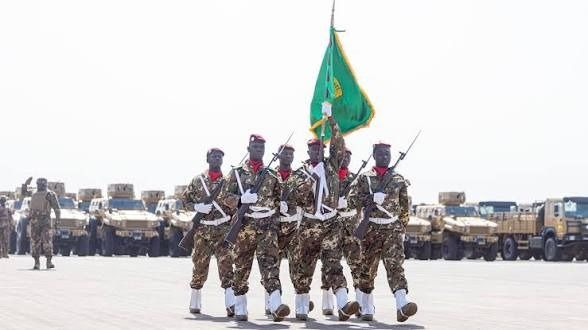
The Alliance of Sahel States (AES), formed in September 2023 by Burkina Faso, Mali, and Niger, poses a fundamental challenge to the structure of dependency that has long entrapped the security apparatuses of states across the African continent and the Global South more broadly. Through its rejection of western neocolonial military bases, creation of a joint military force, break from the imperialist-imposed 'War on Terror' (WoT) framework, and pursuit of monetary sovereignty—including the planned abandonment of the CFA franc, aided by the establishment of the Confederal Bank for Investment and Development (BCID-AES), and the development of a confederal parliament—the AES embodies an attempt to achieve a form of 'delinking' as theorized by Samir Amin.[1] This process, Amin contends, entails peripheral states subordinating external economic relations to the internal imperatives of domestic development as a condition for genuine liberation from imperialist domination. The AES, this article argues, constitutes the material realization of that long-standing Pan-African vision, one that, as Kwame Nkrumah argued in 1963, required "a common defence system with African high command" to defend against "the great design of the imperialist interests that buttress colonialism and neo-colonialism".[2]
The AES rupture from imperialist security architectures offers a powerful counterpoint to the trajectory of states that remain entrenched in relations of dependency. The relationship between Tunisia, like a majority of the African continent and other Global South states, and western imperialist powers has long been structured by what I have termed "security dependency", a structural condition in which peripheral states are compelled to subordinate their security policies and practices to the interests of core powers through mechanisms of bilateral military "partnerships" and "trainings", economic coercion, and the institutional legacies of colonialism that shape dependent security apparatuses. I build on Samir Amin's foundational analysis of dependency, which posits that peripheral economies are structurally locked into serving the interests of the center, resulting in their "disarticulation" and external orientation, a condition he describes as "the adjustment of the orientation of production in the periphery to the needs of the center, which prevents the transmission of benefits of economic progress from the poles of development to the economy as a whole".[3] I extend Amin's analysis of the imperialist core's "control by the dominant powers of technological development, access to natural resources, the global financial and monetary system, means of information, and weapons of mass destruction"—to include the security domain.[4]
The concept of security dependency forces us to move beyond idealist notions of "agency", based on a claimed sovereign equality under intentional law, and to instead understand the material conditions that shape agency and drive Global South states to enter into unequal security arrangements with imperialist states. These conditions are shaped by a racialized and hierarchically ordered world system structured by legacies of slavery and colonialism. This is a system in which "security assistance" functions as a mechanism of control and in which the very institutions meant to protect sovereignty become instruments of its erosion.
In many ways, Tunisia's post-2011 conjuncture serves as an instructive example of the mechanisms through which Global South security dependency is secured, mechanisms that the AES now challenges. Although the demand to delink from the western imperialist core animated the 2010–2011 uprising, these relations of dependency were paradoxically deepened in its aftermath. The WoT framework was strategically deployed to extend peripheral capitalist restructuring. Tunisia's trajectory illustrates how the WoT expanded state repression of especially the working class and lumpenproletariat, further ensconcing the country into a subordinate relationship with US and European capital. This relationship reproduces the colonial legacies which shaped Tunisia's security institutions, its police, prisons, and borders. These institutions were originally constructed to enable the drain and transfer of surplus value during the French protectorate (1881–1956), through pacifying anti-colonial dissent and facilitating depeasantization and the super-exploitation of labor. Instead of securing Tunisia's sovereignty or developing the capacity to contribute to the defense of the region against imperialist-zionist intervention and genocide, Tunisia's post-independence security apparatuses have remained subordinate to western interests, a structural condition that makes it difficult to achieve radical policy shifts regardless of the class orientation of the government.
Yet the AES has demonstrated that another security model is possible, one that is rooted in sovereignty and self-determination. The model they present to the Global South is reinforced by Iran's successful assertion of its sovereignty in thwarting imperialist-zionist designs on the country and the West Asian region more broadly, enabled by the development of an entirely delinked endogenous military-security apparatus. Understanding the mechanisms and structure of security dependency in Tunisia illuminates both the depth of imperialist penetration and the possibilities for genuine decolonization represented by the AES alternative.
To grasp the full weight of Tunisia's security dependency and the rupture represented by the AES, it is necessary to trace the colonial origins and post-colonial trajectory of the security architecture that entraps Tunisia today.
From French Protectorate to US Imperialism: The Persistence of Security Dependency
Tunisia's forced integration into French imperial structures established a blueprint for surplus value drain that would persist long after nominal independence. Established under the Treaty of Bardo (1881) and the La Marsa Convention (1883), the French Protectorate formalized a system of indirect rule in which the Tunisian Bey formally retained monarchical authority, allowing France to "govern from above" while avoiding direct administrative responsibility.[5] Primitive accumulation was achieved through colonial land grabs, entailing expropriation and the prohibition of common land, resulting in "shortages sometimes amounting to famine" that weakened the ability of the colonized population to socially reproduce.[6] M'Barek frames French colonial strategy as a "double enclosure: that of land, as theorized by Karl Marx, and mobility"—a strategy deployed against nomadic and seminomadic populations.[7] The colonial security apparatus operated through military occupation, paramilitary forces, police, prisons, surveillance, and a legal system designed to criminalize all forms of anti-colonial resistance and protect French settler interests.[8] This articulation between coercion and value drain shaped the colonial agrarian question through the systematic dismantling of peasant livelihoods and the expansion of repressive apparatuses.
Tunisia's colonial architecture of security dependency did not end with independence in 1956. The post-colonial state inherited the structures of colonial dependency: where direct military expropriation once operated, the debt economy, export-oriented agriculture, and unequal exchange became the primary mechanisms for surplus drain. This continuity was reinforced through bilateral agreements that maintained French military presence and influence, including intelligence sharing, military training, and logistical support, perpetuating the subordination of Tunisian security policy to French interests.[9] The transition to US hegemony did not alter this structure; it simply changed the imperial patron. Tunisia became integrated into US-led security architectures through military assistance and training along with a deepening political alignment with US interests.[10]
The foundations for this relationship were first laid during the Algerian War of Independence (1954-1962), when the US-led NATO worked alongside France to repress the anti-colonial struggle, and deepened after Algerian independence as Washington sought to break Tunisia off from Algeria's more radical post-independence trajectory, secure Mediterranean shipping lanes, and contain Soviet influence. They were later institutionalized through Tunisia's integration into the NATO Mediterranean Dialogue framework (1994), a normalizing project including Israel and 6 regional states, and culminating in its designation as a "major non‑NATO ally" in 2015. As with all dependent Global Majority states, Tunisia's subordinate structural location within the world system is solidified by the constant threat of military intervention and destabilization, with the clear demonstrative effect of regime change in non-compliant neighboring states, like Libya under Muammar Gaddafi.
The conveniently timed 2015 terrorist attacks on the Bardo museum and Sousse beach resort marked a turning point for Tunisia's integration into the US-led imperialist security architecture. If the 2011 Deauville Partnership opened Tunisia's economy for further surplus extraction, the 2015 anti-terror law, inspired by the US Patriot Act, was designed to curtail the inevitable resistance, including prolonged pre-charge detention, expanded capital punishment, and an elastic definition of terrorism that, building on a colonial era derived criminal code, contributed to criminalizing social protest, strikes, and civil disobedience.[11] Within seven months, over 100,000 Tunisians were arrested under the state of emergency.[12]
This security conjuncture paved the way for Tunisia's designation as a "major non‑NATO ally" and its elevation to a primary host nation for Exercise African Lion, the US Africa Command's largest annual joint military exercise.[13] The exercise draws thousands of personnel from the US, NATO allies, and African "partner" states.[14] The real intention behind these exercises is to further surveil and subordinate African militaries to US imperialist security architecture and deepen continental domination. Enhanced “counterterror cooperation” is also inextricably linked to economic dependency. In Tunisia’s case, it became an important vehicle for debt accumulation while the EU leveraged its financial "blacklist" to pressure Tunisia into signing the Deep and Comprehensive Free Trade Agreement (DCFTA), a deal “designed to insert the most profitable companies on Tunisian soil into the European free market and to condition the Tunisian market to supply the EU.”[15]
The "War on Terror" fundamentally reconfigured Tunisia's political-economic geography, creating new frontiers of accumulation through militarization that echoed colonial counter-insurgency. The 250-kilometer militarized barrier along the Libyan border, financed by the US and Germany, revived the colonial strategy of disrupting cross-border social, political and economic exchange and criminalizing informal survival strategies.[16] This external border violence is complemented by internal mobility control through the S17 program, which has placed over 30,000 predominantly young proletariat and lumpenproletariat Tunisian men under permanent surveillance, restricting their ability to seek employment across borders or within the formal economy.[17] By criminalizing movement and subjecting workers to constant monitoring, the program deepens the precarity of already marginalized populations, trapping them in informal, low-wage labor while weakening their capacity to organize. These measures are reinforced by the establishment of formal military zones governed by military justice codes that undermine due process, extending the reach of the security state into the daily lives of workers and their communities.
Tunisia's deepening security "partnership" with imperialist core states has come at a significant cost, as the state must allocate scarce foreign currency reserves to procure security equipment from core capitalist states and divert surplus from investment in the social wage toward further militarization. Since 2015, the US has approved over $312 million in weapons sales to Tunisia, including a $95 million Border Security Project Phase III with surveillance towers, thermal cameras, radars, and command and control hardware,[18] a $110 million sale of Archangel patrol boats,[19] a $107.7 million Javelin anti-tank missile system approved in December 2024, and most recently, 48 armored Humvees delivered in June 2026.[20] The official justification for these acquisitions is the fight against "terrorism." The official justification for these acquisitions is the fight against "terrorism," yet these weapons are disproportionate for countering light-armed “jihadi” insurgents, a contradiction compounded if such armor exists as it is almost certainly supplied by imperialist-zionist forces. These arms remain insufficient against those same forces, reducing Tunisian militarization to imperialist proxy consolidation and domestic pacification dressed as counter-terrorism.
European powers have also profited from this militarization spending bonanza in recent years: Germany approved over €115 million in arms export licenses to Tunisia between 2017 and 2020[21]; France recorded €25.6 million in arms sales in 2022[22]; and Italy exported €1.58 million in munitions in 2024, while Tunisia's defense budget rose from $979.31 million in 2015 to $1.16 billion in 2020—an increase of approximately 18.4% over that five-year span—and then to $1.485 billion in 2025, representing a further 28% rise over the subsequent five years.[23] These acquisitions drain Tunisia's foreign reserves at a time when external debt service reached 14.4 billion dinars in 2025, while foreign currency reserves stood at 25.1 billion dinars by year-end.[23] While capitalist core states supply arms and training, Tunisia pays with scarce reserves and deepens its integration into the imperialist security architecture.
The zionist assassination of Palestinian leader and Fatah co-founder Abu Jihad in 1988 and the 2017 killing of Mohamed Zouari, a drone expert for Hamas' military wing, on Tunisian soil—both of which provoked outrage among the Tunisian masses—are a reminder that this security architecture was never designed to defend the country's or region's sovereignty.[24] Instead, it functions to manage and repress the Tunisian working class and migrants from other African states fleeing climate devastation, economic collapse, and wars manufactured by the imperialist core.
The colonial logic of 'pacification' and ongoing primitive accumulation are in many ways more obvious in Tunisia's rural interior, where the WonT has provided the cover for a renewed assault on peasant livelihoods and the criminalization of rural mobility. The designation of Kasserine in Tunisia's central-west region as a "closed military zone" in 2014 under the WoT pretext functioned to suppress small-scale agriculture and accelerate rural displacement, converting rural populations into disposable surplus whose social reproduction is actively undermined. Ali Kadri identifies this active undermining, the deliberate crippling of workers’ capacity to sustain themselves, as capital's core imperative: to "de-reproduce labour" and, by "the act of wasting labour", to "augment the accumulation rate", especially as "the North consumes the wasted humans as well as the waste commodities they have produced".[25] Waste, in this sense, is not a byproduct of militarization but a central mechanism of accumulation: the premature destruction of life vulnerabalizes and cheapens labor and generates superprofits by transferring the costs of social reproduction onto the periphery.
This dynamic is replicated in the Gafsa phosphate mining basin, where militarization has contributed to producing the conditions for unequal exchange by entrenching a repressive labor regime, while environmental and social reproduction costs are borne by the communities themselves with the state subsidizing foreign capital.[26] In his analysis of Tunisia's phosphate sector, which comprises close to 15% of Tunisia's exports, Heythem Guesmi shows how the global division of labor assigns peripheral economies the role of producing consumer goods and raw materials, while the centers specialize in the "production of the means of production," reinforcing Tunisia's technological dependency. Tunisia exports approximately 80 percent of its phosphate products at market prices determined in the capitalist core. As Guesmi explains, "the peripheral position of the Tunisian social formation within the international division of labor leads to technological dependence in terms of machinery and technical training, on the one hand, and unequal exchange that pressures wages, on the other," enabling the systematic drain of surplus to the imperialist core.[27] This extraction is accompanied by severe environmental degradation. The transformation of the region into a mining basin has made phosphate production dominant over other economic activities, with the agricultural sector most acutely impacted by pollution.[28]
US dollar hegemony and control over the global financial system mediate this arrangement, while Tunisia's imperialist-linked security apparatus is designed to pacify the super-exploited workforce and suppress protest movements challenging unequal exchange. By design, this apparatus remains ill-suited to defend national sovereignty, let alone contribute meaningfully to liberating the region from imperialist-zionist domination.
The imperialist order thus converts war and environmental collapse into instruments of accumulation. The falling rate of profit is mitigated on the backs of the Global South working class, resulting in what Engels identified as "social murder," in which they "meet a too early and unnatural death".[29]
The AES Alternative: Beyond Dependency
If Tunisia's trajectory exemplifies the entrenchment of security dependency through debt, militarization in the name of "fighting terrorism", and integration into imperialist security architecture, the Alliance of Sahel States represents its antithesis, an example of security "delinking" from the imperialist security architectures that have entrapped the region. The Black Alliance for Peace (BAP) has described this alliance as "revolutionary, representing a historic breakthrough for Pan-Africanism".[30] The AES is not merely a military alliance but a "popular process of decolonization" that the US/EU/NATO axis is "desperate to eliminate".[31]
Determined to challenge French and broader Western imperialist power, popular nationalist military coups in West Africa forged the AES. Faced with sanctions, the three countries cut ties with France, required their armed forces to leave, withdrew from the neocolonial Economic Community of West African States (ECOWAS), and formed a comprehensive military, economic, and political alliance aimed at strengthening their capacities to resist western intervention and pursue autonomous development. The collective defense framework was first established in September 2023 through the Liptako-Gourma Charter, which states that "any attack on the sovereignty and territorial integrity of one or more contracting parties shall be considered as an aggression against the other parties and shall give rise to a duty of assistance... including the use of armed force to restore and ensure security".[32] In June 2025, defense ministers from Mali, Burkina Faso, and Niger gathered at the Alioun Blondin Beye peacekeeping school in Bamako to announce the plan to institutionalize a Joint Defense Force for the AES, the first time in modern history that African states have attempted to realize Nkrumah's vision.[33] The aim is to construct a “people-centred security architecture that fuse[s] national coordination with grassroots participation ... challenging longstanding patterns of external military dominance in Africa and asserting a new paradigm of African-led defence cooperation.”[34]
The roots of this rupture lie in the particular structure of French imperialism in West Africa. Following World War II, France devised mechanisms to maintain colonial levels of ruling class accumulation at a moment of global transformation. This included securing uranium supplies to become a nuclear power and creating the CFA franc in 1945 to gain what Ndongo Samba Sylla has described as a "localized exorbitant privilege" over its former colonies, a monetary arrangement that allowed France to purchase goods from its empire on credit and use the export earnings of its colonies for its own benefit.[35] As Sylla argues, the CFA franc is a neo-colonial tool that has enabled France to continue extracting surplus value from its former colonies, with its fixed parity and guaranteed convertibility locking nations into a deflationary system that prevents domestic production.[36] France forced newly independent states to sign "cooperation agreements" that maintained French control over natural resources, education, currency, and trade. This pattern of subordinated sovereignty paralleled Tunisia's own trajectory under Bourguiba and Ben Ali: while formally independent, the Tunisian state remained integrated into French and later US imperialist structures, with its security and economic policy subordinated to capitalist core interests.
The AES, by contrast, has embarked on the process of breaking from this pattern of subordinated sovereignty. Sylla highlights that the AES countries view this as "a matter of survival," especially after having their own bank accounts frozen by the Central Bank of West Africa (at France's behest) during sanctions, and they are taking measures to avoid sabotage, recalling how French secret services flooded Guinea with fake banknotes in 1960. [37] Toward that end, it formally activated the BCID-AES in Bamako on December 23, 2025—a historic milestone to build an autonomous financial architecture after its ECOWAS exit—targeting transport, energy, and mining, which ministers hailed as a break from colonial finance.[37] The bank is expected to build partnerships with Russia and China, who favor funding infrastructure over neoliberal conditionalities. Simultaneously, the bloc is advancing a forthcoming joint confederal parliament, hosted by Burkina Faso, to harmonize diplomatic, developmental, and defense legislation, cementing the regional integration needed to operationalize its economic sovereignty. Burkina Faso has also advanced resource sovereignty through the July 2026 launch of its first state-owned Bouboulou gold mine—in Thomas Sankara's birthplace—alongside the nationalization of five mining assets previously controlled by foreign firms, while Niger has likewise taken control of its uranium sector from French companies.
Central to this rupture is the AES's rejection of the imperialist-imposed WoT framework, which has produced more political violence and destabilization and has been used, in Gerald Horne's words, as a "lever for imperial intervention in Africa".[38] The AES also poses a significant challenge to the WoT framework on the geopolitical level. As Kungu Al-Mahadi Adam argues, "by labeling regions as terrorist hotspots, the US and its allies justify military deployments that double as a check on Russian and Chinese influence" while securing access to critical minerals and resource zones.[39] Rather than relying on western-led counterterrorism programs like the Trans-Saharan Counterterrorism Partnership (TSCTP) or the G5 Sahel Joint Force, which have only brought more death and destruction, the AES has pursued a path of delinking.
Echoing Iran's philosophy of military self‑reliance, AES Confederation President Ibrahim Traoré has insisted that the people of the Sahel must look to themselves, as their "happiness and successes depend on ourselves" and require greater effort and sacrifice.[41] Traoré applies this logic of self‑reliance beyond the military to the prison system, insisting that "prison must be humane" and vowing that Burkina Faso's jails "will not look like those of the imperialists".[42] His alternative replaces punitive detention with community service and agricultural labor, training incarcerated individuals as productive citizens rather than disposable populations in need of pacification. This model diverges sharply from Tunisia, where the carceral apparatus remains a tool for policing the working class and lumpenproletariat, perpetuating colonial patterns.
The AES security delinking faced its first major test on April 25, 2026, when an imperialist-backed coup attempt by Jama'at Nusrat al-Islam wal-Muslimin (JNIM) and Tuareg separatist groups, including the Azawad Liberation Front (FLA), unfolded in Bamako, with intense fighting spreading to the strategic northern city of Kidal that resulted in the death of Defense Minister Sadio Camara. Mali's Foreign Minister Abdulai Diop stated that "the attacks were designed to hit the highest levels of the state" and warned that "Mali will not bow down".[43] While the government rejected negotiations with the armed groups, the AES unified force responded with "intense air campaigns," deployed 15,000 troops, and—with Russian African Corps backing—ultimately quelled the violence.[44] The AES response made clear the resilience of this project despite ongoing imperialist-backed destabilization efforts. Solidarity rallies in Niamey chanted "Down with the Imperialists" and "Long Live the AES", a testament to the alliance’s popularity among the masses.[45]
This successful foiling of an imperialist-backed coup in Mali demonstrates that delinking from imperialist security architectures—including regional security integration and building strategic partnerships with other anti-systemic, anti-imperialist states—is a practical necessity for safeguarding sovereignty against imperialist destabilization campaigns.
Conclusion: Beyond Security Dependency—Lessons from the Sahel
The trajectories of Tunisia and the AES represent two alternative Global South security approaches to the primary contradiction within the world-system: western imperialism. Tunisia's security dependency, manifested in the subordination of its security apparatuses to western interests, exemplifies the structural logic and material realities of peripheral incorporation. Even if current President Kaïs Saïed was sincere in expressing his commitment to redress some of the economic legacies of colonialism and unequal exchange, especially as they manifest in regional disparities, the country's subordinate position in the global capitalist system, slow pace in diversifying trade and investment partners beyond the imperialist core with its conditionalities, as well as significant shortcomings in terms of the Maghreb’s regional integration structurally constrain such ambitions. The AES, by contrast, embodies the path of security delinking: radical regionalism, rejection of neocolonial security frameworks, the expulsion of foreign forces, and the creation of a unified army.
The AES ultimately points toward a broader transformation of political economy that is enabled by a sovereign security architecture, with the governments of the alliance pursuing the kind of nationalist development, including nationalization of natural resources, moves toward monetary sovereignty, and attention to agroecology and food sovereignty, that puts the needs of the people before that of western capital. In doing so, the AES “represents an anti-imperialist bloc at the vanguard of the pan-African revolution.”[46]
The AES model is a reminder that dependency can be broken and that Global South states can chart their own course beyond the imperialist security architecture that has long entrapped them in the post-independence era. Through regional integration and meaningful sovereignty, it has proven that value drain and transfer can be reversed, that peripheral security apparatuses can be made to serve the interests of the Global Majority rather than the capitalist core ruling class, and that another world is not a distant horizon but a material reality being built in the Sahel.
Corinna Mullin is a member of AISC.
Notes
[1] Samir Amin, Delinking: Towards a Polycentric World (London: Zed Books, 1990).
[2] Kwame Nkrumah, Africa Must Unite (London: Panaf Books, 1963).
[3] Samir Amin, Unequal Development: An Essay on the Social Formations of Peripheral Capitalism (New York: Monthly Review Press, 1976 [1973]).
[4] Samir Amin, "The New Imperialist Structure," Monthly Review 71, no. 3 (2019).
[5] Mary Dewhurst Lewis, Divided Rule: Sovereignty and Empire in French Tunisia, 1881–1938(Berkeley: University of California Press, 2008); Martin Thomas, Violence and Colonial Order: Police, Workers and Protest in the European Colonial Empires, 1918–1940 (Cambridge: Cambridge University Press, 2012).
[6] Samir Amin, The Maghreb in the Modern World (Harmondsworth: Penguin, 1970), 31.
[7] Mabrouka M'Barek, "Affixing the Nomads: Revisiting Marx's Theory of 'So-Called Primitive Accumulation' with a Deleuzo-Guattarian-Inspired Theory of the Colonial State," Rethinking Marxism 36, no. 1 (2024): 28.
[8] Corinna Mullin, "The 'War on Terror' as Primitive Accumulation in Tunisia: US-Led Imperialism and the Post-2010-2011 Revolt/Security Conjuncture," Middle East Critique 32, no. 2 (2023): 167–193; Thomas, Violence and Colonial Order.
[9] Thomas, Violence and Colonial Order.
[10] Mullin, "The 'War on Terror' as Primitive Accumulation in Tunisia."
[11] J. Chandoul, "The IMF has choked Tunisia. No wonder the people are protesting," The Guardian, June 9, 2016.
[12] Mullin, "The 'War on Terror' as Primitive Accumulation in Tunisia."
[13] A. Mallett, "Roaring into Action: African Lion 2026 Begins in Tunisia," U.S. Army, April 15, 2026.
[14] Ibid.
[15] L. Riahi and H. Hamouchene, Deep and Comprehensive Dependency: How a Trade Agreement with the EU Could Devastate the Tunisian Economy (Amsterdam: Transnational Institute, 2020).
[16] Hamza Meddeb, "Young People and Smuggling in the Kasserine Region of Tunisia" (International Alert, May 2016).
[17] Mullin, "The 'War on Terror' as Primitive Accumulation in Tunisia"; Tunisian Organization Against Torture, "S17 Program and Mass Surveillance in Tunisia" (2019).
[18] U.S. Department of State, "Tunisia – Border Security Project Phase III," Foreign Military Sales Congressional Notification, April 27, 2026.
[19] Africa Defense Forum, "Tunisian Navy Adds to Patrol Fleet," 30 Apr. 2025.
[20] Africa Defense Forum, "Tunisia Receives 48 Armored Vehicles from U.S.," June 30, 2026.
[21] Ruestungsexport.info. Tunisia: Value of approved arms export licenses from Germany to Tunisia in €.
[22] Macrotrends. (n.d.). Tunisia military spending/defense budget 2024.
[23] Tustex, Tunisia External Debt Service Data (2026); Central Bank of Tunisia, Foreign Currency Reserves Data (2025).
[24] Nada Trigui, "Mossad blamed as Tunisians protest assassination of engineer," Middle East Eye (2017).
[25] Ali Kadri, The Accumulation of Waste (Leiden: Brill, 2023), 547.
[26] Haytham Guesmi, "قطاع الفسفاط في تونس-1: أزمة إعادة الإنتاج" [The Phosphate Sector in Tunisia-1: The Crisis of Reproduction], Inhiyez, December 10, 2025.
[27] Ibid.
[28] Ibid.
[29] Friedrich Engels, The Condition of the Working Class in England (London: Penguin, 1987 [1845]).
[30] Black Alliance for Peace Africa Team, Statement on the Alliance of Sahel States (2025).
[31] Ibid.
[32] Liptako-Gourma Charter, September 2023.
[33] L'Aube. "Conclave des ministres de la défense de l'AES : Place à la force Unifiée de la Confédération !" L'Aube, 23 June 2025;
[34] Mafa, Cde M. K. "Sahel Rising: The AES Confederation's Defiant March Toward Sovereignty, Security, and Revolutionary Transformation." The Pan Afrikanist, 22 Apr. 2026.
[35] Sylla, Ndongo Samba. “80 Years of the CFA Franc: A Humiliating Anniversary.” Seneweb, 7 Apr. 2026
[36] Sylla, Ndongo Samba. "The CFA Franc: French Monetary Imperialism in Africa." Africa at LSE, 12 July 2017; Koddenbrock, Kai, and Ndongo Samba Sylla. "Towards a Political Economy of Monetary Dependency: The Case of the CFA Franc in West Africa." MaxPo Discussion Paper, no. 19/2, Max Planck Sciences Po Center, Aug. 2019.
[37] Ecofin Agency. "AES Launches Confederal Investment Bank: A Strategic Pivot Toward Sahelian Financial Sovereignty." Ecofin Agency, December 24, 2025.
[38] Gerald Horne, "AFRICOM Watch Bulletin," Black Agenda Report (2025).
[39] Kungu Al-Mahadi Adam, "Geopolitics of the War on Terror in Africa," Plus News (2025).
[41] Agence Nigérienne de Presse. “Diplomatie : ’La Confédération n’est dirigée contre aucun peuple, aucune nation, ni aucune organisation’ (Capitaine Traoré).” July 6, 2026.
[42] Radiodiffusion et de Télévision Publique du Burkina Faso. “Communications of the Presidency of Burkina Faso” (2026).
[43] Sankare, Oumar. "Mali says April 25 attacks aimed to 'decapitate' leadership, vows no talks with armed groups." Anadolu Ajansı, May 8, 2026.
[44] Africanews, "Alliance of Sahel States Confirms Joint Airstrikes in Mali," May 1, 2026.
[45] Ibid.
[46] African Stream, "Sahil Alliance: One year anniversary." September 16, 2024.