Scenes from "In The Worldwide Family of Militant Women" (Examples of Anti-Imperialist Women’s Struggles)
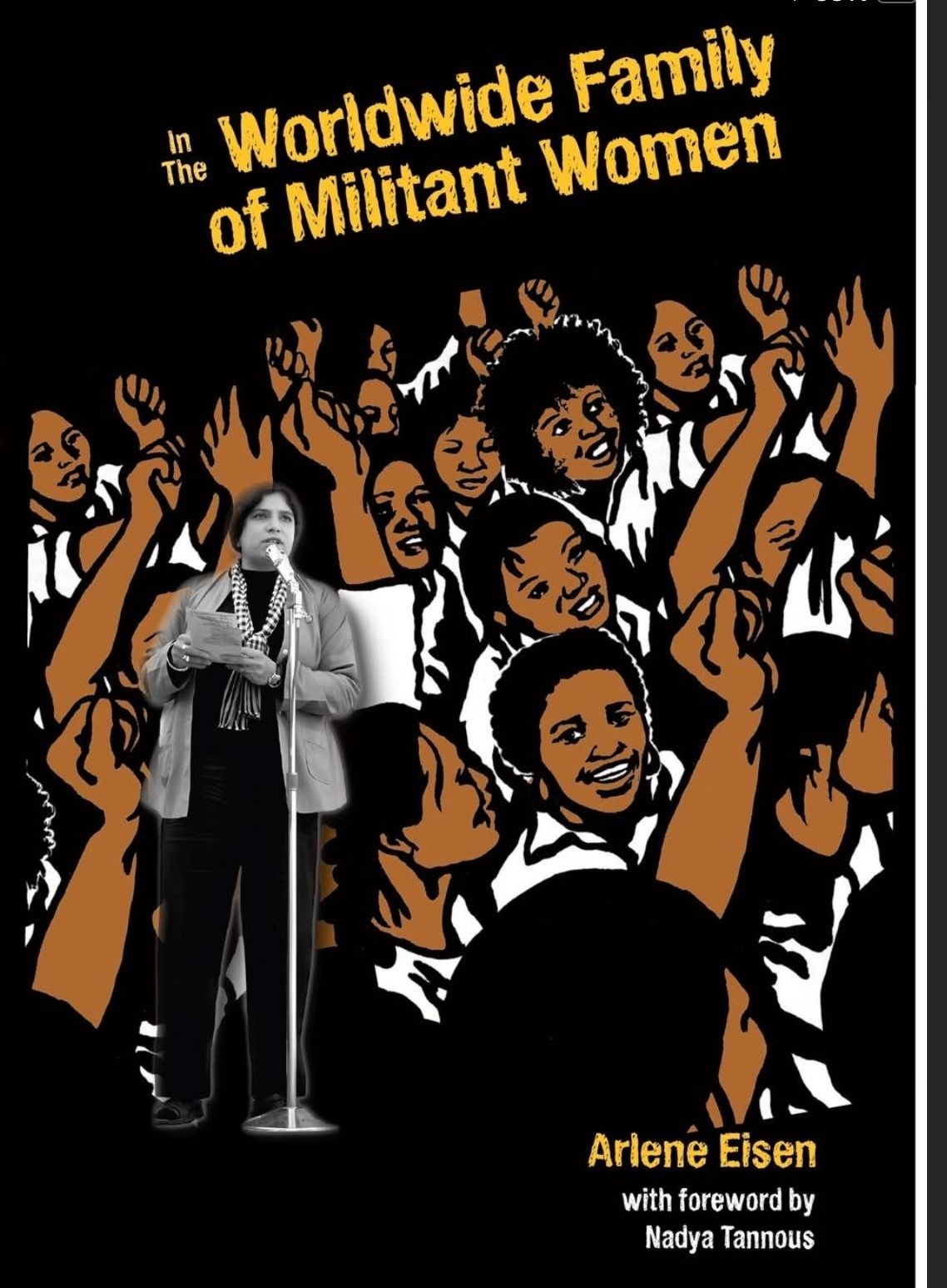
In the Worldwide Family of Militant Women is a hybrid social history/memoir. The book spans two decades between 1962 and 1982, a time that spawned worldwide anti-imperialist struggle–including struggles by anti-imperialist women’s organizations and individual women militants from Viet Nam to Cuba; from inside the imperialist core of the U.S. and Europe to Brazil. The following excerpts are first-hand accounts of some of those struggles.[1]
[Scene One: Account by Nadya Tannous, longtime Palestinian Youth Movement Organizer and author of this book’s Foreword. She writes of childhood incidents that first stimulated her political awakening to the horrors of imperialism, white supremacy and patriarchy.]
“My peers and I, and many of you, will easily recall non-stop war-hawk speeches, flag displays and slogans that aimed to manufacture consent for the invasions to kill people like us in Afghanistan and Iraq; for murderous sanctions and for the criminalization of all Arabs and Muslims. They claimed invasion would “bring democracy and human rights” to the Muslim world and “save the women” from their own society and men.
Post 9/11, it was common practice for teachers to pull children out of class and interrogate us and/or our mothers about whether our fathers were beating us at home. In fact, they had no regard for the trauma they inflicted on children, families, and the entire community. The portrayal of Arab and/or Muslim men as uncivilized beasts drew seamlessly on the same type of white supremacist patriarchal myths that pervaded the US slavocracy and served to fuel and “justify” the reign of anti-Black terror that lynched thousands of Black people after Reconstruction…
For me as a young person, the launch of the 2001 “war on terror” that grabbed our parents on their way to work or simply as they walked down the street, suddenly upended my life. That ordeal forged an unbreakable link that connected me to the people organizing for justice outside of the United States and to the radical tradition of resistance inside the Empire (pp.xviii-xix).
♦♦♦
[Scene Two: In 1974, while the U.S. was still waging war against Viet Nam, the State Department forbid travel to the Democratic Republic of Viet Nam (DRV, called “North Viet Nam” by the corporate press. For its part, throughout the war, the DRV granted visas to only a handful of North Americans. For those committed to solidarity with Viet Nam, travel there was considered a precious privilege and honor to be shared politically as widely as possible. The author, who had been invited to Viet Nam as a guest of the Viet Nam Women’s Union, describes political travel preparations that involved hundreds of women.]
“On the same day I had made plane reservations, I wrote to 40 or 50 contacts in a national network of anti-imperialist women’s groups suggesting that they send me whatever information and solidarity gifts that they wanted to give the Vietnamese women. I also urged them to send me questions that they wanted me to ask in Viet Nam. The Los Angeles Women’s Union, like the ones in the Twin Cities, Boston area, New York and other cities all wanted to hear Vietnamese women’s comments about how their struggle for liberation might continue after the war… (and to express their solidarity for example, from New York). “You have set a heroic example of women fighting for their liberation and the independence of their people. We are sending you these tapes as a symbolic gesture of our love and solidarity”…
I ended up lugging three large suitcases of poems, newspapers, posters, cards, letters, books and school and medical supplies. A group of Women Health Workers affiliated with the San Francisco Women’s Union filled an entire suitcase with lab slides and other gynecological supplies.
In the spring of 1973 women at California institute for Women (CIW)—at the time the only state penitentiary for women—attended a series of workshops that we had organized about women in Viet Nam. A year later, when they heard that I might be able to deliver them directly, they wrote letters to Vietnamese women political prisoners. One imprisoned woman wrote, “It’s an honor to send our love and solidarity to your people—your example strengthens us in our daily fight” (pp. 178-9).[2]
♦♦♦
[Scene Three: During her time in Viet Nam, the author took a jeep trip to Quang Tri Province, the first province in “South Viet Nam” to be liberated from U.S. control, where the U.S. had dropped an average of 94 bombs per person.]
“At another village, people had survived the bombing by living, for two years, in tunnels they dug into the side of a mountain. There, a group of older women—in their fifties and sixties—veterans of two liberation wars—honored me with a feast made from the first crops they had been able to harvest in many years. “We had a slogan during the bombing,” announced the woman whose chopsticks were holding a dumpling in front of my mouth.
I didn’t know which to do first: bite into the dumpling or ask about the slogan. She shook the dumpling. I obeyed and bit into it. She continued, “The slogan was ‘even if we have to use the wood from our homes, we will keep the road to the front open.’” The others nodded, and reached across the table for their favorite dishes. One poured a clear liquid into my tea cup. “Let’s toast our friendship. You helped stop the bombing. The Association of Vietnamese Mothers welcomes you as a daughter.”
Invariably, in meetings with peasants, teachers, workers, doctors, market women, poets, journalists, women who had been in prison, tortured and bombed, widows and women whose children died—teenage militia women and seventy-year-old grandmothers, women who had been concubines and women who were high-level government officials, they all made me feel like a beloved, long lost family member.
On the morning that I left Quang Tri Province—I could hear anti-aircraft fire in the distance. A U.S. plane was violating the Ceasefire Agreement, but no one in our group paid any attention. I too remained calm, sure that we were well-defended. Bui Thi Me, the Vice Minister of Health of the Provisional Revolutionary Government of South Viet Nam, took me by the hand as we walked to the jeep. She stopped a few feet from the vehicle. She had lost her husband, two sons, a brother and her best friend in the War, but her eyes still sparkled with confidence and kindness. Although she was an arm’s length away, I felt kissed by her smile. She must have noticed I was fighting back tears. She kept my hand tight in hers.
“Arlene. Don’t be sad. We are part of the worldwide family of militant women. We will meet again—next time in Ho Chi Minh City, or maybe Paris or even New York” (pp.188-189).
♦♦♦
[Scene Four: In Paris, late Fall 1974, the author renewed her comradeship with Kathleen Cleaver, former member of the Black Panther Party Central Committee who had been in exile from the U.S. In the course of a visit to a woman’s bookstore, des femmes, where the author was arranging for the French edition of her book, Kathleen engaged in political struggle with a French bourgeois feminist.]
“The woman at the bookstore shook Kathleen’s hand and immediately launched into a critique of the Black Panther “phallocrats”.
Kathleen responded, “But, sister, where have you gotten news about the Black Panthers?” Ever the gracious diplomat, Kathleen’s voice didn’t challenge or sound defensive.
The French feminist answered. “Uhm. I don’t know. Probably Liberacion or LeMonde. But everyone knows about the Black Panthers’ macho posturing.”
Kathleen nodded and calmly explained. “I understand why you started a separate publishing house for women. Men control the newspapers and publishing industry in France, just like in the US, no?”
Des Femmes nodded.
Kathleen continued, “So you’ll understand that it’s men who decided what to print about the Panthers, what photos to publish—and many of those men just printed what they found exciting or what the CIA directed them to print. It was a way of keeping people ignorant of the serious revolutionary critique we were making.”
Des Femmes wasn’t about to give up so easily. “But how could you work for such a male-dominated organization?”
Kathleen’s patience amazed me. She stated evenly, but proudly. “I joined because the Party talked about power. Black power. Not male power. We need Black power to get rid of racism, militarism, capitalism and sexism. We are a colonized people. Like the Vietnamese were colonized by the French. Have you asked a Vietnamese woman why she fought against France?”
After a longish pause, “I see your point.” Des Femmes finally conceded without a smile (p. 220).
♦♦♦
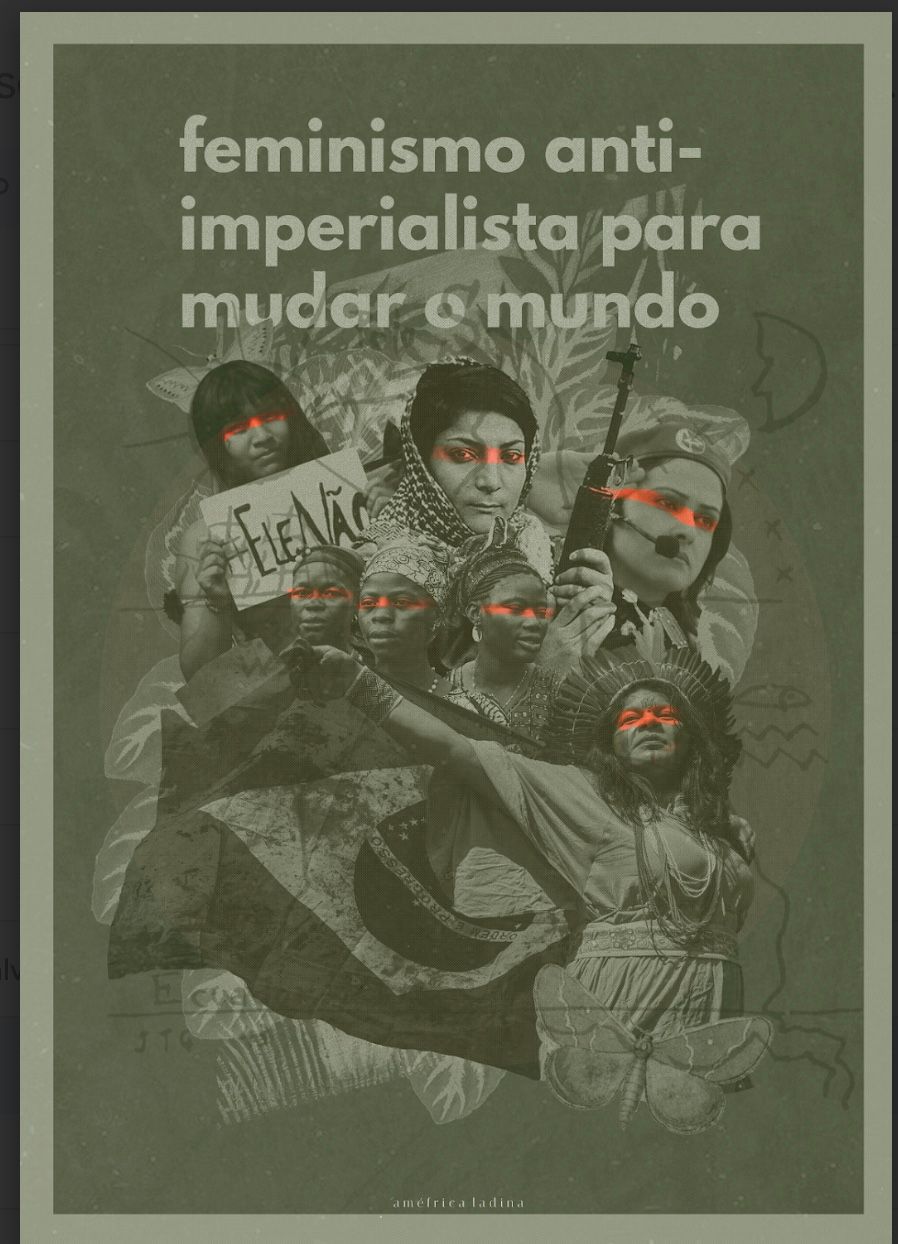
[Scene Five: In Paris, on train to Frankfurt and at preparatory conference for the 1975 International Women’s Year Conference in Mexico City, the author worked with a group of Brazilian women in exile, to publicize and gain support for political prisoners in Brazil and in Viet Nam. The main speaker in this section is “Sonia”, who had been a member of an armed struggle organization attempting to overthrow the dictatorship. She was arrested, tortured and finally freed to live in exile. She and her comrades worked tirelessly to build international pressure to free other political prisoners.]
“At first, they didn’t ask me any questions. They just wanted to humiliate me, to soften me up. During that first time in the torture chamber, they beat me, they spit on me and told me I was a commie whore who would get what I deserved.” Her anger seemed to drain and she began to speak matter-of-factly with a fixed smile.
I had seen that smile on the face of Mý, the Vietnamese woman I met in Hanoi who had been tortured. But she had been surrounded by her sisters in the Women’s Union. I wished I could summon that same support for Sonia.
“Back in the cell, I could hear the screams and curses of other companheiras. I vowed I would die before I would give them one name. The next time, they stripped me again and asked me if I was ready to ‘be nice’. I just stood there with my lips squeezed together and my hands over my private parts. Suddenly, they grabbed me, they strapped me down on the table in a way that forced my spine to arch until I felt my back would break. They pried my legs apart and tied each ankle to a table leg. They inserted a wire into my vagina and attached other wires to my nipples and ears. The pain was excruciating. The shocks lasted until I lost consciousness”…
“When I regained consciousness, I lay in a heap on the floor of the cell. All my muscles were in spasm, like I was an epileptic. I couldn’t lift myself off the floor. I couldn’t tell if the screams I heard were mine or someone else’s… You know the Brazilian dictatorship receives more money and aid from the United States than any other country in Latin America.
(In Frankfurt we secured the passage of the following resolution that was presented a few months later in Mexico City. The Resolution read:)
The International Women’s Congress…. Supports the struggles of women in Asia, Africa and Latin America against sexism, racism and imperialism and defends their right to define and organize their own struggles. We support the demands of the Vietnamese women…. We support the struggles of Latin American women and demand the end to the rape and torture of women imprisoned in Chile and Brazil and other fascist dictatorships…
We were proud of the Resolution—especially because it didn’t pander to many of the European women who, like many white women in the U.S., made a narrow focus on sexism a condition for their support. We had demonstrated to the European women, who thought they had a “higher consciousness,” that women from Latin America, Africa and Asia would lead themselves. And, more basically, women’s solidarity meant that when European women followed the lead of Third World Women, all women would be closer to their liberation.
Back in Paris, the Resolution became part of the presentation I made to various French feminist and Vietnamese groups. Although most UN Conferences had been dominated by the U.S. government, we were about to challenge that” (pp. 214-216).
♦♦♦
[Scene Six: Weeks later, but still in Paris, Sonia and Norma Bengell, an award-winning Brazilian actor, invited the author to their apartment for a “farewell” dinner. There, Sonia elaborated on the political insights she gained from her ordeal.]
“In 1968, there was no way to struggle legally against the dictatorship—either you joined the clandestine, armed struggle or you accepted the status quo. It’s true, 90% of the comrades were men. I told you before, most of the women who joined were like me, university students. While many of us were lovers of the men, we were not housewives, we were independent. Those of us who learned to use arms were treated as equals, as comrades…
(In response to the author’s question, “where did you get the strength to defy the torturers?” Sonia explained:)
“We had a clear analysis of the situation. If I talked, 30, 40, maybe 50 sympathizers would get hurt or killed. If I died, it would be better. I didn’t think my life was more important than 50 others. I was sure we were correct. I had no dudas. I joined the movement because I was sure it was the only way for us to live like humans. Life, to me, was not worth living if I couldn’t fight. People who joined the movement for personal status, they were the ones who talked”…
“Regis (Debray) for us was a god. But in 1969, we looked around and saw a lot of people getting killed. So we began to read him again and criticize him. Damn Debray’s foco theory. Fidel was very smart for Cuba, but Brazil is different. And I’m not even sure Debray understood Fidel. A revolution takes time and has stages. We must be with the people at every stage. I hate when people assume that now that I am older, more mature, I have changed. I am still a revolutionary. Just not a vanguardist. I’m not pessimistic, al contrario, I believe in the people” (pp. 227-229).
♦♦♦
[Scene Seven: In San Francisco in April 1975, the anti-imperialist section of the San Francisco Women’s Union organized a series of actions to support the Vietnamese liberation forces whose victory seemed both threatened and imminent. On April 16, the author received the following telegram from the Viet Nam Women’s Union.]
Please denounce U.S. maneuvers, intensification of U.S. involvement, interference on pretext of evacuation of U.S. personnel from South Viet Nam, together with present forceful evacuation of people and kidnapping children. Remember: since withdrawal of whole U.S. contingent after Paris Agreement, no difficulty was seen with evacuation. Wish best successes. Sisterhood Greetings. Viet Nam Women’s Union.
On April 23, the same day Xuan Loc was liberated, the San Francisco Chronicle reported, “A group calling itself the Women’s Committee for the Implementation of the Paris Peace Agreement staged a sit-in at the 8th floor of the Phelan Building where the U.S. Army has a suite. They demanded implementation of the Paris Peace Agreement, an end to all intervention…” We also tried to expose Ford’s humanitarian babylift charade as kidnapping and an insult to the Vietnamese people. While a sidewalk full of supporters chanted, police led 21 of us women out of the office in handcuffs, cited us for trespassing and released us. We were elated.
Three days later on April 26th, when another telegram from the Viet Nam Women’s Union, dated the 25th, arrived. I ripped the envelope open. “Please mobilize progressive Americans to strongly condemn and immediately stop criminal acts by Ford/Saigon governments using suffocation bombs. CBU-55 in Xuan Loc.”
I glanced at the clock. I had developed the habit of checking the kitchen clock, adding 15 hours to calculate Hanoi time and imagined what my Vietnamese sisters were doing at that hour.
The newspapers and TV news reported “The Fall of Xuan Loc.” Not one mentioned anything about retaliation by Ford or Saigon’s US-supplied airforce dropping suffocation bombs—Ford’s last secret and desperate attempt to save the imperial face of the U.S.A. Although my sisters in Hanoi must have known victory was imminent, they were also bracing for the worst. They had survived Nixon’s genocidal bombing, but at tremendous cost.
“We must do something to expose this latest atrocity. We can’t let Ford get away with some last-ditch attempt to save face,” I argued at an emergency meeting that I had called” (pp. 239-240).
Within three days, April 29, 1975, San Francisco time, the Vietnamese Liberation forces took over the “Presidential Palace” in Saigon, announced victory, and the US Embassy staff fled from the roof of their last diplomatic fortress in an emergency helicopter lift.
Notes
[1] Eisen, Arlene. In the Worldwide Family of Militant Women. Foreword by Nadya Tannous. New York: Iskra Books, 2026.
[2] The Viet Nam Women’s Union leaders and former political prisoners were very moved by receipt of those letters. Copies of the letters and the Vietnamese response were later published in a pamphlet by Peoples Press, From Women in Prison Here to Women in Prison in Viet Nam, We Are Sisters. 1975. Available at https://arleneeisen.org/wp-content/uploads/2025/05/From-Women-To-Women.pdf or Freedom Archives.