Revolutionary Path (Chapter 11)
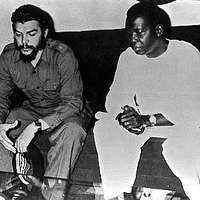
Editorial Note: Reprinted from Revolutionary Path, a collection of Kwame Nkrumah’s speeches, broadcasts, writings, and axioms compiled during the last two years of his life, Chapter 11 explores the path to creating a federation which linked Ghana, Guinea, and Mali in the early stages of what Nkrumah hoped would eventually become a continental Union of African States. For Nkrumah, this Union of African States represented the pinnacle of organized resistance against (neo)colonialism by African peoples and was an important precursor to the current political formation of the Alliance of Sahel States.
Nkrumah traces the union's origins to November 23, 1958, when Ghana and Guinea agreed to exchange resident ministers as a first step toward joint governance, an arrangement he describes as a deliberate "embryo organization which other States could join as and when they wished." He walks through the subsequent negotiations that shaped the project: the 1959 Sanniquellie meeting with Presidents Tubman of Liberia and Sékou Touré of Guinea, which produced a Declaration of Principles for a looser Community of Independent African States; the 1960 talks with Touré and Mali's Modibo Keïta that led to a formal Charter for the Union of African States; and the Casablanca Conference of January 1961, where Ghana, Guinea, and Mali joined Libya, Egypt, Morocco, and the Algerian FLN in the "radical grouping" of states pushing for immediate political federation over the gradualist, economics-first approach favored by other African governments. Nkrumah is candid about the split this produced across the continent, and about his own unrelenting position within it: as he puts it, he does not believe he ever attended a single African conference "where I have not warned against the dangers of delaying unification."
This chapter gives readers a firsthand account of the very federation invoked in this issue's framing of the Alliance of Sahel States. Where Nkrumah insisted that African states must unite politically or "sell themselves out to imperialist and colonialist exploiters for a mess of pottage," the essays gathered here help us consider the significance of a similar federative model finding renewed life in the Sahelian alliance between Mali, Burkina Faso, and Niger six decades later. Readers are invited to reflect on the Declaration of Principles shared at the end of the chapter to consider the historical context and present struggle being waged to form not only the AES but the ongoing struggle to build Pan-Africanism on the continent and our responsibilities to support and constructively criticize said struggle, whether we find ourselves on the continent or in the broader Pan-African geographies. The PDF of the chapter is linked below.