Revolution and Religion
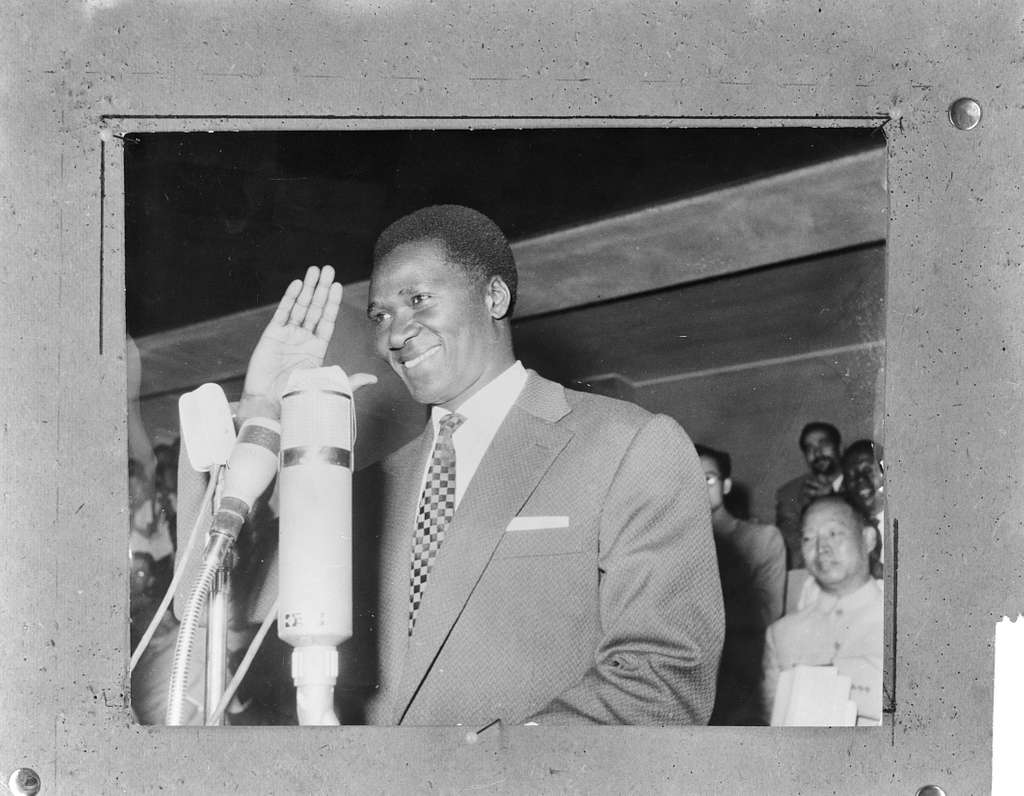
Ahmed Sékou Touré led Guinea to its independence from France in 1958 and served as the country’s first president until his death in 1984. Guinea’s independence is notable for how it transpired. In 1958, France gave its African colonies the option to vote for independence via referendum. But the referendum was structured more as an ultimatum. President Charles de Gaulle proclaimed that any country which voted for immediate independence would be cut completely off from French assistance during the transition. All ties with France would be broken immediately. Given such a stark choice, almost every colony voted to remain with France.
The one exception was Guinea, which voted for independence under Touré’s leadership. A trade unionist who became the head of the Democratic Party of Guinea (PDG) in 1952, Touré and his PDG called upon the people to vote for immediate independence. When the results of the vote were announced, the French immediately withdrew all their personnel from Guinea. They destroyed files and records and even ripped out the office telephone lines. Guineans employed by the French were immediately fired, losing their benefits. The intent was to cripple Guinea and show Africans the real “value” of French colonialism. Guinea survived this experience thanks to the steadfastness of its people, the leadership of Touré, and emergency aid from Ghana (under Prime Minister Kwame Nkrumah) and the Soviet Union. Touré eventually returned Nkrumah’s support not only by offering asylum after a U.S.-backed coup ousted Nkrumah from Ghana in 1966. He also named Nkrumah as the Co-President of Guinea, manifesting the very Pan-Africanist principles for which both leaders staunchly espoused. Under Touré, Guinea provided support for other national liberation struggles on the continent, including in Guinea-Bissau, where the African Party for the Independence of Guinea and Cape Verde (PAIGC) led an armed anti-colonial struggle against their Portuguese colonizer.
This essay, linked in a PDF below, offers Touré’s views on the relationship between revolution and religion.