Resistance Against 250 Year of American Apocrypha
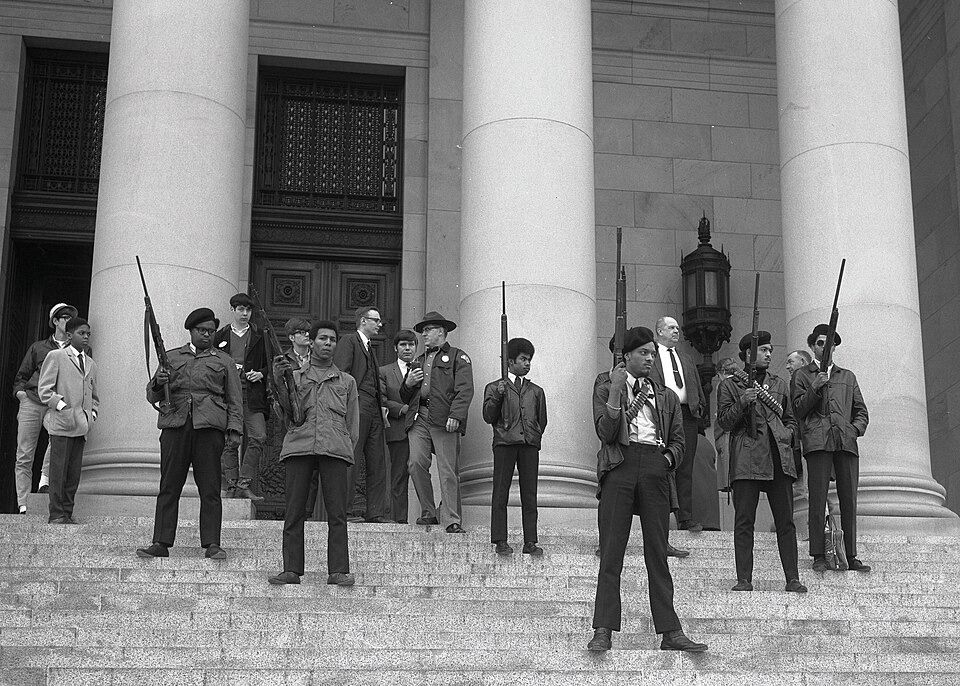
Resistance is a constant force against the genocidal thrum of 250 years of blood and plunder. With every mythology of the supposed repressed ambitions of the former British colony to subdue and conquer new frontiers by the baleful scorn of the mother country in order to crush the colonial pursuits of this burgeoning settler class, there are the tightly woven threads of struggle that bleed in and out through the thick latticework of spiritual capture and colonial subjection. Interlaced in the heavy frays of enslavement and death, is the forceful pull of resistance that turns the tonal drawl of murderous colonial terror into the armour of struggle.
The anti-colonial violence of the oppressed disappears into a fiction that kills in order to make people into things in the image of itself. America, in its mythological image—an image that says nothing of the marred and wasted lives that are reconstituted as surplus value, that in turn, reproduces the thingified-subject that kills themselves in order to give life to capital.[1] It buries the history of revolutionary Black struggle and puts in its place figments of docile savages grateful for being ripped from their land and identity and brought to the corridors of the Atlantic dragged and half-butchered.
A people transformed into a fugitive class of bare flesh, bought and sold in the name of ruthless colonial arbitrage, can only ever reassert their humanity as a people and not a fractal, atomized thing, through the movement of resistance. Freedom, granted by the jagged moral vicissitudes of the imperial overclass - a freedom contingent upon the psychic deformity of a people - is one of capital's many desperate mirages. A freedom that relies on complicity by interpellation is murder by the illusion of a life unbound.[2]
It is revolutionary violence that forces recognition; that forces the truth of the colonized subject as a whole person inseparable from a whole people. Part of the ideological war of imperialist-capitalism is to construct a reality detached from history; to make it appear as if only the now exists. In doing so, capital is able to erase the long dureè of colonized resistance or, by another pretense, revise history to the diktats of capital itself. Illustrated differently, capital/white supremacy revises history to peddle the fiction of the unparalleled morality of the “good whites’’ comprising the Union army, lead by white savior par excellence Abraham Lincoln, who supposedly opposed the slave-loving Confederate rabble-rousers of the south.
This outright white supremacist fairy-tale may convince the handlers of capitalist-imperialism, or those so propagandized they bend their knees in prostration to their own debasement. However, as we all know, or, rather, as we all should know, it was the reverberating force of resistance—from the plantations of Haiti to the plantations of the genocidal-settler project of 1776—that forced the end of official chattel slavery. It is this steeled history of resistance that capital seeks to obliterate and put in its place a colonial metaphysics that butchers history just as it butchers the people that carry the bale of that history.
To be clear, the decisive moment at Galveston was not won by pleas to the humanity of the colonial lie of the “master race”. Indeed, it was not because of the titular moral caprices of the propertied community of the free that chattel slavery was abolished.[3] Instead, it was demanded by the revolutionary understanding of the “Sword and the Neck” in the hands of the centuries long enslaved, subjugated class of Black and Brown people that refused mutilation as life.[4]
Khadija Haynes is a Trinidadian-born Afro-Caribbean woman poet and writer whose life’s work, and ultimate goal, is to help people better understand how their own socioeconomic and psychological problems are directly related to the oppressive nature of this system and not a result of individual shortcomings. As an organizer with the Brooklyn Eviction Defense, Medgar Evers College Coalition, Khadija Haynes’ heart lies in lifting her Brooklyn community and all working-class people out of the repressive conditions capital breeds.
Notes
[1] Building on Ali Kadri's seminal work, Accumulation of Waste, where he gives a pointed analytical account of capital's most pervasive and lucrative industry: militaristic waste turned into surplus value as the result of imperialist aggression bludgeoning the south and internal colony.
[2] Interpellation is a concept developed by the late French Marxist Louis Althusser which explains how subjects reflexively submit within the capitalist order or are hailed as a result of being enmeshed in capitalist ideology.
[3] A concept developed by Italian Marxist philosopher Domenico Losurdo that analyzes the logic of liberalism which sets the laws and parameters granting entry into who can be allowed into the community of the free, historically white propertied men (and later white women), and who will forever be excluded on the basis naturalist eugenics- historically colonized people.
[4] From revolutionary anti-imperialist Palestinian Marxist who was one of the leading figures of the PFLP and prolific author Ghassan Kanafani.