On the Role of Women in the Development of Revolutionary Pan-Africanism
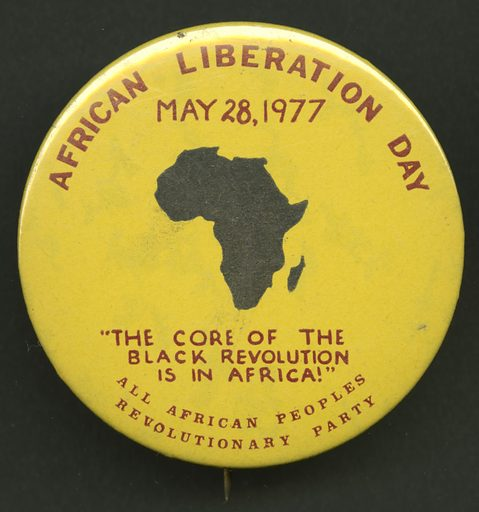
Ideologically, the A-APRP follows the political, philosophical, and material examples of Kwame Nkrumah, Sekou Touré, and Kwame Ture. As such, it is incumbent upon the party to interrogate the contributions of these revolutionaries to the analysis of the relationship between Pan-Africanism and gender, or what has traditionally been referred to as “the woman question.” Revolutionary Pan-Africanism, defined as the “total liberation and political unification of the entire African continent under scientific socialism,”[1] centers the laboring classes as a primary focus to bring about a world without capitalism, imperialism, racism, and gender- and sex-based discrimination and inequality. From its inception, revolutionary Pan-Africanism recognized the centrality of (African) women to our struggle for liberation. Kwame Nkrumah (1968: 91), one of the most prominent theorists and practitioners of revolutionary Pan-Africanism in the twentieth century, declared that “the degree of a country’s revolutionary awareness may be measured by the political maturity of its women.” For some, this quote may be read as political posturing or pandering, but the seriousness of the statement must be measured by the praxis of its declarant.
Nkrumah recognized Marcus Garvey as one of the most influential thinkers and actors in his political development and understanding of Pan-Africanism. One of Garvey’s most influential co-conspirators was his first wife, Amy Ashwood, who was fiercely committed to seeing a revolution among women. In the April 1944 edition of the New York Amsterdam News, Ashwood Garvey demonstrated her feminist and internationalist commitments: “There must be a revolution among women. They must realize their importance in the post-war world. . . . Women of the world must unite”.[2] Perhaps even more significantly, at the 1945 Fifth Pan-African Congress, commonly referred to as the 5th PAC, held in Manchester, England, Ashwood Garvey participated in sessions titled “Oppression in South Africa,” “The East African Picture” (where Jomo Kenyatta spoke), “Ethiopia and the Black Republics,” and “The Problem in the Caribbean.” Speaking at the conference, she noted that “very much has been written and spoken of the Negro, but for some reason very little has been said about the black woman—she has been shunted into the social background to be a child bearer—this has been principally her lot”.[3] Ashwood Garvey urged conference attendees to pay attention to the overlooked contributions of Black women to the struggle, including the ten thousand Black women teaching and organizing in the schools of Jamaica and women joining the trade union movement in the postal service.[4]
Among Marcus Garvey’s other influential disciples was Madame Maymie Leona Turpeau de Mena. Existing versions of de Mena’s biography identify her as an Afro-Nicaraguan immigrant who rose to the upper echelons of the Universal Negro Improvement Association (UNIA). After years of serving as an assistant international organizer and electrifying audiences throughout the hemisphere, she eventually assumed control of all the North American chapters of the UNIA, the editorship of Negro World, and the role of UNIA representative in the United States and globally. One of the many causes she took up during her time in the UNIA was the issue of birth control. For de Mena, birth control was first and foremost a class issue, in that women’s access to family planning was limited by their impoverished material conditions. She argued for the creation of birth control clinics where:
the women of Jamaica will secure the necessary knowledge so easily obtained by those who are able to pay private physicians. Many women will acquire a general knowledge of the care of their bodies; through the work done by the physicians, they would receive much instruction that they would otherwise be deprived of and which would be a great contribution to family welfare. Why not give a fair chance to every child that is born and the right to every woman of voluntary parenthood?[5]
In the cases of both Ashwood Garvey and de Mena, it is clear that concern with the position and predicament of Black/African women was central to their Black internationalist/Pan-African political work. Even before Nkrumah became the first president of independent Ghana, he recognized the critical role women played in the political organizing work necessary to build an independence movement in the Gold Coast. Nkrumah’s assistance in organizing the 1960 Conference of the Women of Africa and African Descent in Accra, Ghana, cannot be overlooked. In his opening remarks at the conference, Nkrumah proclaimed:
Your role in this direction is of great importance. Not only can you carry back this message to the men of your respective countries, but if you are convinced that unity is the right answer, you can also bring your feminine influence to bear in persuading your brothers, husbands, and friends of the importance of African unity as the only salvation for Africa. For my part, I stand resolutely and inexorably by this conviction and will work with unrelenting determination for its attainment. There is a great responsibility resting on the shoulders of all women of Africa and African descent. They must realize that men alone cannot complete the gigantic task we have set ourselves. The time has come when the women of Africa and of African descent must rise up in their millions to join the African crusade for freedom.[6]
In his autobiography, Nkrumah recounts that “much of the success of the Convention People’s Party (CPP) [was due to its] women members. From the very beginning, women have been the chief field organizers. They have traveled through innumerable towns and villages as propaganda secretaries. They have been responsible for the most in bringing about the solidarity and cohesion of the party”.[7] While imprisoned during a critical organizing period for the party, he learned of Ama Nkrumah who, on concluding a fiery speech delivered in Kumasi on behalf of the party, took hold of a blade and slashed her face. She then smeared the blood over her body and challenged the men present to do the same to show that no sacrifice was too great in their united struggle for freedom and independence. Ama’s sacrifice on public display was a show of force, a warning, as well as an admonition to all who witnessed it to step up and fight for the freedom and liberation of the Ghanaian people.
It is important to note how Nkrumah speaks of women’s political contributions to the struggle for Ghanaian independence. He neither takes credit for their actions nor refers to women as auxiliaries to men; instead, he discusses their formidable, integral, and foundational role in organizing Ghanaians, including men, for freedom and independence. We must also take seriously the claim that women were the chief field organizers of the CPP. This organization grew rapidly and wielded significant power, with the women literally serving as the face of the party in recruiting efforts. Their success is at least some indication of the willingness of the general Ghanaian population not only to accept but also to promote women’s political participation and, perhaps to a lesser degree, follow women’s lead.
In her autobiography My Country, Africa: Autobiography of the Black Pasionaria, the Congolese Pan-African activist Andrée Blouin (2025) credits an imaginary conversation with Ahmed Sekou Touré for her “second birth.” She says that “all the courage and determination that I have shown in my political options were catalyzed by this leader”.[8] Chief among the reasons she respected Touré was that he had successfully encouraged the people of Guinea to accept that there could be no real political freedom for them as long as economic power remained with France. She respected Touré’s resolve and turned it into her own. After becoming acquainted with Touré in Guinea, he introduced her to Kwame Nkrumah, whom she credits for asking her to “make a call to Africa’s women to help bring the men together, setting aside the old quarrels between peoples. He wanted to unify the continent.” She further recalls the pride she felt when Touré declared his faith in her to help organize Congolese women, calling her “a patriotic woman of Africa.” She writes, “I was proud that he thought of me, not as a woman of one country, but above all, as African”.[9] Blouin saw that her duty was to the greater struggle for African liberation, but she did not falter in her analysis of the peculiar predicament of African women. At a meeting in the Congo with over six thousand women present (more than four thousand of whom she recruited), she recalls that “at the bottom of most of their grief was the dowry system in which they were sold by their parents to their husbands. The price of their dowries marked them even after that, stigmas for the rest of their lives. They were trapped in a system in which they were mere chattel”.[10] As a result of this meeting, they walked away with the following organizational thrusts:
- To make all women, no matter what age, literate
- To promote an understanding of health and hygiene
- To combat alcoholism
- To work for women’s rights
- To work for the protection of the abandoned woman and child
- To work for the social progress of the African[11]
Blouin embodies the essence of a Pan-African feminist praxis. This praxis is above all concerned with the freedom and liberation of the entire African continent and understands the particularities of women’s experiences under colonialism within that context. It stresses the need for African women to fight alongside, not against, our African male comrades in struggle.
As these examples demonstrate, no matter how much women and their contributions to Pan-Africanism have been obscured or invisibilized, ideas about women’s political contributions have been a present and driving force of Pan-Africanism as articulated by Kwame Nkrumah and his followers. We have a responsibility to disrupt ahistorical renderings of sexism as the Achilles heel of Pan-Africanism. One can reasonably conclude that not just the political participation of women but also gender politics—including the gendered divisions of organizational labor and ideas about manhood and womanhood—are central to the theories and practices of Pan-Africanism that developed in the United States and the broader African diaspora. As we contemplate the struggles for gender equity and Pan-Africanism together, we must consider the need to conceptualize Pan-Africanist women as not only “nurturers” of movements but also visionaries and knowledge producers in their own right. To do this, we must not only learn from the rhetoric of Nkrumah and other well-known Pan-African political leaders but also assess the work and ideas of the women themselves.
Women Organizing Inside the A-APRP
The A-APRP created its first work-study circle in Conakry, Guinea, in 1968. By 1972, the A-APRP was officially established in the United States and then Canada, the Caribbean, England, France, and several countries in Africa. Similar to the Federation of Cuban Women, which “can only be understood as a front within the revolution”—neither “something outside it” nor “a phenomenon parallel to it” —in 1980, the All-African Women’s Revolutionary Union formed inside the A-APRP to address issues of women’s oppression and liberation from inside the Pan-African movement.[12] The A-AWRU was specifically formed to address the oppression of women from a gendered Pan-Africanist perspective. The race/class/gender analysis emphasized the ‘triple burden’ carried by women of African descent.
Bahati Kuumba explains that the 1980s was simultaneously characterized by a “general decline in the race/class liberation sector of the movement […] an upsurge of racialized gender consciousness […] and a broadened internationalist and Pan-African consciousness in the African Diaspora”.[13] The irony, according to Kuumba, was that the A-AWRU’s emergence “heightened old struggles around African women’s roles in the movement thus creating new gender/race/class contradictions”.[14] Kuumba argues that “A-AWRU work often became a fourth burden and a form of oppression as a result of the breakdowns in the implementation of the race/class/gender informed praxis”.[15] Additionally, Kuumba argues, “the very structure of the A-AWRU created tasks for women in the A-APRP over and above their regular A-APRP duties, which included A-AWRU meetings, organizing and attending programs on women, and coordinating the Young Pioneers Institute” (the youth wing of the party).[16] In recalling the formation of the A-AWRU, my mother told me they “had several meetings over the years that led to the founding meeting in Ohio. I didn’t tell my parents about the meeting because I knew they wouldn’t want me to go. I also traveled to New York for another Women’s Union meeting and stayed with one of my father’s relatives. I remember a lot of plenary sessions.” She continued, “I remember I had to write a paper on democratic centralism for which I cut and pasted most of the information,” another of the trial-by-fire moments that created such anxiety in my mother as she continued to work with the A-APRP.
She recalled, “In the party, there was still a lot of the carryover from the sixties and seventies about the position of women inside of the movement.” By which I think she was referring to a general resistance to “feminist rhetoric” because it was seen as a white woman’s issue and often viewed as divisive by male leadership and, to a lesser extent, some women members, when brought up inside Black political organizations. “The fact that women still generally lacked power and political influence in addition to childcare was a big issue. A lot of the women in the party were young with young children, so we felt like we needed to organize over those issues to be properly represented in leadership, to not have the burden of childcare heaped upon women.” According to a survey conducted by Bahati Kuumba in 1990 of A-AWRU members, 53 percent were still attending college, 73 percent had children, 66 percent were working full time, and 63 percent were the primary or sole caregivers for their children.[17]
My mother continued:
In order to keep women from being relegated to roles of secretaries, not just secretaries in the big S sense (in the official structure of the party) but also in the little s sense (being required to run errands and be primarily responsible for the reproductive labor of the organization), women needed to be organized and united in order to be able to address these issues and needed to be united on how we would approach addressing these issues. The All-African Women’s Revolutionary Union was formed in response to internal struggles within the party, as well as to an understanding of what other revolutionary movements were experiencing around the world. Our Palestinian, Eritrean, and South African comrades’ struggles to organize their women and, to some extent, Zimbabwean women’s struggles inside their government informed our own attempts to organize ourselves as women. Just recognizing that women had contributions to make and were, in fact, already making them, made us realize that if we wanted to stay ahead, we would have to organize as well. We needed to recognize our own strengths and weaknesses and have some frank discussions about those things.
Without going into a lot of detail, my mother recalled that the A-AWRU in North Carolina, where she and I were both born and raised, had fewer tensions around issues of gender and childcare than some of the chapters in larger cities. This can be attributed to the very close-knit, largely familial ties of the North Carolina chapter and to the non-party-affiliated provisions for childcare, such as extended family members. I remember spending a great deal of time with my maternal grandparents and extended family during my childhood. Unlike many of the “movement children,” who in John Blake’s (2004) Children of the Movement are depicted as resentful of their parents’ political lives, I do not recall feeling neglected or resentful of my parents’ political work at any point in my life. That is not to say that I always understood everything they were doing, nor that I always wanted to participate in everything. I am fully aware, however, of my parents’ constant attempts to explain and involve us in as much of their work as possible. I am grateful for the balance they attempted to provide, which prevented us from being jaded movement children. It was perhaps the balance of their ethical commitments to family and party work, and their “mutual comradeship,” as theorized by my dear friend and sister in struggle, Dr. Charisse Burden-Stelly, that prevented my siblings and me from harboring the same kinds of resentment some of my peers felt toward their parents’ political work.
The Struggle for Women's Liberation Continues
The A-AWRU’s work remains central to the party’s overall work. The decision to form a union within the organization represents what I call a Pan-African feminist praxis. For revolutionary Pan-Africanists, the question of the nation retains primacy, hence the goal of the total liberation and political unification of Africa under scientific socialism. The mission of the union maintains that primacy while acknowledging that men and women must work together to end all forms of oppression, including sexism, whether external or internal to the broader organization. Because the national question retains primacy, revolutionary Pan-African feminist praxis does not promote organizational development outside or even in parallel to our broader organization. The organization insists that work to rectify all forms of gendered oppression must be taken up as central to the primary goal of national liberation and unity. Unity remains a driving force in revolutionary Pan-African feminist praxis. And because the ultimate goal is a unified Africa under socialism, Pan-African feminism is incommensurate with neoliberalism and capitalism. Whereas many Black feminist organizations made decisions to split from existing Black organizations (with numerous reasonable justifications), the foundational commitment to national liberation for African and African diasporic peoples, and the concomitant obligation to achieve it through socialism, distinguish Pan-African feminist praxis from its Black feminist cousin.
In May 2024, the newly minted MacArthur Fellow Dr. Ruha Benjamin (2024) cautioned the Spelman College class of 2027:
Despite the social media slogan “trust Black women,” you too have to be trustworthy. Black faces in high places are not going to save us. Just look at the Black proponents of cop city in Atlanta’s (mis)leadership class. Black faces in high places are not going to save us. Just look at the Black woman’s hand—ambassador at the UN—voting against a ceasefire in Gaza. That is, our Blackness and our womanness are not in themselves trustworthy if we allow ourselves to be conscripted into positions of power that maintain the oppressive status quo. Our Blackness and our womanness are not in themselves trustworthy if we support the occupation of Black neighborhoods with so-called better-trained police or remain silent about the genocide of oppressed people around the world funded by our tax dollars.[18]
I would add that our Blackness and our womanness in themselves are not trustworthy if we chide, pressure, and guilt one another into voting for a presidential candidate simply because she wears Chucks, pearls, and sports a Howard University alumni flag. As the poet-activist FreeQuency beautifully and forcefully declared at the 2024 Association of Caribbean Women Writers and Scholars Symposium, “I, too, do not want a Black woman president,” especially not of these “united snakes.” A Black feminism that does not consider the genuine harms and ills of racial capitalism is not revolutionary because, again, our Blackness and our womanness in and of themselves are not trustworthy. Precisely because that is true, we must look for specific examples that show us what a truly revolutionary Black feminism, or, in my preferred lexicon, a revolutionary Pan-African feminism, looks like in theory and praxis.
The great Palestinian freedom fighter, Leila Khaled, advises that “revolution must mean life also; every aspect of life”.[19] Ultimately, a Pan-African feminist praxis calls us to be in dialogue with one another across oceans and (neo)colonial boundaries. It requires us to find ways to incorporate the work of struggling for our liberation in our everyday ways of being. And, above all, it requires us to remain attuned to the connected nature of our struggles regardless of the languages we speak, the religions we practice, and the distinct iterations of racial capitalism we live under.
Layla Brown is a member of AISC.
Notes
[1] Onyesonwu Chatoyer, "What is Revolutionary Pan-Africanism?," Hood Communist, November 21, 2019,https://hoodcommunist.org/2019/11/21/clearly-defining-pan-africanism/ .
[2] Ajamu Nangwaya, "Pan-Africanism, Feminism and Finding Missing Pan-Africanist Women," Pambazuka News: Voices for Freedom and Justice, 2016,https://www.pambazuka.org/pan-africanism/pan-africanism-feminism-and-finding-missing-pan-africanist-women , accessed May 28, 2026.
[3] Christian Høgsbjerg, "Remembering the Fifth Pan-African Congress," Leeds African Studies Bulletin, University of Leeds Center for African Studies (LUCAS), April 12, 2016,https://lucas.leeds.ac.uk/article/remembering-the-fifth-pan-african-congress-christian-hogsbjerg/#_ftn36 , accessed May 28, 2026.
[4] Hakim Adi and Marika Sherwood, The 1945 Manchester Pan-African Congress Revisited (London: New Beacon Books, 1995) p. 98.
[5] Courtney Desiree Morris, "Becoming Creole, Becoming Black: Migration, Diasporic Self-Making, and the Many Lives of Madame Maymie Leona Turpeau de Mena," Women, Gender, and Families of Color 4, no. 2 (2016): 171–195. p.188.
[6] Kwame Nkrumah, “Opening of Conference of Women of Africa by the President The Right. Hon. Kwame Nkrumah at the Baden Powell Memorial Hall, Accra, July 18, 1960.” Press release no. 558/60, box 154–15, folder 39, Kwame Nkrumah Papers. Moorland-Spingarn Research Center, Washington D.C.
[7] Kwame Nkrumah, The Autobiography of Kwame Nkrumah (Edinburgh: Thomas Nelson and Sons, 1957) p.109.
[8] Andrée Blouin, My Country, Africa: Autobiography of the Black Pasionaria (1983; repr., New York: Verso, 2025) p.184.
[9] Ibid., 204.
[10] Ibid., 205.
[11] Ibid., 206.
[12] Asela de los Santos and Mary-Alice Waters, Women and Revolution: The Living Example of the Cuban Revolution (New York: Pathfinder Press, 2012) p. 35
[13] M. Bahati Kuumba, Gender and Social Movements (Lanham, MD: AltaMira Press, 2001). P. 132-133.
[14] Ibid., p. 143.
[15] M. Bahati Kuumba, "Engendering the Pan-African Movement: Field Notes from the All-African Women's Revolutionary Union," in Still Lifting, Still Climbing: African American Women's Contemporary Activism, ed. Kimberly Springer (New York: New York University Press, 1999) p. 181.
[16] Ibid., p. 181.
[17] M. Bahati Kuumba, Gender and Social Movements (Lanham, MD: AltaMira Press, 2001). p.180.
[18] Ruha Benjamin, "Spelman College Convocation Address 2024," Atlanta, GA, 2024, video, posted by Outspoken Agency, YouTube,https://www.youtube.com/watch?v=j_12_E3LAeg , accessed May 29, 2026.
[19] Katharine Viner, "'I Made the Ring from a Bullet and the Pin of a Hand Grenade': Profile of Palestinian Fighter Leila Khaled," The Guardian, January 26, 2001,https://www.theguardian.com/world/2001/jan/26/israel , accessed May 29, 2026.