Introduction: The Tricontinental, 60 Years On
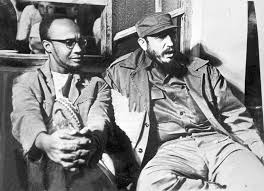
For the Guyanese guerrilla scholar Walter Rodney, Amílcar Cabral—the Cape Verdean freedom fighter and leader of the African Party for the Liberation of Guinea and Cape Verde (PAIGC)—was the archetypal revolutionary intellectual and a paramount theoretician. “In Amílcar Cabral,” he wrote , “Africa had a giant who bridged the gap between theory and practice, and hence represented the embodiment of revolutionary praxis.” He oversaw the people’s liberation struggle with “great distinction” because of the “soundness of his scientific worldview” and its application to the specific historical and material realities of Guinea-Bissau and Cape Verde. Rodney’s assessment reflected the high esteem in which Cabral was held among anti-imperialists. It was for this reason that he delivered the opening speech at the Tricontinental Conference of 1966 on January 6, 1966.
“The Weapon of Theory,” perhaps the most well-known contribution to the conference, spoke to the importance of ideological clarity and development to national liberation movements. This included a correct analysis of the role of class struggle, a proper assessment of the mode of production and level of productive forces in a given society, and a deep understanding of the social, political, economic, and cultural effects of imperialism and its colonial and neocolonial articulations. Cabral sought to infuse the conference with the objective of not only struggling against imperialism, but in struggling for national liberation, which meant “free[ing] the process of development of the national productive forces.” It was also in this speech the Cabral introduced the ethical dimensions of the political struggle for national liberation in his erudite analysis of the colonized petit-bourgeoisie and the imperative of class suicide. He contended:
In order not to betray these [revolutionary] objectives the petty bourgeoisie has only one choice: to strengthen its revolutionary consciousness, to reject the temptations of becoming more bourgeois and the natural concerns of its class mentality, to identify itself with the working classes and not to oppose the normal development of the process of revolution. This means that in order to truly fulfill the role in the national liberation struggle, the revolutionary petty bourgeoisie must be capable of committing suicide as a class in order to be reborn as revolutionary workers, completely identified with the deepest aspirations of the people to which they belong. This alternative—to betray the revolution or to commit suicide as a class—constitutes the dilemma of the petty bourgeoisie in the general framework of the national liberation struggle. The positive solution in favor of the revolution depends on what Fidel Castro recently correctly called the development of revolutionary consciousness.
Cabral wrapped up his speech admonishing that the best embodiment of anti-imperialism was not to “shout hurrahs” and merely proclaim solidarity, but rather to go back to their respective countries, develop the struggle, and “remain faithful to the principles and objectives of national liberation.” Thus was the tone set for the historic Tricontinental Conference—a gathering that offers tremendous insight into our own crisis of imperialism in which genocide, unrelenting war, a return to direct colonial domination, and intense political repression require a recommitment to struggles for national liberation, self-determination, freeing the processes of development, and material solidarity that Cabral called for sixty years ago.
The Solidarity Conference of the Peoples of Africa, Asia and Latin America, commonly known as the Tricontinental Conference, that convened in Havana, Cuba, starting on January 3, 1966, characterized the fight against imperialism in the 1960s. This fight was rooted in the efforts to forge solidarity between the Movement of Afro-Asian Solidarity and the peoples of Latin America. Starting in 1963 at the Third Conference of Solidarity of the Afro-Asian Peoples held in Moshi, Tanzania, there was full support for the convening of a Tricontinental Conference by all the anti-imperialist movements who were then battling colonialism and neo-colonialism. They united around the idea of “complete national independence and for the peace and progress of the peoples of Africa, Asia and Latin America.” A preparatory committee was formed in 1964 under the leadership of Mehdi Ben Barka (whose words are included in this special issue), and included representatives from Algeria, Guinea, Morocco, the United Arab Republic, the United Republic of Tanzania, South Africa, the People’s Republic of China, India, Indonesia, Japan, the Union of Soviet Socialist Republics, Viet Nam, Mexico, Venezuela, Guatemala, Chile, Uruguay, and Cuba.
It was unanimously agreed that the conference would be held in Havana because the decisive victory of the Cuban Revolution against “Yankee imperialism” was a powerful symbol for all freedom-loving people. This gathering was the first of its kind to include “anti-imperialist, anti-colonialist militant organizations of the three continents.” It aimed to eradicate all forms of colonialism; to stymie imperialist aggression on all three continents; to propel the liberation movements; to strengthen the unity and solidarity of Africa, Asia, and Latin America; to promote economic, social, and cultural development; and to cultivate and consolidate permanent connections between nations struggling for independence. The concrete measures following from the conference would offer a “severe blow to the backbone of imperialism.”
More than 500 representatives from national liberation movements, guerrilla organizations, and independent governments of some 82 countries gathered to forge a radical internationalist, anti-imperialist, anticolonial, and antiracist challenge to both United States hegemony and the Soviet Union’s policy of peaceful coexistence. Unlike the latter, Castro emphasized the importance of armed struggle and hemispheric revolution. The conference also aimed to align anti-imperialism with a wider challenge to capitalism and neo-colonialism, to escalate and support liberation struggles in areas still subjected to colonial domination, and to work to secure and protect independent nations that staunchly opposed Western coloniality. Out of this conference came the Organization of Solidarity with the People of Asia, Africa and Latin America and the founding of Tricontinental magazine.
Attendees passed resolutions condemning U.S. imperialism in Viet Nam, Cuba, and the Dominican Republic, and also brought world attention to crises in former Rhodesia and the Congo, the continued military build-up and political repression in South Africa, and the collaboration between NATO and Portugal against revolutionaries in Guinea-Bissau, Angola, Mozambique, and Cape Verde, who were fighting for independence. Moreover, the conference stressed the importance of people’s action and workers to the success and political development of these liberation struggles. This was not least because, as Michael Manley noted, the cumulative history of exploitation rendered the ruling classes fundamentally incapable of recognizing the humanity of the worker.
Three general themes that pervaded the conference elucidate the Tricontinental as praxis. First, attendees supported revolutionary nationalism as an essential phase of the struggle against colonialism, underdevelopment, capitalist imposition, and political disenfranchisement. However, while nationalist ideology was recognized as an essential tool for the formation of a militant liberation front, it was stressed that the “nationalist phase” was neither a final solution, nor a sufficient means of combatting political, economic, or technical exploitation.
The latter could best be resolved by the second theme—that is through continental, and indeed tricontinental, coordination, solidarity, and mutual comradeship. It was only through such unity that imperialism and foreign imposition could be eradicated; that neocolonialism could be revealed, combatted, and ultimately eliminated; and that modes of development endogenous to and beneficial for the formerly colonized could be theorized and implemented.
Third, those in attendance overwhelmingly agreed that socialism and tricontinental solidarity were inextricable. Here, to paraphrase Kwame Nkrumah, socialism meant common ownership of the means of production, distribution, and exchange; production for use instead of profit; state planning; the cultivation of scientific and modern methods of industry and agriculture; and political power and governance controlled by the people generally, and workers particularly.
In the final analysis, it was only through actual existing socialism—and not mere socialist rhetoric—that a new social and economic synthesis could be developed. This did not mean that all countries would follow the same path given that historical, material, and social conditions and realities differed. However, each path should be based on scientific method and explanation. Thus, the universal and common goals of socialism were to ensure the general welfare of the people and to free all people from colonial and imperial imposition.
Tricontinentalism represented a political commitment, an ethical practice, and a philosophy of struggle. It represented the disruption and deterritorialization of the geopolitics and cartography of the “three worlds” through a centering of anti-imperialism and, to paraphrase Che Guevara, the exploited and the dispossessed of the world. Though there were no North Americans, including Black Americans, present at the conference, it nonetheless had deep relevance for their internally colonized reality. According to the August-September 1966 issue of the Tricontinental Bulletin: “Although geographically Afro-Americans do not form part of Latin America, Africa, or Asia, the special circumstances of the oppression which they suffer, to which they are subjected, and the struggle they are waging, merits special consideration and demands that the Tricontinental organization create the necessary mechanisms so that these brothers in the struggle will, in the future, be able to participate in the great battle being fought by the peoples of the three continents.”[1]
This special issue celebrates the sixty-year anniversary of the Tricontinental Conference by highlighting its historical significance while also considering its internationalist spirit for the present moment. Although the international context has shifted, this issue nonetheless illustrates the lessons we may take from the internationalist liberation fighters that convened in Cuba in 1966. But the Tricontinental itself was also a product of the people, movements, struggles, and revolutions in the Third World that either successfully produced national liberation or maintained a protracted resistance against imperialism. This issue therefore takes an expansive approach to the Tricontinental by publishing works that align both with its contemporaneous impact and its historical legacy.
The issue includes a reprint of the “General Declaration” of the Tricontinental, which enumerates the resolutions emanating from the January 1966 conference. This issue also teases a forthcoming special issue in the academic journal Middle East Critique. We have included a preview of that issue, titled “Resistance, Struggle, and Anti-Imperialism in the Global South,” by Alex Aviña. We preview forthcoming articles by Alejandro Pedregal and Alberto García Molinero and by Navid Farnia, both of which will appear in the Middle East Critique special issue. Pedregal and Molinero’s article, “Cuba, Palestine, and the Internationalist Solidarity against Imperialist Counterinsurgency,” highlights how the Organization of Solidarity of the Peoples of Africa, Asia, and Latin America (OSPAAL) centered Palestine in the Tricontinental’s internationalist ideology and material solidarity.
William Balan-Gaubert’s article, “Empire by Proxy: Paramilitarism, Authoritarianism, and U.S. Cold War Power in Haiti and Iran,” examines how the United States upheld authoritarian governments in Haiti and Iran during this same period. These governments, with their U.S.-backed secret police forces, exemplified transnational counterrevolutionary forces that could only be countered through anti-imperialist internationalism. We have also reprinted an essay by the Korean revolutionary leader Kim Il Sung. Titled “The Great Anti-Imperialist Revolutionary Cause of Asian, African, and Latin American Peoples is Invincible,” Kim’s essay observes the first anniversary of Che Guevara’s death. Mao Zedong’s statement of solidarity with the Black people in the U.S., though predating the Tricontinental, likewise reflects this spirit of international solidarity and is reprinted as part of this issue. The excerpt from Mehdi Ben Barka’s “What Are Our Tasks,” published in The Political Thought of Ben Barka outlines the imperatives of anti-imperialists inside and outside of Morocco in their support for revolutionary movements and the development of a global political alternative to (neo-)colonialism.
This issue also considers the ramifications of solidarity beyond the 1960s and extending to the present moment. The article “Battlefield Solidarity: Cuito Cuanavale, the 12-Day War, and Imperialism’s Shattered Invincibility” examines the famed Battle of Cuito Cuanavale, in which Angolan and Cuban fighters defeated the forces of apartheid South Africa, and the 12-Day War. As part of the issue, we have also translated two short essays by the Cuban diplomat José Ramón Cabañas. The first unpacks the insidious arguments made by U.S. officials to rationalize the criminal six-decade blockade against Cuba. Cabañas’ second essay commemorates Fidel Castro’s immeasurable contributions to Cuban foreign relations. Finally, this issue includes a report on how U.S. sanctions impact Cuba. The report is based on a panel organized by the International People’s Tribunal on U.S. Imperialism, which conducted a hearing on Cuba and gathered testimonies from witnesses who described how sanctions affect Cuba.
As U.S. officials lodge daily threats against the Cuban state and people, and as Washington doubles down on suffocating the island, this special issue is a timely effort to reinvigorate the central tenets that inspired the Tricontinental Conference. The brutal U.S. attack against Venezuela, the kidnapping of President Nicolás Maduro and First Combatant Cilia Flores, and Washington’s renewed emphasis on Monroe Doctrine politics remind us of the importance of a materially grounded international solidarity. The ongoing resistance against imperialism across the globe—whether it is Cuba, Venezuela, Nicaragua, and Haiti in the Caribbean; Palestine, Iran, and Yemen in West Asia; or Mali, Niger, and Burkina Faso in West Africa—reflect how national liberation and internationalism are indeed mutually sustaining.
U.S. imperialism is at its most potent when it can fracture bonds of solidarity between anti-imperialist states. Imperialist wars across Africa, Asia, and Latin America not only respond to efforts toward self-determination by anti-imperialist states, but they also aim to eradicate South-South collaborations. In the face of naked imperialist aggression, Global South countries are redoubling their emphasis on international solidarity. This issue pays homage to the historical bonds of solidarity between African, Asian, and Latin American nations that continue to animate our present moment.
Charisse Burden-Stelly and Navid Farnia are members of AISC. ____________________________________________________________________________________
[1] “Resolution on the Rights of Afro-Americans in the United States,” Tricontinental Bulletin, 1966, 79-80.