Introduction: Pan-Africanism and the Alliance of the Sahel States
On November 23, 1958, two towering figures of Pan-Africanism and liberation struggles—Kwame Nkrumah of Ghana and Ahmed Sékou Touré of Guinea—met in Accra where they formed the Union of African States (UAS), the continent’s first political federation. Initially uniting Ghana and Guinea, the UAS expanded in 1961 to include Mali, then led by the revolutionary Marxist Modibo Keïta. Though the federation dissolved just two years later, in 1963, its brief existence left an indelible mark as one of the earliest embodiments of Pan-Africanism on the continent.
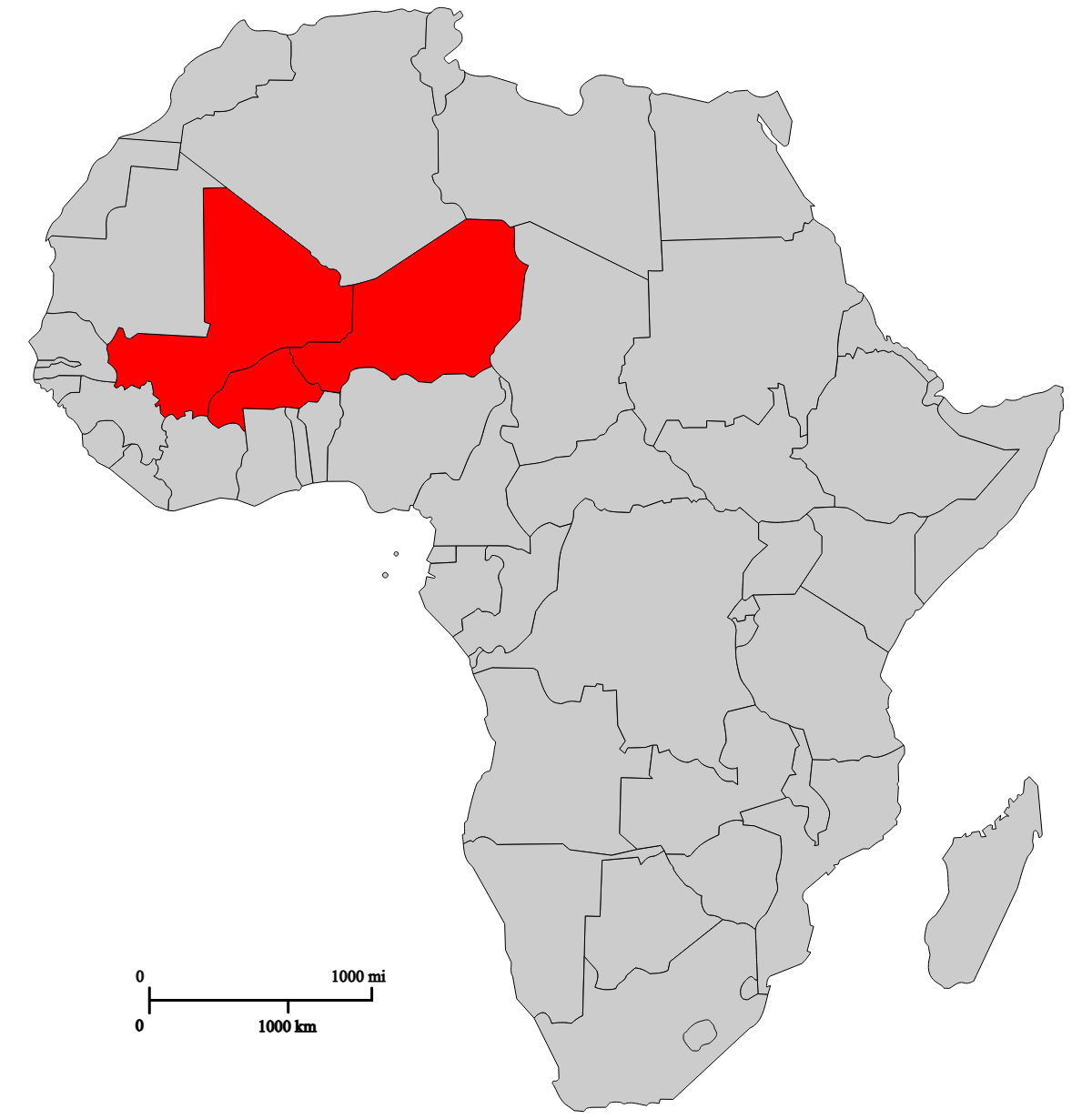
Six and a half decades later, in 2023, a new federation emerged in West Africa—the Alliance of Sahel States (AES), forged by the military-led governments of Mali, Burkina Faso, and Niger. The AES was conceived as both a security pact and a political union, explicitly rejecting external neocolonial frameworks and asserting a sovereign, self-determined trajectory. What makes the AES particularly significant is its political federation—itself a precondition for Pan-African unity, as advocated by Kwame Nkrumah. In this sense, the AES represents the rebirth of the UAS that once united Guinea, Ghana, and Mali. In his contribution to this issue, Navid Farnia describes AES as an exemplary form of Pan-Africanism today.
Both the UAS and AES were established amid turbulent global political shifts, as Western powers began losing their hegemony across the world and a new world order took shape. Today, as the West attempts to reverse its imperial decline by relaunching assaults of the most vicious and primordial form, anti-imperialist alliances and liberation movements have regained their fervor, once again ushering in a transformative global realignment.
In this special issue, we revisit foundational essays and speeches from Pan-Africanist revolutionaries from the past and present. The issue also brings together original contributions that address critical questions regarding Pan-Africanism and the Alliance of Sahel States. We hope these contributions will bring greater clarity to the events unfolding in the Sahel, the resurgence of anti-imperialist movements, and the ongoing political work of Pan-Africanism.
In her essay titled “On the Role of Women in the Development of Revolutionary Pan-Africanism,” Layla Brown reflects on the centrality of African women to Pan-African political work and the struggles for liberation, a recognition affirmed by Kwame Nkrumah and other foundational figures of Pan-Africanism. She recounts the political contributions of revolutionary African women who served as field organizers for political parties, trade unionists, activists. Brown’s essay renders the work of women who were the driving force of Pan-Africanism, including Amy Ashwood Garvey, Maymie Leona Turpeau de Mena, Ama Nkrumah, Andrée Blouin, and the political organizations of African women.
“Resistance Against 250 Year of American Apocrypha” is a poetic rumination by Khadija Haynes in which she contemplates how why amid 250 years of genocidal thrum, Africans in the settler colony of the United States should reclaim the buried history of revolutionary Black struggle. Capital, she argues, is able to erase the long durée of colonized resistance by constructing a reality detached from the history of imperialist-capitalism. Adding to this reflection on the history of Black struggle and to mark African Liberation Day, AISC member Layla Brown spoke with Bob Brown in “FORWARD TO the 69th AFRICAN LIBERATION DAY!”. Bob Brown is a lifelong fighter in the struggle for Pan-Africanism and African liberation, about the history of African Liberation Day and the meaning of Pan-Africanist identity.
Imperialism relies on the cooperation of allied states to sustain its hegemonic influence in the region. On the African continent, Kenya stands as a bastion of Western imperialism. In “Kenya, Imperialism, and the Myth of Kenyatta’s Pan-Africanism” LatSouk Sène is in conversation with Prof. Wandia Njoya—a Kenyan scholar, social and political commentator firmly rooted in anti-imperialist thought—as the two discuss the intense ideological struggles waged by the British in Kenya from the Mau Mau uprising to the present. Njoya contends that this ideological battle ultimately defeated radical anti-imperialism and African nationalist consciousness and paved the way for Kenya to become an outpost of imperialism on the continent. The two also also address the enduring myth of Kenyatta's Pan-Africanism, as well as the popular support among Kenyan masses for the sovereignty project of the Alliance of Sahel States.
In her essay, Charisse Burden-Stelly offers a review of Zanzibari Marxist and Pan-Africanist Abdulrahman Babu's book African Socialism or Socialist Africa, in which he provides a dialectical and historical materialist analysis of the dynamics propelling neocolonialism in Africa. She argues that Babu's precise and polemical analysis of scientific socialism as necessary to resolving internal contradictions remains highly relevant to the current moment. Drawing from Babu's framework to understand imperialism and liberation projects across the African continent, Burden-Stelly focuses on three structural relationships articulated in his book: socialism and self-determination, the colonized petty bourgeoisie and imperialism, and foreign aid and dependence.
As imperialism relaunches its project, it simultaneously wages an ideological and psychological war to intensify internal and regional contradictions, thereby undermining any political unification toward liberation. In his article “Pan-Africanism with Libyan Characteristics: South-South Development vs Imperialism & Rational Fascism,” Essam Abdelrasul Bubaker Elkorghli argues that the de-Africanization of Libya was by no means the outcome of a so-called "civil war" or "ancient tribal hatreds"—as portrayed in the West—but rather stemmed from a prolonged imperialist assault on the radical developmental project that Libya's Pan-Africanism entailed. Elkorghli contends that the empire's "rational fascism" seeks to erase both the shared colonial history that binds Libya to the rest of the African continent and the common Pan-African struggle for emancipation.
In his essay “From Sankarism to the AES,” Navid Farnia takes us on a tour of Thomas Sankara's revolutionary Pan-Africanism and anti-imperialism—the very principles for which he was assassinated—and argues that these ideals undergird the formation of the AES today. Like Sankara, the AES emerged at a time when socialist and revolutionary forces were in retreat. Farnia explains that "with the current global landscape increasingly becoming favorable to revolutionary, socialist, and Pan-Africanist forces, it is likely that Thomas Sankara's vision will continue to spread.”
As Corinna Mullin argues in “ Security Dependency, Delinking and the Quest for Sovereignty: Tunisia and the Anti-Imperialist Sahel Alternative” that the AES security umbrella poses a fundamental challenge to the structure of dependency that has long entrapped the security apparatuses of states across the African continent and the Global South. Drawing on Samir Amin's theory of "delinking," she contends that the AES constitutes the material realization of the long-standing Pan-African vision of sovereignty through a common defense system with an African high command—precisely as Kwame Nkrumah argued in 1963.
In her essay “AES and Mali: Regional Dynamics and the Internal Roots of External Assault” LatSouk Sène argues that while Burkina Faso is perhaps the best known of the three member states, Mali's trajectory may be the most consequential for the AES project of sovereignty. Her essay addresses broad questions concerning the historical and contemporary dynamics shaping the AES countries' relations with their regional neighbors—with particular emphasis on Mali—including the internal factors that have rendered it a primary target of external aggression. In addressing these questions, we gain a better understanding of both the regional context and the internal dynamics shaping the AES's political cohesion and its future viability. Finally, in another interview, LatSouk speaks with Ibrahim Hamadou (IH), Secretary-General of the Free Trade Union of Niger Workers, about his organization, its anti-imperialist ideology, its backing of the current military government in Niger, and the importance of anti-imperialist internationalism.
Together the pieces that comprise this issue elucidate the necessity for Pan-Africanism as a project of liberation against the renewed capitalist-imperialist assaults that continue to deny African peoples across the globe their rights to self-determination and sovereignty. The contributions also bring up long-standing debates on the relation between socialism and Pan-Africanism, the centrality of (African) women’s contributions to the revolution, and the enduring ideological warfare waged by Western powers. Finally, it adds clarity to AES project of sovereignty and Pan-Africanism at a time when a new world order is taking shape.
Layla Brown and LatSouk Sène are members of AISC.