Interview with Professor Setareh Sadeqi
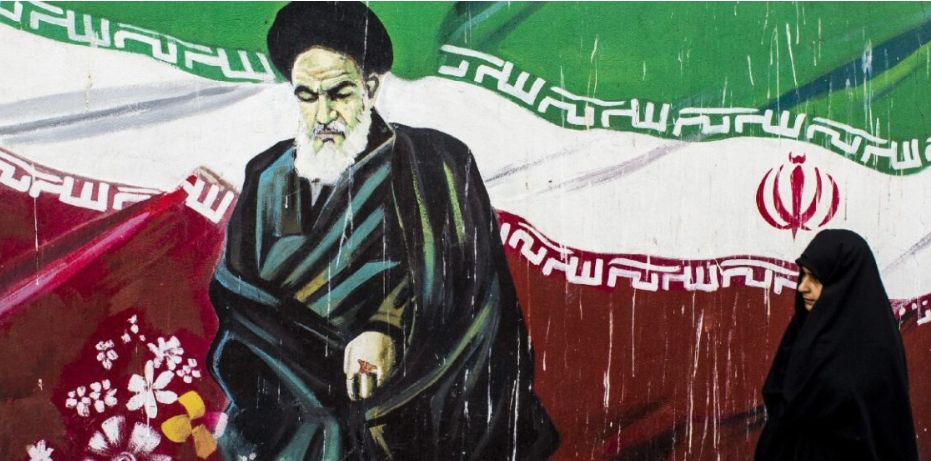
Q: Please explain your latest views about the status of Iran’s war of resistance against US imperialist-zionist aggression. Please give examples of the impact of Iranian women in that resistance.
Professor Setareh Sadeqi: We in Iran see our resistance against U.S. imperial-Zionist aggression as part of the entire resistance against imperialist power and the Zionist settler-colonial project, not as an isolated battle. We feel connected through our struggle against Zionism and imperialism as part of the same struggle that the people of the region and, to a larger extent, the people of the world are part of.
The distinction is that we take pride in being the only state that is rigorously and effectively fighting against U.S. imperialism and Zionist aggression with very calculated and well-measured moves and rational intellectual backing. We are seeing the results of our resistance against this existential war imposed on us. We know the nature of our enemy and the history of their barbarism and savagery against independent nations. Even though women are more vulnerable and more susceptible to these aggressions, there is not a major difference in how men and women are affected by war crimes.
Women’s role in the resistance has been very central. We are seeing women in larger numbers than men in everyday massive rallies in support of the country across Iran. We are also seeing mothers, sisters, and wives of martyrs being articulate, eloquent, and steadfast—enduring the pain of losing their loved ones while turning their grief and anger into pragmatic patriotism.
We have seen women in martyred families delivering fiery speeches that inspire others to become part of the popular support for the armed forces and the sovereignty of the country. Many of these women have previously been marginalized by Western media, and their stories never told. This is the first time we are seeing coverage of these revolutionary women’s stories, even though it is still far from totally representative.
Q: As a scholar of Iran–U.S. relations, how do you understand the differences between U.S. and Iranian political culture? By “political culture,” we mean not only formal legal and constitutional frameworks, but also the broader historical, social, and ideological formations that shape political life—such as the principles and commitments of the Iranian Revolution (including its emphasis on opposing oppression at home and internationally), the role of faith in revolutionary politics and resistance, and differing conceptions of political participation.
Professor Sadeqi: The main difference between U.S. and Iranian political culture is rooted in fundamentally distinct historical experiences, spiritual commitments, and conceptions of political legitimacy. The United States is founded as a settler colonial state, built on the violation of Indigenous rights and the exploitation of enslaved labor. Although the American Revolution and liberal values are emphasized in political discourse, U.S. political practice reflects a frontier logic and a perception of itself as possessing global authority. This is evident not only in its international conduct but even in its institutional language—such as the Department of State—which signals a self-assumed authority over other nations and their resources, particularly when they resist U.S. exceptionalism.
By contrast, Iran draws on a long civilizational history and a collective memory centered on sovereignty and resistance. It emphasizes that, in its modern history, it has not initiated war and, since the 1979 Revolution, has maintained territorial integrity despite sustained external pressure, including sanctions, war, and assassination campaigns. The Iranian constitutional framework explicitly commits to opposing oppression domestically and internationally and to supporting oppressed peoples regardless of nationality or religion.
These commitments are not only political but rooted in deeper cultural and theological traditions. Resistance to domination predates the Islamic Republic and is embedded in historical experience, including periods of foreign-backed authoritarian rule. In Shia theology, the principle of refusing humiliation—preferring death over submission to coercion—provides a moral framework that informs political action, including the valorization of martyrdom and collective endurance.
Finally, political participation reflects these differences. In the U.S., it is primarily procedural and institutional. In Iran, it encompasses both electoral participation and public expressions of support for sovereignty and resistance, even alongside internal critique. Legitimacy is thus derived not only from formal mechanisms but from public support and adherence to moral and spiritual principles.
Q: In recent weeks, we have witnessed daily demonstrations involving millions of people. What are these protesters demanding, and how do their demands reflect and shape the government’s decision-making?
Professor Sadeqi: These rallies emerged as a way of supporting the government and the establishment’s decision to move forward against U.S. and Zionist aggression. Among their demands is revenge not only for the leader of the revolution, commanders, officials, innocent people, and school children, but also the expression of public support for the decision to fight back and punish the perpetrators of these aggressions. In other words, to make it clear to our adversaries that any attack on us will be costly for them.
This sentiment is shaped by the perception that Iran has engaged in talks despite being betrayed during negotiations and even attacked in the course of them. One of the common slogans—“no to surrender, no to negotiations, we’ll fight America”—captures both state decision-making and a form of popular pressure reinforcing it.
In this context, it has effectively become political career suicide for any Iranian politician to trust the United States, engage in talks for just any deal, or offer concessions, rather than negotiate from a position of strength.
Q: According to U.S. imperial propaganda, the Iranian Revolution is opposed to any struggle against gendered oppression. How has the revolutionary project understood women’s emancipation or liberation?
Professor Sadeqi: The role of women in the Iranian Revolution must be understood within a broader anti-imperialist struggle against the U.S.-installed Pahlavi monarchy. Women were not peripheral actors; they participated in mass mobilizations, political organizing, and revolutionary activism, framing their struggle as one for national sovereignty as well as social transformation.
Empirically, the condition of women prior to 1979 was marked by deep structural inequality, particularly outside urban elites. Literacy data illustrates this clearly: in 1966, only about 17% of women were literate. By 1978, on the eve of the Revolution, over 60% of women were illiterate. These figures highlight that the Pahlavi dictatorship’s Western-oriented modernization disproportionately benefited a narrow social stratum, leaving the majority of women—especially rural and working-class—excluded.
Following the Revolution, literacy campaigns and mass education initiatives dramatically altered this landscape. Female literacy rose to roughly 85–87% by the 2010s, and youth literacy approached near universality. At the same time, women came to constitute over half of university entrants, reflecting a structural expansion of access to higher education. These gains were not incidental but tied to state-led efforts such as the Literacy Movement Organization, as well as nationwide campaigns promoting the education and social participation of women.
Women’s participation extended beyond education into wartime and state-building processes. During the Iran–Iraq War, women contributed both on the front lines and in logistical, medical, and social support roles, resisting the invasion led by Saddam’s regime, which was backed by the U.S. and major global powers. Their involvement reinforced a political identity rooted in resistance rather than passive citizenship.
Ideologically, Imam Ruhollah Khomeini articulated a model in which women were central to social and moral development, emphasizing education and participation rather than confinement to private life. Importantly, revolutionary discourse did not frame women primarily through gender alone, but as political subjects engaged in a shared anti-imperialist project. In this framework, emancipation was not defined by conformity to Western capitalist norms—which commodify women—but by access to education, political participation, and cultural self-determination.
Thus, while challenges remain, the post-revolutionary trajectory of Iranian women reflects a transformation in material conditions and social participation. The Revolution reconfigured women’s roles from largely marginalized subjects under a Western-aligned monarchy to active participants in a project of national independence, social development, and resistance to external domination.
Q: How have Iranian women historically shaped and sustained forms of resistance—from armed struggle to social reproduction and political organizing—and how does an anti-imperialist feminist lens help us better understand their roles beyond colonial and imperialist erasure?
Professor Sadeqi: Iranian women have historically played a central role in shaping and sustaining resistance across multiple domains, including armed struggle, political mobilization, and social reproduction. From the Iranian Revolution to the Iran–Iraq War and contemporary forms of political engagement, women have participated not only as supporters but as active agents in anti-imperialist struggle. Their contributions have ranged from direct involvement in resistance efforts to sustaining communities, maintaining social cohesion, and facilitating the material and emotional conditions necessary for prolonged resistance.
An anti-imperialist feminist lens helps to situate these roles outside dominant Western epistemologies that often marginalize or misrepresent non-Western women’s agency. In the Iranian context, many women have articulated forms of resistance rooted in indigenous cultural and religious frameworks rather than in liberal Western feminist paradigms. This challenges the assumption that emancipation must be defined according to Eurocentric norms of individualism, secularism, or consumer freedom. Instead, Iranian women’s political subjectivity has often been expressed through collective struggle, national sovereignty, and cultural self-determination.
This perspective also highlights how imperial and colonial narratives selectively render certain Iranian women visible while erasing others. Women who conform to Westernized aesthetics or lifestyles are frequently elevated as symbols of “authentic” liberation, whereas those who embrace Islamic or indigenous forms of identity—such as women who wear the chador or hijab and participate in public, political, or professional life—are often excluded from dominant representations. This selective visibility reproduces an orientalist logic, in which the West defines the terms through which non-Western societies are understood and judged.
Moreover, even within some leftist and ostensibly anti-imperialist spaces, these biases persist. Cultural imperialism operates not only through overt political domination but also through the imposition of normative frameworks that determine whose voices are recognized. As a result, Iranian women who engage in resistance while maintaining religious or culturally specific identities are frequently marginalized in global discourse, despite their significant presence in political institutions, civil society, and grassroots organizing. Contemporary examples further illustrate this dynamic. Yet international representations often frame their legitimacy through proximity to Western norms, implicitly suggesting that Iranian women’s lives and rights are more “valuable” when they resemble those of women in cities like Paris or New York. Such representations obscure the long-standing agency of Iranian women, who have, for centuries, negotiated power, pursued education, and contributed to societal development within their own historical and cultural contexts.
In this sense, an anti-imperialist feminist framework reveals that Iranian women’s emancipation cannot be reduced to a binary of oppression versus liberation as defined by the West. Rather, it emerges through their active participation in political struggle, their role in sustaining social life, and their capacity to define freedom on their own terms. Recognizing this is essential to resisting both imperial erasure and reductive narratives that deny the plurality of women’s experiences in Iran.
Setareh Sadeqi is a professor of World Studies at the University of Teheran.