In Their Own Words: Selected Quotes on Gender Issues by Political Leaders from the Global South
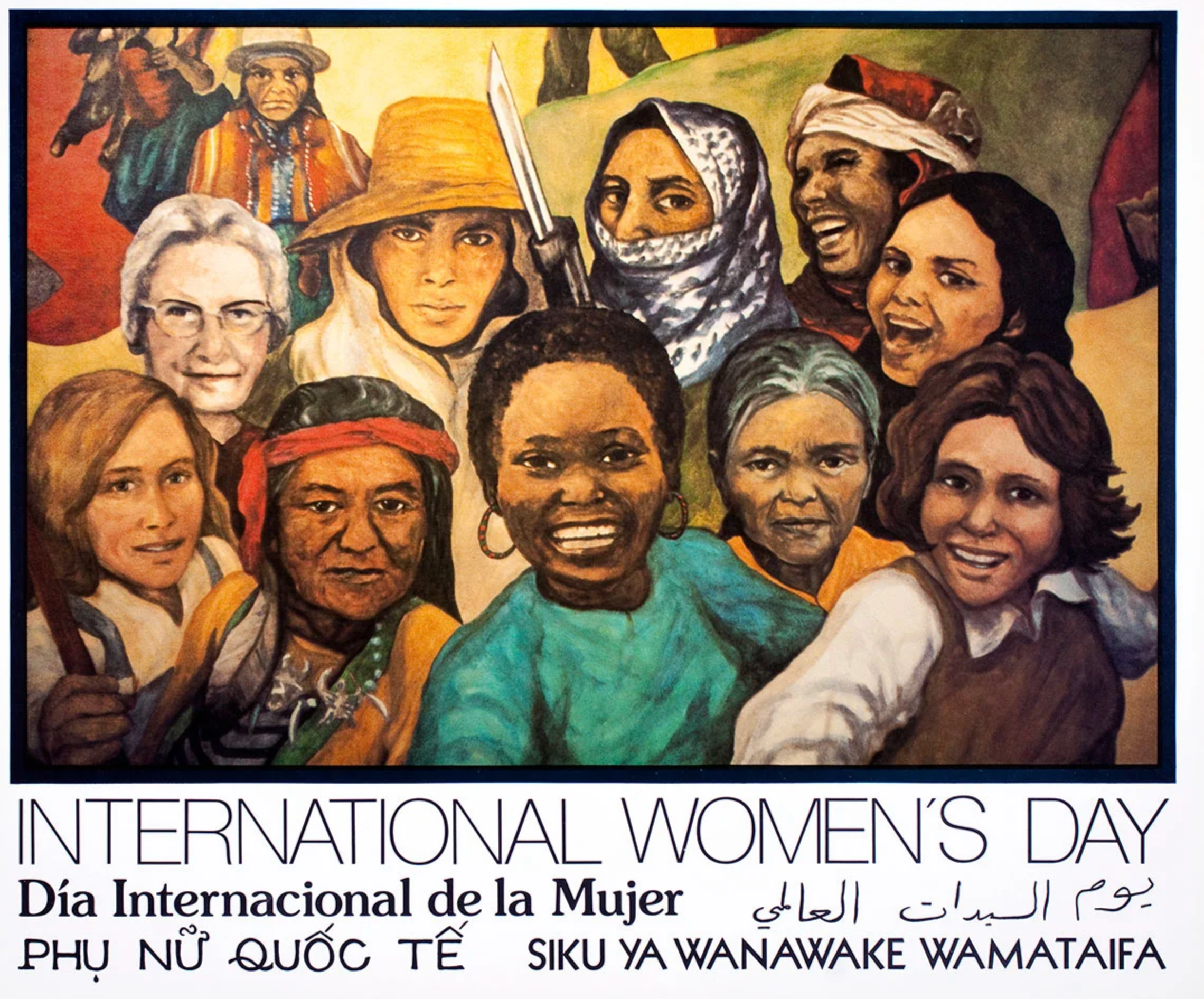
Selected Quotes on Gender Issues by Political Leaders from the Global South (in alphabetical order of the speakers’ names)
Andaiye
Andaiye (1942-2019), Political thinker and leader of the Working Peoples Alliance of Guyana, comrade of Walter Rodney, founder of Red Thread (women’s organization based in Guyana), founder of CAFRA (Caribbean Association of Feminist Research and Action) and Women of Colour in Global Women’s Strike.
From: Towards A Critique of Feminist Politics and Organizing in the Caribbean (2002)
On March 8, 2002, the third global strike of women—which last year saw action in 60 countries including Uganda, India, Peru and Guyana—will take place. The demands of the strike are both local and global, and all are understood as among the many ways that money and resources which women are owed can be paid. Some are demands which, in the heyday of both my Marxist and feminist lives, I would have been embarrassed by, such as breastfeeding breaks and other benefits that recognize rather than penalize women’s caring work. Others are demands that I used to call “practical” as distinct from “strategic”: accessible drinking water; ecologically sound technology for every household; affordable and accessible housing and transportation, all of which I now see as fundamental to reducing the burden of women’s unwaged work. One demand is pay equity for all, women and men, internationally—which opposes the right to pit female workers against male, those in the North against those in the South, by forcing us to undercut each other’s wages. Another is protection against all violence—at home, in the street, in the office, on the farm, in the factory—and the violence of war, linked to a call to stop valuing killing more than caring. Another is the abolition of the Third World debt.[1]
From: Valuing Unwaged Work: A Preparatory Brief for CARICOM Ministers Responsible for Women’s Affairs Attending the 4th World Conference on Women [1994]
At least five factors seem to be interacting to produce the extraordinary weight of unwaged work in the Caribbean:
The high proportion of single parent single headed households as a result of slavery and our long and continuing reliance on emigration as a survival strategy.
The degree of entrenchment of gender stereotypes and the strength with which they continue to be fostered by all the institutions that shape consciousness: home, school, media, popular culture and religion…
The level of underdevelopment in some countries and regions of countries.
Because of the geographic location, small size, ecological fragility and economic dependency of many of our countries, our vulnerability to militarism and war, natural disasters, endemic economic crisis and massive debt, each of which increases the unwaged work of ensuring survival.
The lack of social support for reproductive work (especially child and family care) except through arrangements among women…
The invisibility of unwaged work is a discrimination against women which fuels other forms of discrimination against women….Because unwaged work is invisible it brings with it no entitlements: thus, after a lifetime of a double unwaged workday (in subsistence farming and in the household), an elderly rural woman can find herself with no financial “security” except through her husband or partner. Incidentally, in some of our countries the unwaged work of women in food production is on the increase as men migrate internally in search of jobs…
The invisibility of women’s unwaged work devalues women’s waged work. The fields of study and work into which women still cluster are low-waged first at all, because they are extensions of the unwaged work they do at home. Waged domestic work, which is the most direct extension of all, is not only among the lowest-waged jobs in any of our countries. In some countries it is not even recognized in labor legislation.
The invisibility of women’s unwaged work shapes women’s participation in waged work and their ability to organize to defend themselves in the workplace. It is behind their choice of home-based production and part-time work. It defines the areas of self-employment in which they engage. It legitimizes bias against their access to credit and other production resources. It justifies the employer’s denial to them of job security, training and promotion on the grounds of their “unreliability.”[2]
*****
Amílcar Cabral
Amílcar Cabral (1924-1973), Nationalist leader, Founder and Secretary-General of the African Party for the Independence of Guinea and Cape Verde (PAIGC).
“QUESTION: My question is about the role of women. What is the nature of their transformation from the old system under imperialism?
CABRAL: In our country you find many societies with different traditions and rules on the role of women. For example, in the Fula society a woman is like a piece of property of the man, the owner of the home. This is the typical patriarchal society. But even there women have dignity, and if you enter the house you would see that inside the house, the woman is the chief. On the other hand, in the Balante society women have more freedom.
To understand these differences you have to know that in the Fula society all that is produced belongs to the father. In the Balante society all that is produced belongs to the people that work and women work very hard so they are free. It is very simple. But the problem is about the political role in the fight. You know that in our country there were even matriarchal societies where women were the most important element. On the Bijagos Islands they had queens. They were not queens because they were the daughters of kings. They had queens succeeding queens. The religious leaders were women too. Now they are changing.
I tell you these things so that you can understand our society better. But during the fight the important thing is the political role of women. Yes, we have made great achievements, but not enough. We are very far from what we want to do, but this is not a problem that can be solved by Cabral signing a decree. It is all a part of the process of transformation, of change in the material conditions of the existence of our people, but also in the minds of the women, because sometimes the greatest difficulty is not only in the men but in the women too.
We have a big problem with our nurses, because we trained about three hundred nurses—women—but they married, they get children and for them it's finished. This is very bad. For some this doesn't happen. Carmen Pereira, for instance, is a nurse, and she is also a member of the high political staff of the Party. She is responsible for all social and cultural problems in the southern liberated region. She's a member of the Executive Committee of the Party. There are many others too, trained not only in the country but in the exterior also, in foreign countries. But we have much work to do.
In the beginning of the struggle, when we launched the guerrilla struggle, young women came without being called and asked for weapons to fight, hundreds and hundreds. But step by step some problems came in this framework and we had to distribute, to partition the war. Today, women are principally in what you call the local armed forces and in the political war working on health problems, and instruction also.
I hope we can send some of our women here so you will be able to know them. But we have big problems to solve and we have a great problem with some of the leaders of the Party. We have (even myself) to combat ourselves on this problem, because we have to be able to cut this cultural element, with its great roots, until the day we put down this bad thing—the exploitation of women, but we made great progress in this field in these ten ears.”[3]
*****
Vilma Espin
Vilma Espín (1930-2007), Chemical Engineer who organized clandestine support for the 26th of July Movement to overthrow Batista in Cuba, Founding President of the Federation of Cuban Women; Member of the Central Committee of the Cuban Communist Party and First Lady of Cuba (Married Raul Castro in 1960).
“Within the revolution’s policy of equality, we do not only put special emphasis on women’s participation, but, of course, also on their promotion. We are conscious that women’s promotion is no easy task, nor is it a short-term one, but the realistic and critical vision of our organization and our party, along with practical measures and ideological work, will allow us to reach the goals that we justly aspire to.
As comrade Fidel Castro said on closing the Second Congress of the Federation of Cuban Women (FMC) in 1974, “The day will have to come when we have a party of men and women, a leadership of men and women, a government of men and women, and a state of men and women. I believe that all comrades are conscious that this is a requirement of the revolution, of society and of history….”[4]
(In response to a question about the “international feminist movement”): I believe in those feminist groups who tie the solution to the oppression of women, of the liberation of women, to the liberation of all exploited, the oppressed, the discriminated against, which also means taking into consideration social, political and ideological, as well as economic problems, from the perspective of class, sex and race analysis. I am convinced that the problems women face cannot be analyzed outside the economic context. Nor should they be considered side issues…there are no solutions to women’s problems unrelated to their context.[5]
*****
Ho Chi Minh
Ho Chi Minh (1890-1960), Founder of Indochinese Communist Party and the Viet Nam Workers’ Party (VNWP); Founded the Democratic Republic of Viet Nam (DRV) when he declared Vietnamese independence from France in 1945. Served as President of DRV and Chairman of VNWP until his death in 1969.
“Many people think that the problem of equality between the sexes is a simple one… A serious mistake! What equality really means is a thorough-going, difficult revolution, because contempt for women dates back thousands of years. It is deeply rooted in the thoughts and attitudes of everyone. It cannot be done away with by coercion… If this large scale revolution is to be successful, progress will have to be made in every field: political, cultural, economic, legal. The revolution must involve heart-searching by each of us. It must involve the whole people. This is a big task and a difficult one, but our success is certain.”[6]
“It is correct to take a keen interest in the family; many families constitute the society.A good society makes a good family and vice versa. The core of society is the family…The law on marriage and the family to be presented at the National Assembly is a revolution, an integral part of the socialist revolution. Therefore, we should adopt the proletarian stand to understand it. It is not correct if our understanding is based on the feudal, bourgeois or petty bourgeois stand.
The law on marriage aims at emancipating women, that is, at freeing half of society. The emancipation of the women must be carried out simultaneously with the extirpation of feudal and bourgeois thinking in men. As for themselves, women should not wait until the directives of the government and Party free them but they must rely on themselves and struggle.
The Party must give this law leadership from its preparation to its presentation and execution because this is the revolution. The leadership of the Party means that all cadres and Party members must apply this law strictly and lead all you and women’s organizations resolutely and correctly put it into effect…everything is not over with the promulgation of this law, but long-term propaganda and education needs to be carried on to obtain good results.”[7]
“The Deputy Commander of the Liberation Armed Forces is Miss Nguyen Thi Dinh. Our country alone in the whole world has a woman general. This is a glorious thing for the South and our entire nation."[8]
*****
Argelia Laya
Argelia Laya (1926-1997), AfroDescendant Venezuelan woman who was a teacher, a guerrilla fighter, a communist, a militant for women’s rights, a rape survivor who proudly raised her child, a deputy in the Congress. She died a year before the Bolivarian Revolution took power. Hugo Chavez underlined her importance, “Argelia Laya’s words should be engraved in gold letters in all our battlefields and with red letters in our hearts: The fight for women’s equality is the fight for people’s liberation.”[9]
“A socialist society is inconceivable without the full participation of women and men as equals…Venezuelan women are a very important sector of the social forces striving for a profound transformation of the current socio-economic political system. It is completely clear that for the exploiters and oppressors it is a matter of life or death to keep women from the popular classes deceived, marginalized from politics, and guided down the path of the false “sexual revolution,” as a route to female liberation on a strictly individual level.
The triple exploitation of women—in the capitalist economy, in the family, and in society—demands a scientific, particular, and specific treatment of their problems; a policy and a direct message that can awaken them, make them aware of their situation, and capable of rebelling against the system.
The first step toward the true liberation of women is socialism. Equal rights for the female masses are only possible in a truly socialist society. The full realization of socialism requires the complete liberation of women.
It is necessary to awaken, unite, and organize women to fight for their emancipation and for socialism. Women are almost absent from the ranks challenging the capitalist system, and it is evident that they have not yet perceived the redeeming message of socialism. This is a real weakness of the revolutionary movement that must be overcome through the development of two parallel lines.[10]
*****
Le Duan
Le Duan (1907-1986), Founding member of the Vietnamese Communist Party. He became General Secretary of the Vietnamese Communist Party in 1960 and held that position until his death in 1986. He was the political and ideological leader of Viet Nam after the death of Ho Chi Minh.
“To strongly promote women’s role and ability as collective masters, the Party, the State and the mass organizations should pay more attention to the task of training and fostering women cadres so as to have many capable women cadres with important responsibilities in the leadership and management of various branches at various levels. We must sharply criticize those cadres who are unwilling to assign women to important posts, on the grounds that women sometimes have difficulties with regard to their health and families…
The Party committees and administrative bodies at all levels, and the mass organizations should take the most practical and concrete measures to help our women surmount immediate problems in family life and gradually alleviate the burdens of house-work, especially shopping and cooking. Those are the most practical tasks to achieve the emancipation of women, ensure their right to collective mastery and equality between men and women…The Women’s Union must take the initiative…to work out the most effective plans to enlarge the network of nurseries and kindergartens in the countryside as well as in towns and qualitatively improve the service of these establishments so that mothers and families can confidently send their children to the nurseries and kindergartens in such ways as to conform with the concrete conditions of work of women in various production bases and offices, in order to create the most favorable conditions for the mothers…”[11]
*****
Thomas Sankara
Thomas Sankara (1949-1987), Revolutionary leader and President of Burkina Faso, 1983-1987.
“And so this child (daughter) knows no childhood. From the age of three, she must meet the requirements of her role in life: to serve and be useful. While her brother of four or five or six will play till he drops from exhaustion or boredom, she, with little ceremony, will enter the process of production. She already has a trade: assistant housewife. It is of course an unpaid position…
Our society—still too primitively agrarian, patriarchal and polygamous—turns women into an object of exploitation for her labor power and of consumption for her biological reproductive capacity…
Our sisters, fighting as they are on four fronts of our war against disease, hunger, poverty and degeneracy, feel the pressure of changes over which they have no control. For every single one of the 800,000 males who emigrate, a woman takes on an additional load…
In the very first hours of the democratic and popular revolution we said, “It is for women themselves to put forward their demands and mobilize to win them”…
One of the main gains of our revolution in the struggle for women’s emancipation has been, without doubt, the establishment of the Women’s Union of Burkina (UFB)…because it has given the women of our country a framework and sound tools for waging a successful fight…Comrade militants, the Women’s Union of Burkina is your combat organization. It’s up to you to sharpen it further so its blade will cut more deeply, bringing you more and more victories…
(Concludes speech with) Comrades, there is no true social revolution without the liberation of women. May my eyes never see and my feet never take me to a society where half the people are held in silence. I hear the roar of women’s silence. I sense the rumble of their storm and feel the fury of their revolt… Homeland or death, we will win!”[12]
*****
Joseph V. Stalin
Joseph Vissarionovich Stalin (1878-1953), Soviet revolutionary, General Secretary of the Communist Party of the Soviet Union (1922-1952), Premier of the Soviet Union (1941-1953).
“There has not been in the history of mankind a single great movement of the oppressed in which women toilers have not participated. Women toilers, the most oppressed of all the oppressed, have never kept away from the high road of the emancipation movement, and never could have done so. As is known, the movement for the emancipation of the slaves brought to the front hundreds of thousands of great women martyrs and heroines. In the ranks of the fighters for the emancipation of the serfs there were tens of thousands of women toilers. It is not surprising that the revolutionary working-class movement, the mightiest of all the emancipation movements of the oppressed masses, has rallied millions of women toilers to its banner.
International Women's Day is a token of the invincibility of the working-class movement for emancipation and a harbinger of its great future.
Women toilers—working women and peasant women— are a vast reserve of the working class. This reserve constitutes a good half of the population. The side that it takes—for or against the working class—will determine the fate of the proletarian movement, the victory or defeat of the proletarian revolution, the victory or defeat of the proletarian power. Consequently, the first task of the proletariat, and of its advanced detachment — the Communist Party, is to wage a resolute struggle to free women, working women and peasant women, from the influence of the bourgeoisie, to enlighten them politically and to organize them under the banner of the proletariat.
International Women's Day is a means of winning the reserve of women toilers to the side of the proletariat.
But the women toilers are not only a reserve. If the working class pursues a correct policy, they can and must become a real working-class army, operating against the bourgeoisie. To forge from this reserve of women toilers an army of working women and peasant women, operating side by side with the great army of the proletariat—such is the second and decisive task of the working class.
International Women's Day must become a means of transforming the working women and peasant women from a reserve of the working class into an active army of the emancipation movement of the proletariat.
Long live International Women's Day!”[13]
Notes
[1] Andaiye. The Point is to Change the World: Selected Writings of Andaiye. Edited by Alyssa Trotz. London: Pluto Press, 2020, 17–18.
[2] Andaiye, The Point is to Change the World, 134–35.
[3] “Connecting the Struggles: An informal talk with Black Americans,” 1972. In Return to the Source: Selected Speeches by Amilcar Cabral, edited by the Africa Information Collective. London: Monthly Review Press, 1973, 85-86.
[4] Espín, Vilma. Cuban Women Confront the Future. Edited by Deborah Shnookal. Melbourne: Ocean Press, 1991, 21.
[5] Espín, Vilma. Cuban Women Confront the Future, 55.
[6] Ho Chi Minh. "Greetings for International Women's Day." 1952. Quoted in Arlene Eisen, Women and Revolution in Viet Nam. London: Zed Press, 1984, 89.
[7] Ho Chi Minh. "Excerpt from a Talk at a Cadre's Meeting Debating the Draft Law on Marriage and the Family, October 1959." In On Revolution, edited by Bernard B. Fall. New York: Signet Books, 1967, 304–5.
[8] Nguyen Thi Dinh. No Other Road to Take. Translated by Mai V. Elliott. Ithaca, NY: Southeast Asia Program Publications, 1976, 33.
[9] Andreina Chavez Alava, "The Afro Venezuelan Woman Who Ignited Grassroots Feminist Struggles," Venezuela Analysis, November 27, 2021. Available at: https://venezuelanalysis.com/analysis/15394/ .
[10] Laya, Argelia. Nuestra Causa. Caracas: MinMujer, 2014, 45.
[11] Le Duan. "The Role and Tasks of Vietnamese Women in the New Stage of the Revolution." In On the Right to Collective Mastery. Hanoi: Foreign Languages Publishing House, 1980, 121-124.
[12] “The Revolution Cannot Triumph without the Emancipation of Women.” Speech, March 8, 1987. In Women's Liberation and the African Freedom Struggle. New York: Pathfinder Press, 1990, 37-65.
[13] Stalin, J. V. "International Women's Day." Pravda, March 8, 1925. Reprinted in Works, vol. 7. Moscow: Foreign Languages Publishing House, 1954. Marxists Internet Archive. https://www.marxists.org/reference/archive/stalin/works/1925/03/08.htm .