From Sankarism to the AES: Pan-Africanism and the Changing Global Order
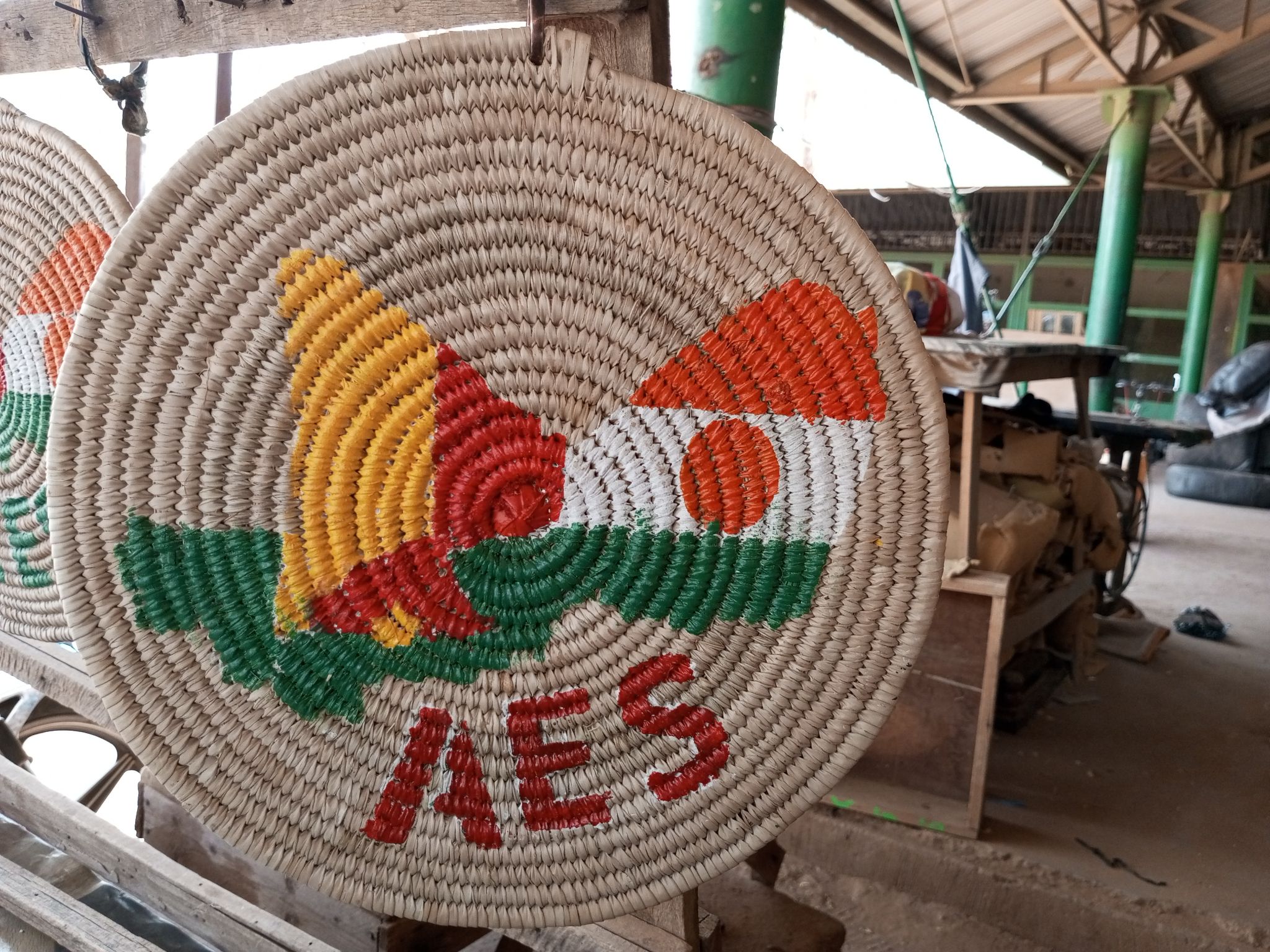
In 1987, as rumors swirled around a possible coup and counterrevolution against Thomas Sankara’s government in Burkina Faso, the popular leader assured that his death would not nullify the revolutionary ideals that had proliferated across the country. “Even if you kill me, thousands more Sankaras will be born.” Thomas Sankara’s words were not only prophetic in the case of Burkina Faso, where the revolution was reinvigorated after Captain Ibrahim Traoré assumed power in 2022. The core tenets of Sankarism are now being realized in the neighboring countries of Mali and Niger, both of which have their own indigenous revolutionary traditions. After respectively experiencing popular revolutions in the early 2020s—Mali in 2020 and 2021, Burkina Faso in 2022, and Niger in 2023—the three countries came together to form the Alliance of Sahel States (AES) in late 2023. As the most exemplary manifestation of Pan-Africanism in the world today, the AES has compelled other West African countries to reevaluate their relations with the West and inspired freedom-loving peoples across the African continent and beyond to wage their own struggles for self-determination, sovereign development, and national liberation.
The Burkinabe government of Captain Thomas Sankara laid the political, economic, and ideological foundation for the Alliance of Sahel States (AES). Although Western-backed forces assassinated Sankara in 1987, just four years after he came to power, his ideas persisted over the past four decades and are now stronger than ever. Sankara’s revolutionary Pan-Africanism and anti-imperialism, the very principles for which he was assassinated, undergird the formation of the AES today. These ideas are likely to remain entrenched as the AES countries consolidate their revolutionary gains. The current global landscape is indeed are more conducive to fulfilling Sankara’s Pan-Africanist and socialist vision than when he was in power.
Thomas Sankara, an Ideological Anchor
When Thomas Sankara assumed power in August 1983, his new government was tasked with confronting a national situation in which Upper Volta remained entirely subjugated to imperial power. The social conditions which existed fueled widespread poverty and destitution among the people of the country. The new government identified its mandate to not only build the country but also restore national dignity. To this end, the Sankara government changed the name of the country from Upper Volta to Burkina Faso in August 1984. Burkina Faso meant “land of the upright people” in the Mooré and Dioula languages, both of which predominated in the country.
Standing upright meant building the country with Burkinabe hands. It entailed engaging in a genuine and rigorous process of national development. In 1980, Upper Volta’s annual average per capita income was a paltry $210; the adult literacy rate was 11 percent; 18 percent of school age children were in primary school; and just 3 percent made it to secondary school. The average life expectancy was 44.[1] And like many African countries, Upper Volta was in debt. It had taken out loans from international financial institutions, and the debt it incurred belied any semblance of self-determination or economic self-sufficiency.
Upon taking power, Sankara and his party, the National Council of the Revolution (CNR), immediately set out to reorient the state. Sankara understood that little difference existed between colonial rule and neocolonialism other than the reality that a collaborationist national bourgeoisie had become the new agents of foreign domination. The most important tasks thus included building a unified nation against imperialism, developing the national economy, and initiating widespread social transformation to address such issues as poverty, disease, and education.
In October 1984, the government launched the People’s Development Program, which mobilized communities to facilitate local development projects. In fifteen short months, the government built 351 schools, 314 maternal health centers and dispensaries, and 88 pharmacies. Burkina Faso’s literacy rate increased from 13 percent in 1983 to 73 percent by 1987. Sankara’s government also launched a wildly successful child immunization campaign. In mere weeks, 2.5 million Burkinabe children were immunized from such deadly diseases as measles, yellow fever, and meningitis.[2] Infant mortality rates declined from 208 for every thousand births in 1981—the highest in the world—to 145 by 1985. The government also increased prices for peasants’ food crops, thereby allowing people to make greater profits from their harvest. And it launched reforestation projects as part of the People’s Harvest of Forest Nurseries. The campaign included provisioning 7,000 village nurseries and planting 10 million trees in 1985 to impede desertification.[3] As Sankara explained at the First International Tree and Forest Conference in February 1986, “This struggle to defend the trees and the forest is above all a struggle against imperialism. Imperialism is the pyromaniac setting fire to our forests and savannah.”[4]
Sankara’s government also set out to improve conditions for women. The revolutionary leader lamented any society which “turns the woman into an object of exploitation for her labor power and of consumption for her biological reproductive capacity.” Burkina Faso’s previous neocolonial governments had “no better than a bourgeois approach to women’s emancipation, which brought only the illusion of freedom and dignity.”[5] The government’s programs accordingly designed specific measures for women, including literacy classes, the development of primary health units in local communities, and support for women’s cooperatives and market associations.
Sankara’s Burkina Faso also prioritized domestic interests over foreign aid. As Foreign Minister Basile Guissou explained, “No one will come to develop Burkina Faso in place of its own people.” The government understood that Burkina Faso must become self-sufficient both to preserve the revolution and build the country toward a new future. This precept, perhaps more than any other, made Sankara an enemy of imperialism and global capital. By 1984, the country’s largest donor, France, halted all general budgetary support to the Burkinabe government. The World Bank followed suit in 1985. One of Sankara’s aides, Justin Damo Baro, even tried to convince him to accept assistance from the IMF, but the president refused, arguing that IMF “conditionality” would bring the revolution to an end by dictating that economic policy decisions favor external actors.[6] Aid, Sankara argued, should help strengthen rather than undermine Burkina Faso’s sovereignty. Aid “must help to destroy the need for further aid.”[7]
As for the country’s debt, Sankara clarified that imperialist domination continued to cripple Burkina Faso through neoliberal exploitation. “Debt’s origins come from colonialism’s origins. Those who lend us money are those who colonized us,” he explained at the 1987 OAU conference in Addis Ababa. Debt, Sankara continued, is neo-colonialism, “in which colonizers have transformed themselves into ‘technical assistants’…. Under its current form, controlled and dominated by imperialism, debt is a skillfully managed reconquest of Africa.” No African country was positioned to individually resist debt, so Sankara called for a united front against repayment. “Debt cannot be repaid, first because if we don’t repay, lenders will not die. That is for sure. But if we repay, we are going to die.”[8]
Sankara’s continental solution to the debt issue, which did not materialize at the time, reflected the Burkinabe government’s general Pan-Africanist and internationalist orientation. Sankara was especially critical of French imperialism, denouncing the French military intervention in Chad and expressing support for Kanaky (New Caledonia’s) independence movement against France. Sankara also challenged U.S. imperialism and white world supremacy. In a 1984 trip to New York to address the UN General Assembly, Sankara denounced the U.S. invasion of Grenada, which overthrew the country’s revolutionary government. He also announced Burkina Faso’s solidarity with the Palestinian people and the Sandinista revolutionaries in Nicaragua, who were struggling against “contras” backed by the United States. But before speaking at the UN, Sankara gave a speech to a large crowd in Harlem, where he lambasted racism and imperialism. “Our White House is in Black Harlem,” he famously proclaimed. He then added, “I am ready for imperialism!” before unbuckling his belt and holding up his holster and pistol.[9]
Time and again, moreover, the Burkinabe government pressed for Pan-African unity, particularly against the apartheid regime in South Africa. Apartheid, he explained , was a cancer that must be exterminated. “Apartheid is a living element of the imperialism of our times. Ultimately, apartheid is also a strategy, in class struggle, for the exploitation of man by man.” Sankara thus understood the need for proletarian internationalism in the struggle against apartheid.
Burkina Faso supported the liberation struggles in Southern Africa by sending arms from its limited cache to the African National Congress (ANC) in South Africa and the South West Africa People’s Organization (SWAPO) in Namibia. Participating in the global boycott against the apartheid regime, Burkina Faso barred South African goods from being sold in the country. Burkinabe activists, meanwhile, organized a campaign against Shell Oil, one of the country’s major oil suppliers, for its dealings with South Africa.[10] Burkina Faso also boycotted the 1984 Olympics in protest of apartheid South Africa’s participation. “These games, like all other platforms, should be used by us to denounce our enemies and the racism of South Africa,” Sankara explained. Burkina Faso would not participate “side by side with those who support South Africa's racist policies and those who reject the warnings and condemnations that Africans make aimed at weakening racist South Africa.”[11] These efforts were foundational to an anti-imperialist vision of the world.
Sankara’s government was toppled in a coup led by minister of the state at the presidency and former comrade Blaise Compaoré on October 15, 1987. Sankara and several of his closest aides were assassinated in the putsch. The subsequent government, which lacked popular support, returned to many of the principles that plagued the country before 1983. Compaoré reestablished close ties with France. He restored the veto power of global capital over internal economic governance and began accessions to Structural Adjustment Loans from international banks. On the other hand, the Compaoré government cut spending on health, education, and water, privatized industries, and redirected the country’s resources toward export.[12]
In 2014, the unpopular Compaoré illegally attempted to run for a fifth term in office. This compelled the Burkinabe people to hit the streets, and the protests successfully prevented Compaoré from remaining in power. Sankara’s vision and the 2014 protests sowed the seeds for a new resistance that ultimately led to a takeover of the government, led by Captain Ibrahim Traoré, in 2022.
The Alliance of Sahel States
The military takeovers in the Sahel countries of Mali, Burkina Faso, and Niger set the tone for a new era in West Africa. They particularly signified the resurgence of Pan-Africanism and anti-imperialist internationalism. The first takeover took place in Mali, in 2020 and 2021, the latter of which brought General Assimi Goïta to power. In September 2022, Captain Ibrahim Traoré took power in Burkina Faso. And in July 2023, a coup in Niger was led by General Abdourahamane Tchiani. These takeovers were in the same spirit as Sankara’s seizure of power in 1983. They were coups backed by popular sentiment. The Malian, Burkinabe, and Nigerien people were fed up with their former governments, which were neocolonial adjuncts of the West. The three countries each experienced major protests in the late 2010s and early 2020s. Each situation therefore played out more like a popular revolution with the ensuing consolidation of revolutionary gains rather than a simple military coup, and the people expressed widespread support for their new governments. Revolutionary consolidation included the formation of a regional united front among the three countries, leading to creation of the Alliance of Sahel States (AES), which was established in September 2023 and formalized in July 2024.
The AES entails cooperation in all segments of society, including military protection. It began as a mutual defense pact, as the countries pledged to provide military support for each other should any of them face a foreign military invasion. But the AES was conceptualized to become much more. For example, the alliance inaugurated a common biometric passport to allow for easier transit and trade between the countries. It also involves shared infrastructure development, including building new transit routes between the three countries. Economic integration is another major objective, which culminated in the establishment of a regional bank called the Confederation Investment and Development Bank (BCID-AES). The AES also further consolidated the mutual defense pact into a joint military formation involving all three states. The AES Unified Force was officially launched with support from Russia in December 2025. It currently consists of 15,000 troops. Above all, the end goal of the AES is a fully integrated federation.
These developments reflect a coordinated response to imperialism. For decades, the three countries were plagued by the predations of neocolonialism and military occupation. As former French colonies, Mali, Niger, Burkina Faso, and the rest of the region continued to experience neocolonial meddling long after the demise of the French empire. France remains extremely active in West Africa to this day. This reality harbors public resentment, not just in the AES, but all throughout West and Central Africa.
For instance, fourteen former French colonies (comprising of over 200 million African people) use what is called the CFA franc, a currency attached to the former French franc. The CFA franc was created in 1945, when these countries were still French colonies. Although France no longer uses the franc—it is now on the Euro—its former colonies continue to use the colonial currency. This reality has resounding implications. Fifty percent of the foreign assets of countries using the CFA franc must be held in France’s treasury. Each country is also limited to a 20 percent ceiling of its revenue from the previous year, thereby limiting access to its own finances and profits. And when France devalues the currency, as it did in 1994, it can decimate the economies of these countries. The 1994 devaluation caused the governments of the CFA member countries to impose wage freezes and layoffs, which led to widespread protests over inaccessible goods.
In 2015, Chad President Idriss Deby explained that the CFA “pulls African economies down.” Benin President Patrice Talon added in 2019, “Psychologically, with regards to the vision of sovereignty and managing your own money, it’s not good that this model continues.” Member countries have thus discussed delinking from the CFA since long before the revolutions in the early 2020s. Yet the AES governments began to actualize this process. “The first instrument of sovereignty is currency,” said Niger’s Foreign Minister Bakary Sangaré in April 2025. “You cannot be sovereign if someone else mints your currency. It’s clear that we’re not going to stay in this CFA franc affair. France itself knows it.” The AES’s regional bank is a step in the delinking process.
AES countries have also begun to address the issue of resource drain. Niger for example has benefitted very little and suffered greatly due to its enormous mineral wealth, which includes one of the world’s largest uranium reserves. Its uranium was controlled by a French joint venture called Somaïr. Eighty-five percent Somaïr was owned by two French companies and France’s atomic energy commission, while the Nigerien government managed only a 15 percent stake. Uranium was siphoned from Niger with little benefit for the people as a result. Niger’s uranium powers one in three lightbulbs in France, while over 42 percent of Nigeriens were living below the poverty line. To make matters worse, Niger has lost almost a billion dollars in arbitration cases brought by multinational corporations against the government.
Beyond the economic dynamics, the countries of Niger, Burkina Faso, and Mali have also housed Western bases and troops, including from France, Germany, and particularly the United States. The military occupations resulted from so-called bilateral agreements between Western governments and their Sahelian adjuncts. Niger housed the world’s largest drone base on behalf of the U.S. at Agadez. The Western military presence was ostensibly to quell the advances of rightwing takfiri militant groups in West Africa. However, since Western troops arrived to wage the so-called War on Terror, takfiri groups have in fact proliferated. The militant groups surged after the U.S.-led NATO invasion of Libya in 2011. NATO’s destruction of Libya fomented widespread political, economic, and social instability across the region from which the Sahel is still recovering. Imperialism, in other words, created a security problem and sold a failed “solution” that only exacerbated regional insecurity. Uncoincidentally, the first takfiri attacks against Burkina Faso occurred in January 2016, soon after protests achieved the defeat of the Western-backed Compaoré government. According to Ibrahim Traoré, African countries have been “confronted with the most barbaric, the most violent form of imperialist neo-colonialism…. We African heads of state must stop behaving like puppets who dance every time the imperialists pull the strings.”
Consolidating Power, Advancing the Revolution
Soon after the new governments seized power, Mali, Niger, and Burkina Faso moved quickly to oust foreign forces. They terminated military agreements with Western countries, thereby closing French and U.S. bases and compelling the occupying soldiers to leave. French troops departed Mali in August 2022, which marked the end of a nine-year deployment in the country, and Burkina Faso in February 2023. The last French troops withdrew from Niger in December 2023 after the Nigerien government terminated its military cooperation with France. German troops left Niger in August 2024. In March 2024, Niger announced the termination of its military agreement with the United States. A U.S. delegation led by Victoria Nuland attempted to salvage the agreement, but the Nigerien government announced the cessation of all military cooperation after the visit and called on all U.S. troops to leave the country.[13] “Niger regrets the intention of the American delegation to deny the sovereign Nigerien people the right to choose their partners and types of partnerships capable of truly helping them fight against terrorism,” government spokesperson Amadou Abdramane stated .
The ouster of foreign troops enabled the new governments to consolidate state power, particularly in the face of ongoing takfiri insurgencies. Each country continues to contend with Western-backed militants attempting to destabilize the governments and even take power. In May 2026, fighters from Jama'at Nusrat al-Islam wal-Muslimin (JNIM) and the Azawad Liberation Front (FLA) waged a major offensive against Mali in an effort to overthrow Assimi Goïta’s government. The fighters succeeded in assassinating Defense Minister Sadio Camara, but their offensive quickly stalled. Burkina Faso has also thwarted multiple coup attempts against the Traoré government. Popular militias have formed in Burkina Faso to protect the government as a result. “We are not in a democracy, we are in a popular progressive revolution,” Traoré explained . “We intend to unmask all traitors in our nation.”
The ouster of foreign troops should be understood alongside the ongoing attempts by takfiri militants to overthrow these revolutions. The governments and peoples of the three countries clearly recognize the nature of the counterrevolutionary forces that they face. They understand that imperialist powers have historically perpetuated instability to harvest the conditions for counterrevolution anytime a non-compliant leader assumes power. Yet with the people’s support, the AES countries have successfully foiled destabilization attempts and continue to liberate occupied territory. “We have made significant progress on the ground,” said Traoré. “We have been able to recapture areas that were under terrorist control four or five years ago. We have been able to liberate these areas. Other areas are currently in the consolidation phase.”
On a regional level, the three countries faced immediate threats from the Economic Community of West African States (ECOWAS)—a Western-backed regional organization that currently includes twelve member states—after the coups. With Western backing, ECOWAS imposed sanctions on Mali, Niger, and Burkina Faso, all of which were member states. Perhaps unsurprisingly, JNIM has also aimed to interdict transit and trade routes in order to strangle the three countries’ economies. ECOWAS meanwhile also threatened to invade Niger and reinstall the pre-coup leader, Mohamed Bazoum. Given these provocations, Niger, Burkina Faso, and Mali officially withdrew from ECOWAS in January 2025 and even imposed a levy on ECOWAS goods. Their mutual defense pact was also in response to these regional pressures.
Despite the ongoing threats, each AES country has moved forward with national development projects by cultivating self-sufficiency. This includes nationalizing resources, such as Niger’s uranium and Mali’s gold . The AES countries continue to wrest control of their mining industries from multinational corporations. And they strongly promote agricultural development. Each country is also pursuing industrialization. Burkina Faso introduced the country’s first ever tomato-processing plant in December 2024. In March 2025, Traoré’s government inaugurated a detergent factory, the first ever in an African country. This was especially notable since many detergents contain palm oil, a major resource extracted from West Africa under colonialism. As a primary cashew producing nation, Burkina Faso finally opened its first cashew processing plant in May 2025. Previously, the country would have to export its agricultural products for processing elsewhere before reimporting the final good at a cost. Burkina Faso’s newly developed industrial capacity enables the state and its people to fully benefit from their own land, labor, and harvests.
Beyond these examples, the AES governments have engaged in widespread infrastructure development. In Mali, the government has built hundreds of new health facilities since it took power. Burkina Faso recently established two mini data centers to support data sovereignty. In July 2026, moreover, the Burkinabe government passed a law mandating the government’s authorization for students to study abroad in an effort to align the country’s education system with national development. The decree aims to curtail “brain drain.” In line with Sankara’s legacy, Burkina Faso has also initiated a massive reforestation campaign. It set a goal to plant at least 20 million trees in 2025 and another 15 million trees in 2026. Along with reversing desertification, the campaign subsidizes food security and advances health initiatives.
The AES countries have also mobilized their citizens to connect villages by paving new roads. And because the three countries are all landlocked, they have sought to maintain their capacity to trade with the rest of the world. One such example is the use of the Senegal River, which extends from the Atlantic Ocean, through Senegal, into Mali. In early 2026, the Organization for the Development of the Senegal River—which consists of Senegal, Mali, Guinea, and Mauritania—approved a massive development project along the river that would open a trade corridor for Mali and thereby stifle imperialist efforts to isolate the AES. The project includes establishing a navigable channel and modernizing ports to transform the river into a major trade artery. Once complete, the initiative will drastically increase Mali’s trade capacity and reduce transportation costs by up to 60 percent.
Alliances, Not Dependency
National development, regional reintegration, and international trade access all correlate with delinking from imperialism and forging new ties with the countries of the Global South. It is thus notable that the AES countries have strengthened relations with China, Russia, North Korea, Iran, and Cuba. In late 2023 and early 2024, Niger held talks with China, Russia, and Iran much to the U.S.’s chagrin. U.S. Representative Mike Rogers later captured Washington’s alarm at the changing dynamics in Africa. “At the end of the day, it is critical for the U.S. to have a [military] footprint on the continent,” he said.“Africa is of vital strategic importance to the United States. We can’t let China or Russia become the preferred security or business partner.” Between security coordination with Russia and China’s aid in infrastructural development, the AES has identified mutually beneficial partnerships rather than maintaining unceasing dependence on the West. In a summit involving the AES countries and Russia in early July 2026, Nigerien Foreign Minister Bakary Sangaré praised the ongoing collaboration with Russia. “Long live the cooperation between the Confederation of Sahel States and the Russian Federation,” he said, adding that the meeting exemplified a common will “to work toward the emergence a new world order that is more just and more equitable.”
The changing global dynamics have disrupted U.S. global dominance. U.S. and European hegemony have receded to such an extent that the Donald Trump government began dismantling the mechanisms of Western soft power in order to push military spending and domestic securitization. Yet the AES and the liberation struggles in West Asia serve as models and accelerators for global transformation. The AES’s formation, Sangaré affirmed , “marks an indisputable new era in the geopolitical, regional, and international configuration.” In short, national liberation and multipolarity reinforce each other and force imperialism’s retrenchment. The current global context suggests that new movements will surface, and popular and armed struggles against imperialism will likely proliferate.
In the 1980s, as Thomas Sankara and the revolutionary movement worked to transform Burkina Faso’s neocolonial status, they did so in a context where the world’s socialist and progressive forces were on the retreat. Although the liberation struggles in Southern Africa prevailed over the apartheid regime in South Africa, the rest of the world was becoming increasingly mired in the predations of neoliberal capitalism. Sankara, like Maurice Bishop in Grenada and Samora Machel in Mozambique, unfortunately did not live to see through his country’s revolutionary project. Decades later, Burkina Faso joins Mali and Niger in resuming and expanding the revolution Sankara envisioned. The AES emerges from a unity, resilience, and determination to build a new future, as Bakary Sangaré proclaimed . With the current global landscape increasingly becoming favorable to revolutionary, socialist, and Pan-Africanist forces, it is likely that Thomas Sankara’s vision will continue to spread. The AES is only the beginning.
Navid Farnia is a member of AISC.
Notes
[1] Ernest Harsch, Thomas Sankara: An African Revolutionary (Athens, OH: Ohio University Press, 2014), 34-5.
[2] Thomas Sankara, “Save Our Trees, Our Environment, Our Lives,” February 5, 1986, in Thomas Sankara Speaks (New York: Pathfinder, 1988), 153. Harsch, Thomas Sankara: An African Revolutionary, 74-78.
[3] Ibid., ii-iii, 154.
[4] Ibid., 156.
[5] Sankara, “The Revolution Cannot Triumph Without the Emancipation of Women,” March 5, 1987, in Thomas Sankara Speaks, 212-14.
[6] Nicholas Jackson, “‘Incentivised’ Self-Adjustment: Reclaiming Sankara’s Revolution Austerity from Corporate Geographies of Neoliberal Erasure,” in A Certain Amount of Madness: The Life, Politics, and Legacies of Thomas Sankara, ed. Amber Murrey (London: Pluto Books, 2018), 120. Harsch, Thomas Sankara: An African Revolutionary, 91-92.
[7] Sankara, “There is Only One Color—That of African Unity,” August 1984, in Thomas Sankara Speaks, 65.
[8] Thomas Sankara, “A United Front Against Debt,” July 29, 1987, https://www.marxists.org/archive/sankara/1987/july/29.htm .
[9] Sankara, “Our White House is in Black Harlem,” October 3, 1984, in Thomas Sankara Speaks, 81.
[10] Harsch, Thomas Sankara: An African Revolutionary, 110-19.
[11] Sankara, “There is Only One Color—That of African Unity,” 71.
[12] Jackson, “‘Incentivised’ Self-Adjustment,” 119-122.
[13] Nuland was the architect of the 2014 coup in Ukraine, which began a war in that country that is now over a decade old and led to Russia launching its Special Military Operation in February 2022.