From Pet to Threat: Indigenous Internationalism and the Palestine Exception in the Neoliberal, Multicultural, and Settler Colonial University
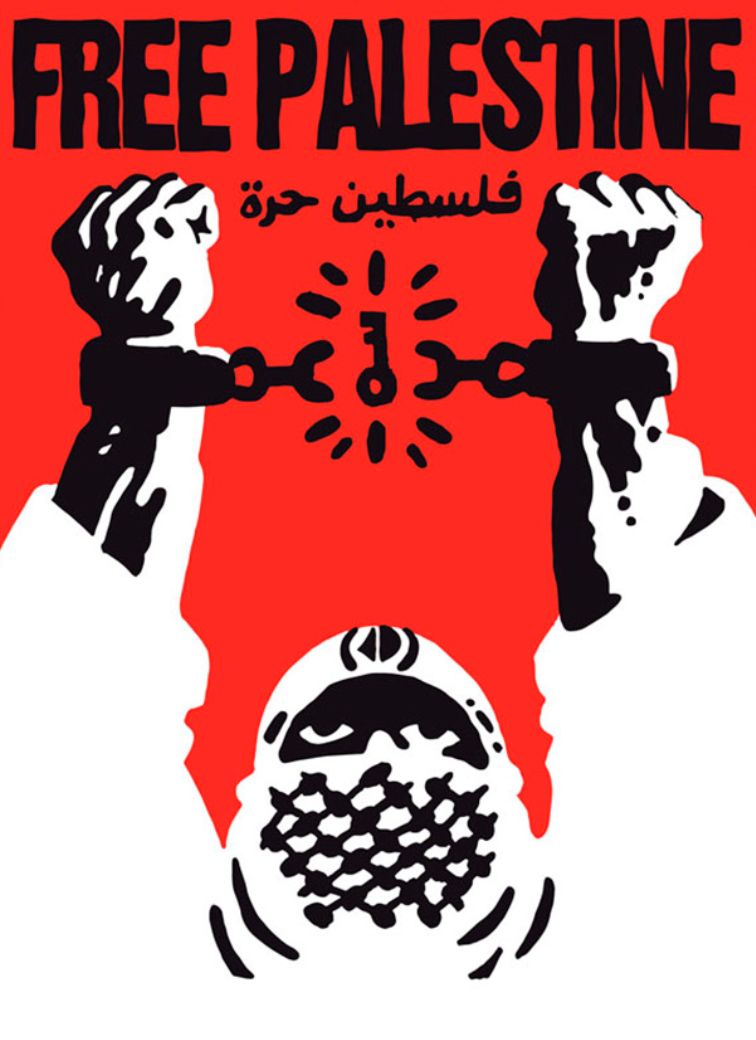
Editorial Note: These remarks were delivered by the author at the Palestine Tribunal on Canadian Responsibility held in Ottawa, Ontario on November 15, 2025.
Mahalo and deep gratitude for inviting me to testify, Azeezah Kanji, and to the organizers, witnesses (especially those from Gaza), and our esteemed elders. It’s an honor. Listening to testimony over the last two days, I’ve been brought to tears, hearing about loving family and beautiful children in stories like those told by Gada Ageel. Listening more, I’ve also inhaled that oxygen, as Thomas Becker put it, to carry on steadfast in the struggle for Palestinian liberation. What I offer to the tribunal are narrow remarks about the power of Indigenous-Palestinian solidarity, and how the university treats that relationship as dangerous, and thus attempts to prevent, suppress, and eliminate it, precisely due to the profundity of its political power.
On October 7, 2023, I woke to photos of Palestinians triumphantly tearing down the apartheid wall near Nir Oz, manifesting their freedom dreams amid a decades long blockade in Gaza by the Israeli Government. We knew this to be the world’s largest open-air prison. One of the most densely populated places on the planet, we knew many sequestered yet enduring there were refugees, forcibly displaced from their homes because of the 1948 Nakba—and Euro-American backed Zionist settler colonization that would establish the ethno-nationalist entity now known as Israel.
Some Indigenous professors located in North America knew this, and we viewed Al-Aqsa Flood as a north star in a constellation of global struggle for anti-colonial national liberation. As with Palestinians in Gaza, the West Bank, historic Palestine, and the diaspora, cheers coming from our communities were thunderous. As a Kanaka Maoli (Native Hawaiian) professor working in Canada at the time, I cheered from Toronto—in Dish With One Spoon Treaty Territory—and from my vantage as a professor at the University of Toronto.
Still, I was concerned for how my fellow Kānaka Maoli (Native Hawaiians), fighting our own anti-colonial national liberation struggle in our Indigenous homeland in the Pacific, would wake to the news, news that predictably would be framed and overdetermined through North American reports reproducing zionist propaganda in the State of Hawaiʻi. A US settler-state that formed because of prolonged military occupation starting in 1893, illegal annexation in 1898, and then unlawful statehood in 1959.
It’s a pedagogical imperative, scholarly pursuit, and organizing principle of mine to connect the Hawaiian movement to Palestine. So, that morning a little more than two years ago, I articulated my position publicly, knowing that other Kānaka Maoli such as Haunani-Kay Trask, J. Kēhaulani Kauanui, and Malia Osorio to name a few, had already set a foundation for Hawaiian-Palestinian solidarity. Indigenous solidarity with Palestinians is a lightning-rod reminder that settler colonialism is a failing project in our intertwining refusals to disappear. “Refusal holds on to a truth,” Mohawk scholar Audra Simpson writes, “structures this truth as stance through time, as its own structure and comingling with the force of presumed and inevitable disappearance and operates as the revenge of consent.”
It's no coincidence why Indigenous peoples of North America, Oceania, and elsewhere see ourselves in the Palestinian struggle and, in turn, why Palestinians have seen themselves integral to the Indigenous struggles. Unique indeed, our struggles are nevertheless linked. Our freedom interconnected. Liberation entwined.
Because of this position made public, as a professor in the Canadian post-secondary education system purporting to seek truth and reconciliation with Indigenous Peoples, I went from pet to threat.
In the week after October 7, 2023, six hit pieces ran in right-wing reports, largely from the National Post, mischaracterizing my position as antisemitic celebration of violence against Jewish people.
On November 8, 2023, Honest Reporting Canada, a zionist propaganda organization, launched a smear campaign over social media demanding the University of Toronto engage in disciplinary action.
On November 9, 2023, Hillel at the University of Toronto amplified the smear campaign, claiming I endangered the safety of Jewish students on campus.
Five days later, two senior colleagues in the Department of Political Science—Lucan Way and Seva Gunitsky—stated on social media that I was a terrorist sympathizer. The former would later apologize via email and, in the same email, asked if I condemn Hamas. Another senior colleague—Linda White—sent an eerily similar email asking me to condemn Hamas.
Over that month, at least three more white senior colleagues made informal and formal complaints. Lilach Gilady insinuated that the death threats I received due to the smear campaign were a result of living and dying by the sword.
The following month, the chair of the department, Ryan Balot, called me into a disciplinary meeting, where he noted inquiries were made concerning where funding was coming from for a research lab I founded. This was the Palestine exception in effect. Eventually, I was forced to leave the University of Toronto—leaving Toronto and Canada—because of interior and exterior pressure from the Israel lobby. This all, of course, pales in comparison to the hostility faced by Palestinians.
My experience as an Indigenous professor isn’t exceptional; it’s a pattern cutting across institutions shaped by governments, media, and special interest groups. Other Indigenous professors expressing public solidarity have likewise been castigated: Audra Simpson at Columbia University, Heoli Osorio at the University of Hawaiʻi, Nick Estes at the University of Minnesota, Eve Tuck at the University of Toronto, the list goes on. For instance, in reaction to Diné professor Melanie Yazzie’s advocacy, North American right-wing pundit Ann Coulter wrote: “We didn’t kill enough Indians.”
A majority of those targeted and harassed are Indigenous women and queer professors, which ought to be marked as violence against Indigenous women and queer folks—what Canada’s National Inquiry in 2019 concluded as genocide.
Meanwhile, some Canadian professors are doing the targeting and violence. Just this month, a Sparrows for Palestine Collective report detailed the University of Toronto hired a visiting professor, Shahar Kvatinsky, from 2023 to 2025 in which, leaving twice, he served as Lieutenant Colonel in the IOF’s Golani Brigade, an infantry unit that the Hind Rajab Foundation contends has repeatedly committed war crimes. Evidence exists of Golani Brigade soldiers firing at schools, photographing themselves with women’s lingerie, and celebrating the destruction of civilian buildings in Gaza. On May 3, 2024, Kvatinsky posted a photo of himself at “The People’s Circle for Palestine”—the student encampment—wearing a Golani Brigade shirt. “The case of Shahar Kvatinsky’s visiting professorship,” the report states, “poses urgent questions about UofT’s commitment to international law, equity and safety for all members of its community; about the normalization of anti-Palestinian racism on campus; and about foreign military interference at UofT, and more broadly in Canadian, American, and European universities.”
North American universities continue partnering with Israeli universities like Hebrew University, collaborating with military industrial corporations like Elbit Systems, and profiting on investments in Palantir Technologies. According to a 2024 report, the University of Toronto’s Asset Management Corporation holds almost $3 billion USD of investments in companies supporting illegal settlements in the Occupied Territories, and $11.5 billion USD in companies directly profiting on the genocide in Gaza.
How might we hold Canadian universities accountable when their support and investment in Zionist settler colonization in Palestine is co-constitutive of settler colonialism across North America, as Ellen Gabriel noted, on these Indigenous lands?
This contradiction is heightened and exposed through Indigenous-Palestinian forms of solidarity. In my view, it is precisely why in Canada that truth and reconciliation gets thrown out the window at the point at which Indigenous Peoples criticize Israeli occupation, apartheid, and genocide in Palestine.
No longer are we considered Indigenous people, like Palestinians, but together labeled terrorists, instead of those justly waging revolutionary struggles against settler nations—Canada, US, Israel—that are predicated on terrorizing, displacing, and eradicating the Native. “We know who made the hell Palestinians live in today,” says my friend and comrade Esmat Elhalaby, a Palestinian historian at the University of Toronto. He continues and I’ll end with his words: “Who will unmake that hell? And who will watch silently or cheer as its depths are made deeper and its people burn hotter?”
Uahikea Maile is a member of AISC.