Black Star of Labor Award
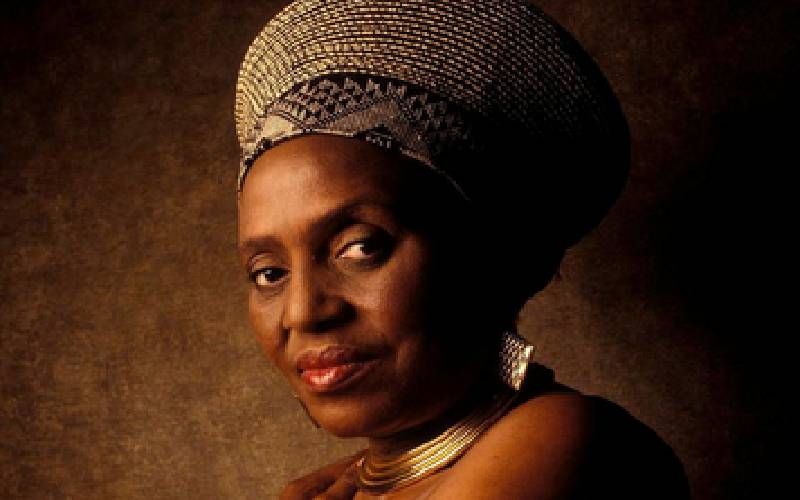
Editorial Note: On the occasion of the 68th commemoration of African Liberation Day in May 2026, the All-African People’s Revolutionary Party-GC and the All-African Women’s Revolutionary Union-GC honored Miriam Makeba, Andrée Blouin, and Umm Kulthum with the Kwame Ture Black Star of Labor Award. The following narratives are reprints of the statements drafted to honor these revolutionary women and their labor in the service of Pan-African Liberation.
Zenzile Miriam Makeba
“I kept my culture. I kept the music of my roots. Through my music, I became this voice and image of Africa and the people without even realizing. ” – Zenzile Miriam Makeba
Born March 4, 1932, in the township of Prospect, near Johannesburg, South Africa, under colonial rule and into an apartheid future, Zenzile Miriam Makeba would come to be known as Mama Africa for her tireless cultural and political labor. Her mother, a Swazi domestic worker and Sangoma, was imprisoned when Miriam was just eighteen days old for brewing beer to supplement her family's meager income. The infant Miriam went to prison too, carried on her mother's back, beginning her life inside the very system she would spend her entire adult life fighting.
Losing her father young, she was forced to leave school at sixteen and help her mother clean white households. Through it all, she found solace in song. In 1948, she joined the Cuban Brothers. In 1954, the Manhattan Brothers brought her in. By the late 1950s, she had joined the all-women Skylarks, blending jazz with traditional African melody. Miriam endured a difficult first marriage, gave birth to her daughter Bongi in 1950, and survived breast cancer. She carried grief and hardship the way African women are so often required to, without stopping, without ceasing to sing.
In 1959, the anti-apartheid film Come Back, Africa (shot secretly and illegally inside South Africa) took Miriam to the Venice Film Festival. In London, she met Harry Belafonte, who helped facilitate her travel to the United States. By November 1959, she had performed on the Steve Allen Show. She was the first African artist to bring Xhosa and Zulu music to Western stages, insisting through every note that Africa had something the world needed to hear. In 1960, she tried to return home for her mother's funeral. South Africa revoked her passport and turned her away. She would not see her homeland again for thirty years. They thought exile would silence her, but it was the driving force behind her eventual recognition as “Mama Africa.”
In 1963, Miriam Makeba spoke before the United Nations General Assembly, querying: "I ask you and all the leaders of the world: would you act differently, would you keep silent and do nothing if you were in our place? I appeal to you to save the lives of our leaders, to empty the prisons of all those who should never have been there." South Africa's response was to strip her of her citizenship and ban every record she had ever made. They believed that was punishment. It was proof of how afraid they were.
President Sekou Touré declared that culture encompasses all a people produce in the course of their struggle to survive, understand the world, and transform it. Culture is never neutral but " an instrument of socio-economic liberation and of domination." Touré understood Miriam as a Culture Worker and recognized her tremendous value to the African Revolution. In 1967, she was greeted as a daughter of Africa returning home to Conakry, Guinea. She was awarded honorary citizenship for her contributions to the liberation effort and the rehabilitation of the continent. There she met Kwame Ture. They married in 1968, and shortly thereafter, her bookings vanished, contracts disappeared, and her visa was revoked. Punished first for speaking out against Apartheid and later for loving an African revolutionary, she refused to be confined.
She and Kwame Ture relocated to Guinea under the tutelage and protection of Sékou Touré and Kwame Nkrumah, where she remained for eighteen years. Serving as Guinea's official delegate to the United Nations, she addressed the General Assembly in 1975 and 1976, again speaking against apartheid and colonial domination in Africa, but this time with the full diplomatic standing of a sovereign nation behind her. What they intended as exile, she transformed into a continental mission.
In 1990, Nelson Mandela walked out of prison and called her home. In 1991, thirty-one years after they had turned her away from her mother’s funeral, she performed in an Apartheid free South Africa for the first time. She had outlived the system that exiled her. On November 9, 2008, at seventy-six years old, she performed in Castel Volturno, Italy, in solidarity with a writer threatened by organized crime. As she finished her set, she collapsed backstage, dying as she lived, using her voice for someone else’s struggle, laboring for the people until her last breath.
Therefore, on this day, May 23, 2026, the Black Star Labor Award is posthumously bestowed upon Zenzile Miriam Makeba, Mama Africa, for her tireless and uncompromising contributions, her suffering and sacrifice, for African People and Oppressed Humanity in our Revolutionary Struggle for Pan-Africanism, One Unified Socialist Africa, and for the Emancipation and Unity of African People Worldwide.
Andrée Blouin
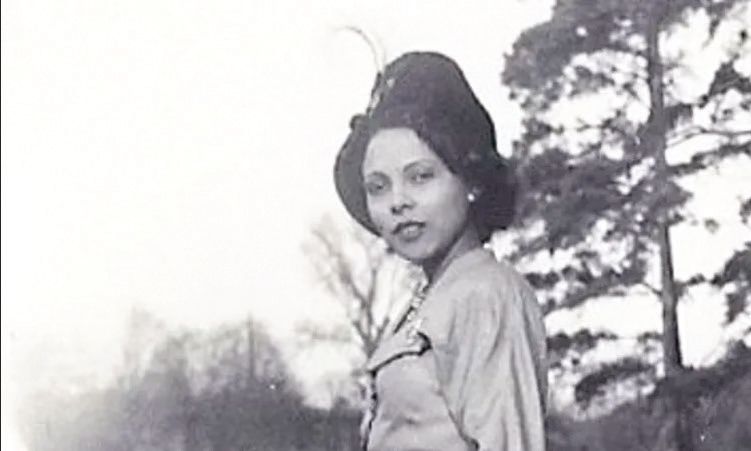
“I was proud that he thought of me, not as a woman of one country, but above all, as African.” – Andrée Blouin
Andrée Blouin, born on December 19th of 1921, in what was then Congolese territory that had been captured and colonized by the French, came to be one of the most consequential Pan-African activists of the twentieth century, a woman who transformed personal suffering into political purpose on a continental scale. Her autobiography, My Country, Africa: Autobiography of the Black Pasionaria, stands as both testament and battle cry, a record of a life lived entirely in service to African liberation.
Blouin’s political awakening, stirred by the tragic loss of her young child to malaria when the French colonial government refused him quinine because he was African, was later deepened as a result of her encounters (both imagined and real) with some of the greatest architects of Pan-Africanism. From Ahmed Sékou Touré, who led Guinea to reject French (neo)colonial domination and claim dignity in poverty over riches in chains, she drew the model of uncompromising resolve. His leadership catalyzed what she called her “second birth” (the moment she fully committed herself, without reservation, to the freedom of the African continent and its people.
Through Touré, she came to know Kwame Nkrumah, who entrusted her with a mission of extraordinary scope: to call upon Africa’s women to help the men set aside old quarrels in order to achieve the ultimate goal of African Unity. That Nkrumah would place such a charge upon Blouin is a testament to the reputation she had earned, a charge she accepted without hesitation, a commitment that evidenced her laboring love for Pan-Africanism.
For Blouin, her commitment to Pan-Africanism presented a prime opportunity to bring attention to the particular manifestations of suffering experienced by African women. For Blouin, Africa could never truly be free while its women remained enslaved by both colonialism and custom, by patriarchy and poverty, nor the neglect of their own men. At a crucial gathering of over six thousand women (more than four thousand of whom Blouin has personally recruited), she bore witness to the testimonies of women whose lives had been shaped by the dowery system, which reduced women to chattel. Women were being sold by their parents to their husbands for a price that did not end with the wedding. These women were less than wives and certainly not partners, more like property that had been assigned a price and changed hands.
Blouin refused to subordinate women’s oppression to the larger struggle by waiting to address women's liberation after independence. She understood that you cannot build a free Africa on the backs of unfree women. That a people cannot be liberated if half of that people remains in bondage within the household, within the family, within the community structures that are supposed to protect them.
From that great assembly, they walked away with purpose. They organized themselves around six demands, six commitments that together amounted to a declaration that African women's full humanity was not negotiable. Those six commitments were to make all women literate, to promote an understanding of health and hygiene, to combat alcoholism, to work for women’s rights, to work to protect abandoned women and children and ultimately to work for the social progress of Africa. From that assembly rose a powerful organizational program, insisting that women's emancipation was not separate from African liberation, but its very foundation.
Blouin fought alongside African men without surrendering the demand that African women’s particular experiences of colonialism, economic, social, and intimate, be named and combated. She was, in Sékou Touré’s own words, “a patriotic woman of Africa,” and she wore that title as battle armor in the struggle for Pan-Africanism.
In light of her life of service to the Pan-African struggle, On this Day, May 23, 2026, the All-African People’s Revolutionary Party-GC, posthumously bestows the Black Star Labor Award upon Andrée Blouin for her tireless, uncompromising contributions, suffering and sacrifices on behalf of African People and Oppressed Humanity in Our Revolutionary Struggle for Pan-Africanism-One Unified Socialist Africa and the Emancipation and Unity of African People Worldwide.
Umm Kulthum
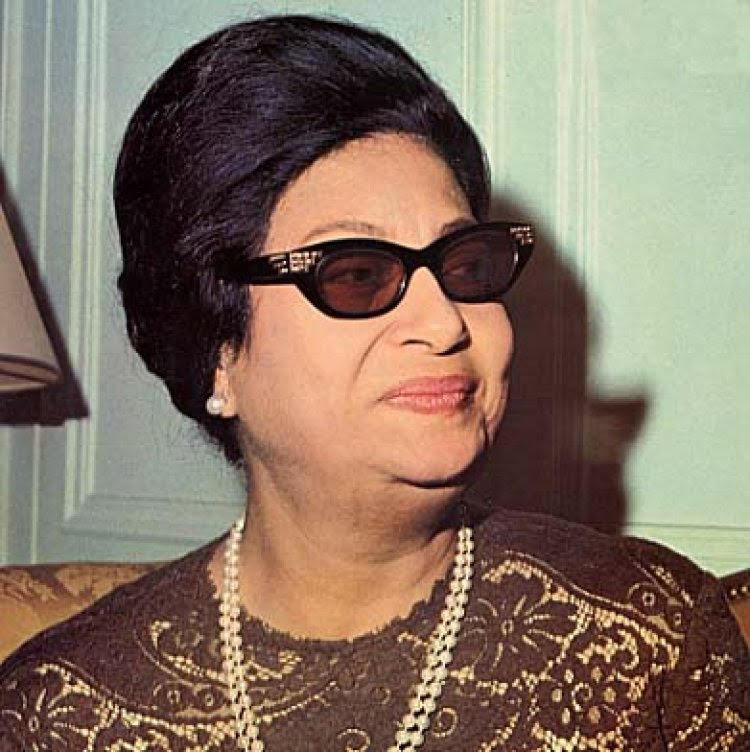
“Revolution of freemen, you’re destined to victory against imperialism - No matter what imperialism conspires, God is greater. A faithful is never burned by fire. - Revolution of freemen, you’re destined to victory." - Umm Kulthum (The Star of the East)
Umm Kulthum was born in a small village in Egypt's Nile Delta, somewhere between 1898 and 1904, the daughter of an Imam who supplemented his income by performing at religious festivals. The family toured the Delta performing songs in praise of the prophet, and Umm Kulthum was their shining star. From that Delta village, she would grow into the most consequential cultural force in the twentieth-century Arab world, a woman whose voice became the sound of their dignity for millions and a pillar of the broader Pan-African struggle for liberation, unity, and dignity.
Her career took off under the mentorship of the renowned Sheikh Aboulela Mohammed, who introduced her to the poet Ahmed Rami. By the 1930s, her talent and carefully curated public image had catapulted her to the top of the industry, selling records from Morocco to India. In 1934, she secured a deal with Egypt's national radio station to broadcast a live concert every first Thursday of the month, prompting many Egyptians to buy a radio for what became a national event and one that would continue for forty years and beyond her death.
That voice was never politically neutral. Although usually remembered for her love songs, Umm Kulthum was a political artist, careful to maintain the image of a modest peasant girl turned working-class hero, and she remained culturally close to the majority of Egyptians. When the Egyptian revolution of 1952 swept away the British-backed monarchy, she adapted without hesitation, aligning herself with the new era of Arab nationalism and forging a historic partnership with President Gamal Abdel Nasser. Her music became the soundtrack of this era, to which Nasser provided the philosophy: Pan-Arab nationalism. Pan-Arab nationalism was not separate from the Pan-African tradition; it was an expression of the same fundamental demand: that African and Arab people on the African continent govern themselves, control their own resources, and refuse the humiliation of colonial domination. Nasser's Egypt was one of the nerve centers of that continental anti-colonial movement, and Umm Kulthum was its most powerful cultural weapon.
During the 1956 Suez Crisis, her song Wallāhi Zamān, Yā Silāḥī ("It's Been a Long Time, My Weapon") was played as many as ten minutes at a time, with lyrics evoking duty and honor among those resisting the British, French, and Israeli advance. The song became so beloved it was later adopted as Egypt's national anthem, and its instrumental version served as Iraq's national anthem for sixteen years. She had written a nation's identity, and by extension, a continent's defiance, in musical notation.
In 1967 the Six-Day War shattered Arab confidence and battered Nasser. After the defeat and Nasser's resignation, she used her voice to support his return to politics, honoring him with the song Habib el-Sha'ab ("Love of the People"), which was broadcast almost every day for a month on Egyptian national radio. And when mourning threatened to become paralysis, she acted. Two weeks after the defeat, she secretly donated £20,000, the fee she had received from Kuwait's state radio, to the war effort. This was only revealed after a Ministry of Finance employee leaked the news. She then toured Iraq, Morocco, and Lebanon, raising over two million dollars for Egypt's military. Her fans and the power of her voice rallied people together during the deepest crisis of their generation. She performed for the first time outside the Arab world at the Olympia in Paris, donating those earnings to the Egyptian treasury as well, and was treated as a diplomatic ambassador.
She was never merely an entertainer. She was a culture worker in the fullest and most demanding sense. Kulthum was a woman who understood that music is not what a people does when the serious work is finished, but how a people survive such serious work at all. She used her art to forge unity across borders, languages, and classes. She carried the anti-imperialist consciousness of her era not in speeches but in song. Kulthum carried the heart and the spirit of the Egyptian Revolution, part and parcel of the African Revolution and the larger struggle to achieve Pan-African unity and liberation.
Umm Kulthum passed away on February 3, 1975. Four million people filled the streets of Cairo to mourn her, not only mourning a singer but mourning the living embodiment of a collective revolutionary Egyptian consciousness. The Black Star Labor Award honors those who labor without ceasing for the liberation, unity, and dignity of oppressed people. Umm Kulthum labored for forty years. She gave her voice, her earnings, her diplomatic standing, and her entire public life to the cause of Arab unity, anti-colonial, anti-imperial, and Pan-African resistance. She was a Worker of the People, and the All-African People's Revolutionary Party (GC) is proud to bestow upon her, posthumously, the Black Star Labor Award.
The Star of the East shines on.