Resistance or Colonialism: Revolutionary Internationalism Against Imperialist War
Editorial Note: The following is the transcript of a speech given at the International Online Rally: No Work for War! In Solidarity with the Mediterranean Port Workers’ General Strike on February 6, 2026.
Greetings brothers and sisters in struggle, comrades.
I want to convey to you the profound gratitude felt by the Venezuelan people for your gestures of solidarity and support for the Bolivarian Revolution over so many years now. And we have seen how much that solidarity has grown following the nefarious military attack of January 3rd.
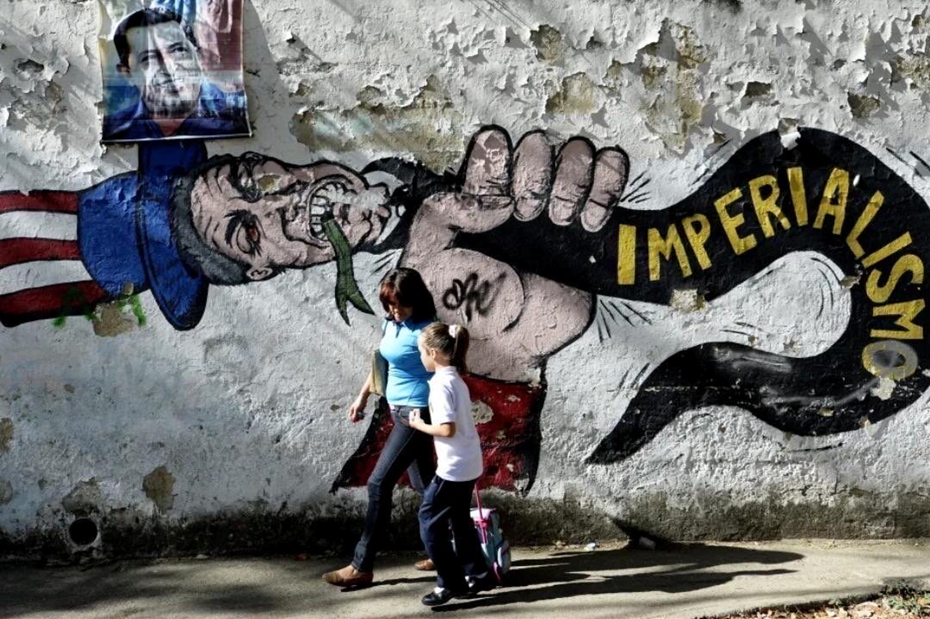
What may seem so simple, almost obvious, is in fact a key factor for the anti-capitalist struggle of this time. For, as you know, the bourgeois elites exercise imperial action as a form of absolute dominion over the planet’s resources and wealth, and also as a means of control over rebellious peoples, over peoples fighting for their self-determination. This imperialist action can only be combated through revolutionary internationalism, through solidarity among peoples. The pressure that can be exerted against these elites in the streets of the United States, Italy, Greece, or South Africa can be decisive in halting imperialist action and in exposing its genocidal intentions, as has occurred in Gaza. To unmask a monster that has manipulated public opinion with its cultural machinery for a century can be a great feat in the fight against its domination.
Peoples besieged by imperialism face great challenges of resistance. The greatest examples, as you know, have been given by nations like Palestine, Cuba, or the Congo, condemned to the cruelest forms of subjugation known in human history, carried out with absolute shamelessness and total impunity before a complicit international community. In Venezuela too, we have been condemned to times of great difficulty, which we have faced with deep conviction and a will for sovereignty. The criminal blockade imposed against our country, through sanctions and unilateral coercive measures, has cost us the future of entire generations, the forced migration of a large part of our population, and the lives of hundreds of thousands of Venezuelans. However, the anti-imperialist will has never ceased during this time. Faced with the dichotomy—resistance or colonialism—the Venezuelan people have chosen and will always choose to resist.
But, as I said before, such resistance is only fruitful to the extent that it is accompanied by the solidarity and mobilization of other peoples. A difficult but necessary reflection at this moment concerns the censorship and denial that certain sectors of the international left allowed and sustained against Venezuela, almost always adhering to the imperial narrative. This fact came at a high cost for us, as it created the conditions to justify an imperial intervention on our territory. And while this ambiguity has diminished in the face of the shameless colonial interest of the United States, I believe it is important to denounce it, express it, and reflect on it. For revolutionary internationalism cannot afford to fall again into the trap of the imperial narrative.
If revolutionary movements understood global geopolitics as capitalism does, I firmly believe there would be no room for ambiguity. Venezuela’s resources are strategic not only for our sovereignty but for the sovereignty of a region and of the disadvantaged peoples resisting worldwide. It is the solidarity with other peoples that capitalism punishes Venezuela for; it is also a condemnation of the mechanisms of integration, subsidy, and exchange among peoples that have emerged from here, just as with Cuba and its enormous gestures of revolutionary internationalism in bringing education and health to the areas most subjugated by imperialism.
If the labor movements, if the revolutionary movements, do not understand that the resistance of these nations is strategic for the global struggle against capitalism, they are handing over control of vast resources and potential to the international bourgeoisie.
The international labor movement must know that the media war that sought to delegitimize President Maduro had much to do with his condition as a worker leader, as the first worker president of Venezuela, and with his stance in favor of the Venezuelan working class. This media manipulation finally achieved its objective on January 3rd, when, through a military operation at a high cost to our country, the United States kidnapped President Nicolás Maduro and comrade Cilia Flores, holding them as prisoners of war in a flagrant violation of international law. The labor movement must feel this kidnapping as its own. It must know that the Pentagon took away a union leader and that the Venezuelan people, under the leadership of President Delcy Rodríguez, remain in constant mobilization demanding their liberation.
I believe the world is perhaps passing through the cruelest hour of capitalist violence. And I believe this time will be decisive in defining the future of humanity. That is why we are grateful for these spaces of articulation and exchange; that is why I firmly believe that only through solidarity manifested in mobilization and denunciations will it be possible to exert the necessary pressure to halt the overwhelming advance of capitalism.
That is the reason why these efforts are so necessary, so decisive, and why we are so grateful to you.
Long live the peoples of the world! Long live revolutionary internationalism! ¡Venceremos, camaradas!
Eglims Peñuela Lovera is a Venezuelan Journalist, revolutionary and Marxist-feminist militant.