Introduction: From Viet Nam to Palestine
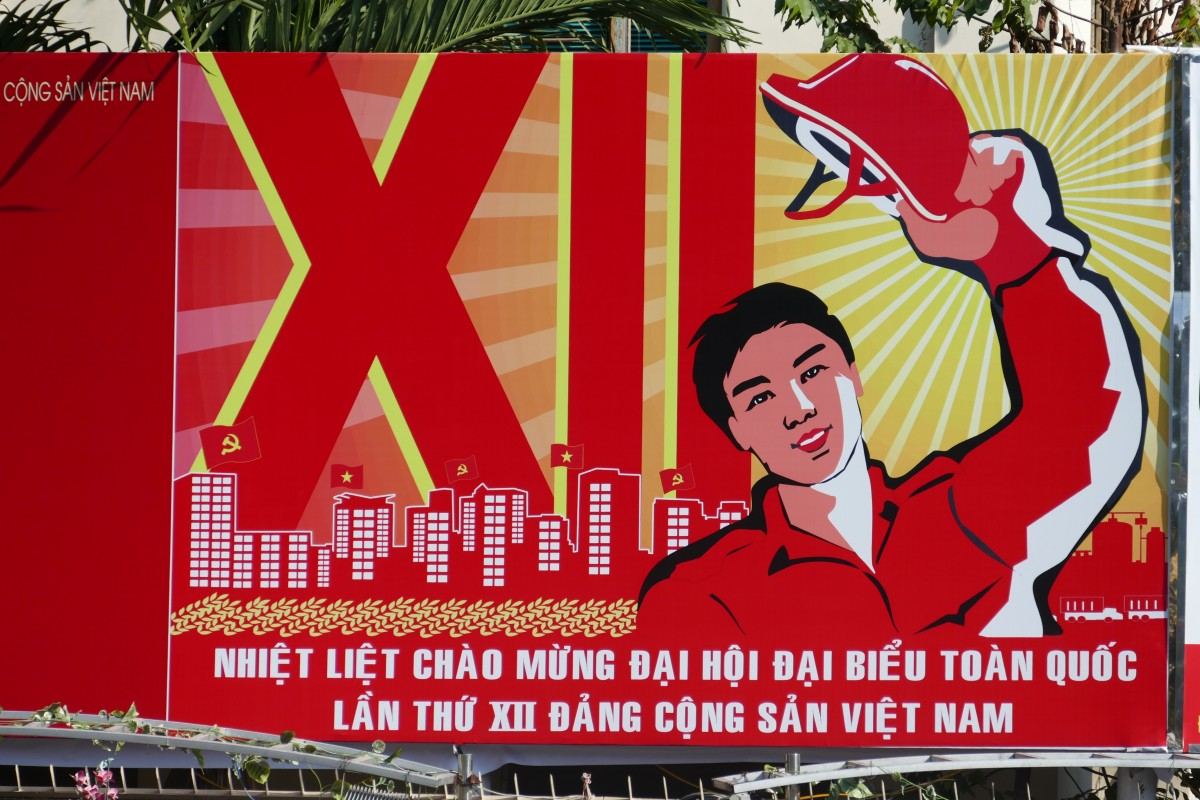
The year 2025 marked the fiftieth anniversary of Viet Nam’s victory over the United States. Viet Nam’s anti-imperialist war against the U.S. aggressor was a world-historical event. For instance, it helped foster conditions for revolt in cities across the United States, which in turn, had a material impact on the Vietnamese struggle.
On July 23, 1967, the Detroit police raided an after-hours drinking establishment that was hosting a large gathering of Black people. Over eighty were arrested. The police’s actions triggered a massive uprising in the city that lasted for about a week and involved thousands of Detroiters. Detroit officials were so confounded by the scale of revolt that they not only called for assistance from the State Police and the Michigan National Guard, but they also requested the federal government to send in the U.S. Army. President Lyndon Johnson deployed the army to Detroit less than twenty-four hours after the uprising began. Detroit was not an isolated incident, however. Hundreds of U.S. cities erupted in revolt during the 1960s. The federal government in Washington was deeply unsettled by these uprisings. Federal officials were wary of committing troops to cities like Detroit because it would affect the U.S.’s ability to wage war in Viet Nam.
But the Detroit-Viet Nam connection ran deeper. In early 1968, the Vietnamese resistance waged its largest offensive to date against the United States in South Viet Nam. Known as the Tet Offensive—it began on the Vietnamese New Year, Tet—Vietnamese guerrilla fighters took the war to the cities of South Viet Nam for the first time. To that point, the Vietnamese had primarily waged their struggle in the countryside. The Tet Offensive marked a major turning point in the struggle against the U.S. occupiers. It shattered the myth that U.S. forces were safe anywhere in Viet Nam, particularly since U.S. officials claimed that the cities of South Viet Nam were “secured.” The offensive also demoralized U.S. soldiers and by extension, angered the U.S. public, fueling antiwar sentiment. Facing insurmountable crises, the U.S. eventually withdrew from Viet Nam. The Vietnamese victory culminated with the reunification of the North and the South in 1975. General Vo Nguyen Giap, the military mastermind of the Vietnamese resistance revealed the inspiration behind the Tet Offensive years later. “We learned from Detroit to go to the cities.”[1]
This special issue, “From Viet Nam to Palestine,” commemorates the Vietnamese victory. As part of the issue, we have reprinted General Giap’s essay, “The Vietnamese People’s War of Liberation against the French Imperialists and the American Interventionists (1945-1954).” The essay traces the historical trajectory and the global context animating Viet Nam’s struggle for liberation against French imperialism. It also outlines the strategic principles guiding the liberation struggle, including the need for a prolonged war of resistance. As General Giap explains, the Vietnamese people’s revolution had a “twofold fundamental task: the overthrowing of imperialism and the defeat of the feudal landlord class, the anti-imperialist struggle being the primary task.”[2]
This special issue develops directly from a conference held in Detroit in September 2025 on Viet Nam, Black Liberation, and the Antiwar Movement.[3] Several of the participants in that conference have contributed to this issue. Based on a talk given at the conference, Eyad Kay’s “Lessons from Viet Nam and South Africa: A Path toward a Free Palestine” draws upon the historical examples of the Vietnamese liberation struggle and the author’s own experiences as an anti-apartheid activist during the 1980s to make the case that Palestine will also be free despite the immeasurable cost.
Student activism figures prominently in this issue, which contains multiple contributions from graduate and undergraduate students. “Bilal’s Beacon and Regrounding the Collective in Legal Education,” authored by a student at the City University of New York (CUNY) School of Law, highlights the takeover and renaming of a campus landmark. The article spells out the CUNY law students’ demands, including university transparency, a rejection of a federal surveillance agreement targeting students based on their national origin, the reinstatement of the student graduation speaker position, and the creation of a campus ICE safety plan. As the author explains, law has historically been used “both to suppress liberation struggles and, when taken up collectively, to confront empire.” A poem by Hadeeqa Arzoo Malik, a CUNY student, descriptively recounts the lifeless reactions of various CUNY powerholders to student demands for divestment from occupation and genocide. Momodou Taal’s essay explores the mutually constitutive relationship between Pan-Africanism and anti-Zionism in Kwame Ture’s politics. Ture (formerly Stokely Carmichael) was a member of the Student Nonviolent Coordinating Committee during the 1960s.
The special issue also includes a talk given by Gloria Aneb House at the conference. House, a former SNCC field secretary, discusses SNCC’s budding internationalism and its opposition to the war. House's talk connects well with the primary sources we have reprinted as part of this issue. We include several statements from Black activists and political organizations that opposed the U.S. war in Viet Nam and expressed solidarity with the Vietnamese resistance. A 1965 statement by SNCC condemns conscription and the war itself. Specifically, SNCC exposes the hypocrisy of the U.S. government in claiming to fight a war for “democracy” abroad while suppressing Black people’s right to vote at home. General Gordon Baker, eventual cofounder of the League of Revolutionary Black Workers, likewise penned an open letter in 1965 against the U.S. military draft and in solidarity with the oppressed peoples of the Third World. In a 1964 statement titled “Greetings to Our Militant Vietnamese Brothers,” the Revolutionary Action Movement (RAM) congratulated the Vietnamese “for their inspiring victories against U.S. imperialism in South Vietnam,” while declaring “Our Independence from the policies of the U.S. government abroad and at home.” Finally, Huey P. Newton of the Black Panther Party wrote an open letter in 1970 to the National Liberation Front in South Viet Nam, offering to deploy Panthers to fight alongside their anti-imperialist comrades.
Diane Nash’s important 1966 essay, “Journey to North Vietnam,” is also reprinted. The essay documents Nash’s visit to North Viet Nam in 1966 at the invitation of the Vietnamese Women’s Union. Nash recounted witnessing the destruction caused by the United States during her visit. She learned that the U.S. had bombed eighty hospitals and health centers, killing over two hundred patients in their hospital beds. One hospital was attacked thirty-nine times. She also saw Catholic Churches bombed in numerous North Vietnamese towns and villages. Nash’s observations indicate that the Zionist atrocities targeting Palestinian hospitals, schools, and religious structures are by no means exceptional in the history of imperialist warfare. A digitized copy of Arlene Eisen’s book Women and Revolution in Viet Nam is also included in this special issue. Documenting the perspectives of Vietnamese women, Eisen shows how Viet Nam’s national liberation struggle likewise created the conditions for women’s liberation.
The essay “On Fighting and Talking: Lessons from Viet Nam’s Victories over Two Empires,” explores the precepts of revolutionary warfare developed by the Vietnamese resistance and applies them to the Palestinian struggle today. The essay also examines how Viet Nam navigated a tenuous global context during its liberation struggle. In doing so, it offers an analysis of Palestine in the contemporary global landscape.
Contributors to this special issue particularly consider the question of international solidarity, whether with Viet Nam in the 1960s or with Palestine today. We emphasize a dialectical materialist conception of solidarity. Samora Machel, a leader in Mozambique’s liberation struggle and subsequently the country’s first head of state, asserted that international solidarity is not a charitable act but rather “an act of unity between allies fighting on different terrains toward the same objectives. Solidarity,” he continued, “is an assertion that no people is alone, no people is isolated in the struggle for progress. Solidarity is the conscious alliance of the progressive and peace-loving revolutionary forces in the common struggle against colonialism, capitalism, and imperialism.” The Detroit-Viet Nam connection, seen within a larger prism of anti-imperialist resistance, constitutes the materiality of solidarity.
Solidarity also does the work of stretching imperialism beyond its capacity. In 1965, the United States began to escalate its presence in South Viet Nam by deploying hundreds of thousands of troops. The Vietnamese resistance did not panic, however. In a July 1965 speech, the Vietnamese leader Le Duan said the following about the U.S. escalation.
If the U.S. itself directly enters the war in the South it will have to fight for a prolonged period with the people’s army of the South, with the full assistance of the North and of the Socialist bloc. Fighting for a prolonged period is a weakness of U.S. imperialism. The Southern revolution can fight a protracted war, while the U.S. can’t, because American military, economic, and political resources must be distributed throughout the world.[4]
Ho Chi Minh was more succinct in his assessment of imperialism. “You will kill ten of our people, and we will kill one of yours. In the end, it will be you who will tire of it,” he warned the French in 1946. The words of Ho Chi Minh and Le Duan and the steadfastness of the Vietnamese resistance have lasting relevance.
In 2025, the United States engaged in active military operations in Palestine, Yemen, Syria, Iraq, and Iran just in West Asia. It now allocates around 20 percent of its total naval assets to the Caribbean in order to enforce a military blockade against Venezuela. The U.S. and its NATO allies are also bogged down in their war against Russia. U.S. attacks against Somalia reached an all-time high. And its recent bombardment of northern Nigeria likely constitutes part of a more comprehensive effort to destabilize the anti-imperialist Alliance of Sahel States. Finally, U.S. troops were also deployed to cities like Los Angeles, Washington, and Chicago, with others to potentially come. Similar to the 1960s, government officials describe these cities as warzones.
In short, the U.S. empire is stretched thin. The intellectual’s task is to therefore amplify the connections between Chicago and Palestine, Los Angeles and Venezuela, Washington and Niger, and so forth. The Vietnamese not only recognized the global ramifications of their resistance, but they transformed this analysis into strategy to defeat U.S. imperialism. Viet Nam’s success should serve as a lesson for all anti-imperialists.
Navid Farnia is a member of AISC. ____________________________________________________________________________________
[1] Maxwell C. Stanford, “Revolutionary Action Movement: A Case Study of an Urban Revolutionary Movement in Western Capitalist Society” (MA Thesis, Georgia State University, 1986), 64.
[2] Vo Nguyen Giap, People’s War, People’s Army (Honolulu: University Press of the Pacific, 1961), 27-28.
[3] The conference was organized by David Goldberg, whose labor and support have also proven crucial for this special issue. AISC expresses gratitude to David for his help.
[4] “Speech by Lao Dong Party Secretary Le Duan,” in Vietnam: A History in Documents, 316.