Battlefield Solidarity: Cuito Cuanavale, the 12-Day War, and Imperialism’s Shattered Invincibility
Editorial Note: The following excerpt is from a forthcoming article by Navid Farnia, titled "Palestine and the Axis of Resistance in the History of Anti-Imperialist Struggle." The full article will appear in a special issue for the academic journal Middle East Critique.
Soon after the United States attacked Iran’s nuclear facilities on June 22, 2025, Iranian army Chief of Staff Abdolrahim Mousavi announced that Iran would retaliate by continuing to target the Zionist entity of Israel. The United States bombed three nuclear sites within Iran, contrary to all international laws, Mousavi explained. Born from desperation and noticing “the signs of defeat in (Israeli Prime Minister Benjamin) Netanyahu,” the United States “decided to give him artificial respiration with this action.” Iran would therefore “take action against them (Israel) proportional to the U.S. strikes.” Mousavi concluded by declaring that Iran would also respond directly to the U.S. “The criminal U.S. must know that in addition to punishing its illegitimate and aggressive offspring, the hands of Islam’s fighters within the armed forces have been freed to take any action against its interests and military.”
Iran’s Operation True Promise III, launched in response to the Zionists’ unprovoked air strikes against the Islamic Republic on June 13, 2025, was the most successful attack against Israel since its artificial inception atop Palestinian land in 1948. Its magnitude and precision rocked the foundations of the Zionist entity, forcing settlers to scurry into shelters every day and night. By June 24, panicked Zionist officials entreated the U.S. to intervene and help facilitate a cessation of hostilities. Within twelve days, Israel’s tactical success transformed into a strategic defeat.
Iran’s operational victory, though historically significant, was not unique in the pantheon of anti-imperialist struggles. Israel’s colonial future remains to be determined, and the war between Zionist-imperialism and Palestine, Iran, and the Axis of Resistance is by no means over. Nonetheless, history shows that the circumstances surrounding the collapse of empires and colonial regimes are often traceable to a singular watershed event or battle. Dien Bien Phu for instance, foreshadowed the demise of the centuries-old French empire. In Southern Africa, Angola’s ultimate victory over the invading forces of South Africa catalyzed the apartheid regime’s regional withdrawal and ultimately accelerated its final collapse. The watershed event in this instance was the Battle of Cuito Cuanavale. Though the struggle for the liberation of Palestine remains incomplete, Iran’s True Promise operations should be analyzed in this historical context. Specifically, Cuito Cuanavale provides lessons for understanding the 12-Day War.
Cuito Cuanavale and the Liberation of Southern Africa
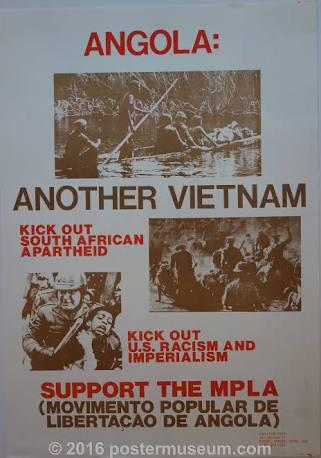
Days before Angola’s independence from Portugal in 1975, the South African apartheid regime deployed thousands of soldiers into Angola. With support from the United States, the apartheid forces sought to prevent Angola’s main liberation organization, the People’s Movement for the Liberation of Angola (MPLA), from taking power. MPLA meanwhile received assistance from Cuban troop reinforcements—which peaked at 36,000 during the 1970s—that were dispatched at the request of the Angolans. Together, the Angolan and Cuban forces defeated apartheid South Africa and its local adjuncts, specifically the National Union for the Total Independence of Angola (UNITA).
Despite suffering a defeat in Angola, the apartheid regime recommitted itself to military engagement throughout Southern Africa. It endeavored to destabilize the Frontline States—the regional countries aiding the anti-apartheid resistance in South Africa. The apartheid regime’s reinvasion of Angola during the 1980s constituted a central part of its war against the Frontline States. Because the regime threatened the entire region’s stability, the liberation forces understood the necessity of a united frontline against colonialism and imperialism. Angola’s survival against South African aggression was an existential issue for the forces of liberation in the region. In this respect, the MPLA once again called upon Cuba, whose intervention was not only welcomed but proved instrumental. By 1988, Cuban troops in Angola numbered at 55,000.
From December 1987 to May 1988, Angolan and Cuban troops stymied South Africa’s advance at Cuito Cuanavale, a village in southern Angola. Months earlier, the South Africans stifled an offensive by Angola’s MPLA-led military—the People’s Armed Forces for the Liberation of Angola (FAPLA)—into the southeastern region. Encouraged by Soviet military advisors, FAPLA’s offensive sought to seize UNITA’s headquarters near Angola’s border with South African-occupied Namibia. The offensive failed, and the FAPLA forces retreated to Cuito Cuanavale. Having decimated the offensive and weakened the morale of the withdrawing FAPLA troops, the apartheid regime decided in fall 1987 to take Cuito Cuanavale in Operation Moduler.
As FAPLA Deputy Chief of Staff Ngongo Monteiro explained, “The loss of Cuito Cuanavale would have been a disaster for our sovereignty and our territorial integrity.” South Africa’s military leadership conversely ascertained that a victory at Cuito, which they believed all but ensured, could provide “the decisive breakthrough” both in Angola and Namibia. Namibia was in fact central to South Africa’s presence in Angola. The MPLA-led government’s support for the Namibian liberation struggle—and specifically, the Southwest Africa People’s Organization (SWAPO)—motivated South Africa’s expansionist regional activities.[1]
In response to South Africa’s planned operation, Fidel Castro decided that Cuba would help defend Cuito Cuanavale. Castro dispatched more troops and materiel to Angola, including Cuba’s best weapons, aircraft, and tanks, and its most elite pilots. The decision carried significant risks. By allocating most of its military capabilities to Angola, Cuba was defenseless against the United States, its northern neighbor. Castro was however convinced the North Americans would not invade Cuba. “For us the greater danger is…in Angola,” he asserted. “The war is there, not here.” Castro knew the stakes for all involved. Cuba was sending troops to a “remote place,” at the request of the Angolan government and the Soviet military mission, “to wage a battle on terrain chosen by the enemy.”[2]
But the Cuban leader’s decision was not based on defensive calculations. Castro intended to use a victory at Cuito as a springboard for an offensive into Angola’s sparse southwestern region. The UNITA-controlled southwest was not perceived as strategically significant as the southeast. However, control of the southwest would enable the Angolans and Cubans to make land contact with the resistance in Namibia. Castro understood that Cuba was not simply fighting for Angola’s liberation. It was involved in a regional war against South African domination. The strategy of the Angolan and Cuban forces needed to reflect the regional conditions. Cuba’s goal was to help preserve Angola’s sovereignty, integrity, and peaceful development and to assure the independence of Namibia.
Cuba assigned 1,500 troops to Cuito Cuanavale, while it secretly deployed more of its forces to the southwest region. “By going there, we placed ourselves in the lion’s jaws,” Castro explained. From the outset, the Cubans planned to gather their forces to attack in another direction, “like a boxer who with his left hand blocks the blow and with his right—strikes. Cuito Cuanavale was the left hand, and the right was the forces that we assembled” in the southwest.[3]
South Africa was unable to break the defenses in Cuito Cuanavale. By February, it was apparent that the South African counteroffensive was failing. “Until the battle of Cuito Cuanavale,” wrote the newspaper Weekly Mail, “South Africa was able to control perceived threats to its security by selective and (mostly) unilateral application of its regional power…. But Cuito Cuanavale’s dusty streets and battered airfield may well prove the bridge too far.” The South Africans launched their final assault on Cuito on March 23. By then, even U.S. officials admitted the war was taking a “dramatic” and “undesirable” turn for the apartheid regime. According to historian Piero Gleijeses, the Angolans and Cubans were able to achieve victory at Cuito Cuanavale for two major reasons. First, they established air superiority over the South Africans. Second, the Angolans and Cubans achieved a defensive victory on the ground by repelling South African tanks on the bridgehead to the east of the town. In doing so, they saved key FAPLA brigades and greatly improved their soldiers’ morale. South Africa’s troops were conversely demoralized.[4]
As the apartheid regime made a final push in March, a Soviet delegation met with U.S. officials in Washington. Regarding Angola, U.S. Assistant Secretary of State Chester Crocker boasted to Soviet Deputy Foreign Minister Anatoly Adamishin that South Africa would not withdraw from Angola until Cuban troops left the country. According to Crocker, South African troops “feel every day more comfortable in Angola, where they are able to try out new weapons and inflict severe blows on the Angolan army.”
But Washington’s psychological operation proved unsuccessful. When Adamishin forwarded Crocker’s message to Castro, the Cuban leader gave a commanding reply. “Ask the Americans,” he exhorted Adamishin:
If the South Africans are so powerful,…why haven’t they been able to take Cuito? They’ve been banging on the doors of Cuito Cuanavale for four months. Why has the army of the superior race been unable to take Cuito, which is defended by Blacks and mulattoes from Angola and the Caribbean? The powerful South Africans…have smashed their teeth against Cuito Cuanavale…and they are demoralized.[5]
The Angolan victory proved decisive for all of Southern Africa. After failing to sustain military advances in Angola, apartheid South Africa was eventually expelled from the country altogether. The defeat in Angola further weakened the apartheid regime. In doing so, it strengthened the resistance in neighboring Namibia, which ousted the South African occupation and won its independence in 1990.
As for South Africa itself, international sanctions devastated the apartheid economy. Regional resistance reversed the regime’s expansionist ambitions. And the external pressures nourished the steadfast resistance within South Africa. Rebellions in the townships fractured the apartheid state. The strain of policing the townships, combined with military failures in the region, made government policies increasingly unpopular among white South Africans. In short, Cuito Cuanavale bolstered the morale of the South African resistance.
Nelson Mandela later described the importance of Cuito Cuanavale. It “destroyed the myth of the invincibility of the white oppressor…[and] inspired the fighting masses of South Africa…. Cuito Cuanavale was the turning point for the liberation of our continent—and of my people—from the scourge of apartheid.”[6]
Cuito Cuanavale is rightfully lionized as a watershed battle in the liberation of Southern Africa. But its significance transcends the region and is indeed world historical. The victory at Cuito is a shining inspiration to all who wage their own anti-colonial struggles against settler regimes. Today, the Axis of Resistance endeavors to produce its own Cuito Cuanavale moment in West Asia.
The Regional Struggle against Zionism
Operation Al Aqsa Flood exposed Zionism’s tenuous foundations for the world to see. Since October 7, 2023, the Israeli regime has attempted to restore its aura of invincibility through unmitigated genocidal violence and grotesque terror. But spectacular violence does not produce strategic victories and only further delegitimizes the Zionist project. Nonetheless, the Zionist-imperialists remain beholden to shock-and-awe given their battlefield vulnerabilities.
Operation Rising Lion, as the Zionists’ called their attack against Iran on June 13, 2025, was one such example of spectacle. The Zionists attacked Iran’s missile capabilities and air defenses with moderate success. Israel also assassinated dozens of military commanders and civilian scientists and terrorized the Iranian population.
Iran nonetheless recovered from the lightning attack. Within twenty-four hours, Iran launched Operation True Promise III and pummeled the Zionist entity over the ensuing eleven days with several different models of its homegrown ballistic missiles. On a tactical level, Iran varied its attacks to progressively wear down Israel’s air defenses, including the Iron Dome, David’s Sling, and Arrow systems, along with the U.S.-supplied THAAD system, which used Jordanian and Syrian airspace to intercept missiles. The U.S. also provided air defense from its warships stationed in the region. Yet the Zionist regime’s defenses were exposed from the first wave of Iranian strikes and precipitously decayed over eleven days.
By the war’s end, the Zionists’ munitions and air defense stockpiles were depleted , and it expended billions of dollars in interception attempts alone. The U.S. likewise launched dozens of THAAD interceptors, which reportedly ate into a quarter of its stockpiles. Iran’s homegrown ballistic missiles and drones successfully penetrated the Zionist-U.S. air defense system. The economic damage was palpable, with estimates ranging up to $20 billion of wartime costs for an economy already ravaged by nearly two years of war against Palestine, Lebanon, and Yemen.
Iran has demonstrated a commitment to a protracted war against Israel and the United States. From the outset of the Zionist aggression, Iranian officials were clear that the country was prepared for a long-term war. The Zionists meanwhile were unwilling to let the war drag out. “We will not be dragged into a war of attrition,” Netanyahu claimed , “but we will also not end this historic operation until we have met all our goals.” Iran’s resilience forced Zionist officials to request U.S. military assistance after only a week.
On June 22, the United States conducted airstrikes against Iranian nuclear sites, including Natanz, Esfahan, and Fordow. In response, Iran launched missiles targeting the largest U.S. military base in the region. At least one and up to six missiles evaded interceptors and impacted the Al Udeid Airbase in Qatar. The strikes destroyed the base’s Modernized Enterprise Terminal (MET) system, which was used for secure communications via satellite. Hours after the Al Udeid strikes, a ceasefire was declared, bringing the twelve-day hostilities to an end. Israel desperately sought a ceasefire without having achieved any of its objectives, including destroying the nuclear program, disabling Iran’s ballistic missile program, and above all, destabilizing the Islamic Republic. The ceasefire signaled both the depth of Zionist fragility and Iran’s strategic endurance.
The Zionist regime suffered significant losses during the 12-Day War. Iran targeted and at least partially destroyed numerous Israeli military and intelligence structures, including those belonging to the Military Intelligence Directorate, Mossad, the Zionist War Ministry, Nevatim Airbase, Tel Nof Airbase, Meron Airbase, Rafael Advanced Defense Company (a weapons manufacturing company), and the Weizmann Institute. Weizmann houses decades of research geared toward Zionist military and intelligence operations. Iranian missiles also struck economic and infrastructural targets, including the Tel Aviv Stock Exchange , a power plant in Ashdod, and one of the Zionists entity’s two oil refineries in Haifa.
The psychological impact was just as significant. The strikes forced a closure of Israel’s airspace and instilled such panic that the Zionist regime announced a departure ban for its own population on June 20. The airspace closure and departure ban prompted settlers to seek other ways to leave the colony, with many paying top-dollar to flee via yacht .
Soon after the war’s end, the Palestinian and Yemeni resistance amplified their operations. Iran’s attacks on key intelligence gathering sites hindered the Zionist colony’s surveillance and monitoring capabilities in Gaza, enabling the Palestinian resistance to carry out significant pre-planned ambushes against Zionist occupation soldiers. In July 2025, the al-Qassam Brigades executed a major operation in the northern Gaza city of Beit Hanoun, a site which the Zionist forces previously declared clear of resistance activities. The Beit Hanoun operation killed at least five and as many as thirty Zionist soldiers, with at least eleven more wounded. It was deemed one of the most severe incidents the Zionist forces suffered since October 7.
Despite the ceasefire, Iranian officials have repeatedly stated that their country remains at war. As an Iranian parliament member explained , “The meaning of this ceasefire is not the end of the war but rather the entry into a new phase of war.” In early January 2026, the Zionist-imperialist war against Iran indeed assumed a new form, as Mossad agents infiltrated Iran’s cities and committed numerous acts of terror against citizens and civilian institutions. Iranian security forces defeated this urban operation within several days. With a new U.S. attack possibly looming—particularly given the U.S.’s military buildup in the region—Iran has projected strength. The previous attacks hardened the Iranian state and people, indicating that the country is prepared for a protracted war.
Conclusion
According to General Ebrahim Jabbari, a senior advisor in the Islamic Revolutionary Guard Corps (IRGC), the U.S.’s “main assets in the region are not its ships or bases.” Although those are highly vulnerable, the “most important military asset is Israel itself, which today is incapable and overwhelmed in the face of our attacks.” While Israel and the United States continue to pose a significant threat to the West Asia region, the 12-Day War exposed the vulnerabilities of Zionist-imperialism. The war was therefore a world-historic event, even if we have not yet witnessed the ultimate outcome.
In this respect, an Iranian victory against Israel is as significant as the Angolan victory over apartheid South Africa. With Cuba’s support, the regional resistance in Southern Africa destabilized the apartheid regime and forced it into negotiations with the South African resistance. Thirty-two years after the final victory of the South African resistance over apartheid rule and twenty-eight months after Al Aqsa Flood, the Palestinian resistance endures while Israel teeters. With every ceasefire violation, the Zionist entity further delegitimates itself. And with every ballistic missile strike imposed by Iran, Israel’s settler project destabilizes.
The resistance meanwhile remains steadfast. IRGC Brigadier General Mohammad Reza Naqdi conveyed this truth in his broadcast to the people of Palestine during the 12-Day War. “‘O zealous fighters of the West Bank and Gaza Strip…the day of decision and fulfillment of your historic mission is approaching.” Today, “the bloodthirsty Zionist wolves who tortured, exterminated, bombed, and usurped your land are now crawling into shelters, or paying exorbitant sums of money to rent a boat or vessel on their shores to escape.” Naqdi concluded, “We are fighting together, side by side, we will join you, we will celebrate together, and we will pray together in Jerusalem.” From Cuito Cuanavale to the 12-Day War, unyielding resistance in Southern Africa and West Asia highlights the ultimate importance of anti-imperialist regionalism and internationalism in the quest for national liberation.
Navid Farnia is a member of AISC.
____________________________________________________________________________________
[1] Piero Gleijeses, Visions of Freedom: Havana, Washington, Pretoria, and the Struggle for Southern Africa, 1976-1991 (Chapel Hill: University of North Carolina Press, 2013), 399-402.
[2] Ibid., 407.
[3] Ibid., 421.
[4] Ibid., 424-6.
[5] Ibid., 427.
[6] Ibid., 426.